Friday, April 15, 2016

You Are What Your Papers Are: Rahul Ravi’s ‘Living in Limbo’

(Photography artist Rahul S Ravi)

Twelve years ago, when the Tom Hanks starrer, ‘The Terminal’ hit the screens worldwide we all had come to know about the plight of a man who spent almost eighteen years in the Terminal One of the Charles De Gaulle Airport in France as a refugee. His name is Mehran Karimi Nasseri. He was an anti-Shah activist in Iran and was expelled from the country in 1986. After seeking asylum in many countries, he finally decided to settle down in the United Kingdom. However, on his way at the French airport, he found to have lost all his papers and since then, he has been living there as a ‘stateless’ man. He penned a book titled ‘The Terminal Man’ and it was the source material for the Tom Hanks movie.

 (Mehran Karimi Nasseri, the airport man)

Airport terminals are no man’s lands. You lose your country when you are inside an airport terminal. Not only the conceptual status of a nowhere land but also the architectural finish of these structures make the airport terminals extreme cases of ‘no-identity’ lands. Even a domestic terminal in any country poses the same risk for a native passenger. The moment he is in, until he comes out he cannot really say that he belongs to a place. The authorities could do anything with you; they could make you a drug trafficker, a terrorist, a mad man or anything that they want you to become. You are the most helpless person in an airport terminal. What about Mr.Nasseri who spent almost two decades there? The experience might have grown into him and helped him to evolve the life in a terminal a constant performance, which is political, cultural and even spectacular. The naturalization of living as a man without a land would have given him a new identity, the identity of a stateless man. But what about those people who have passports, homes, familiar language and families to live with, and yet forced to live like ‘stateless’ ones?

 (Picture by Rahul Ravi)

Rahul Ravi’s photographic series ‘Living in Limbo’ tells how such people lead their lives. Shot almost eight years back, when he was a student at the Photography Design Department of the National Institute of Design, Ahmedabad this series was shown in certain international art expositions. Looking at the photographs of the asylum seekers and refugees all over the world, a new and massive phenomenon caused by the militant and fundamentalist organizations like the Islamic State, and also at the photographs of the people who live under the perpetual threats of the militaries of the hostile countries as well as of the militaries of their own native countries, I tend to look at the people who live though not in conflict zones but in limbos created by political, religious and cultural prejudices as well as ridiculously complicated systems of governance and citizen management.

 (Photograph by Rahul Ravi)

Photographers all over the world have taken interest in people who live in political and social limbos. While they focus on the eyes of their subjects that speak volumes about their present state of living and being, and also at the physical gestures and clothes in order to reveal the plight of their existence, Rahul Ravi’s photographs stand distinct mainly because that the abovementioned structural paraphernalia that define a photograph taken in a refugee situation are absolutely absent in his series. In these pictures, the subjects, a few elderly Muslim men in their bedrooms or drawings rooms (a very natural setting for a head of the family to be in in a photograph) are seen sitting tensed and looking at the camera with a sense of resignation. Rahul Ravi has taken special care to cut all the other human presences out of his pictorial frames so that these subjects get an iconic treatment in his photographs yet they resist becoming icons because of the pall of gloom shrouding their faces.

(Photograph by Rahul Ravi)

Who are these people? The story has the scope of a minor epic narrative but they remain short stories read less and hardly acknowledged, and even let the characters to fend off for themselves. However, they are not just left alone like that. Had it been so they would have been much better and happier. The state always asks after them. The state is always looking at them. They are under the state’s microscope. Living under a CCTV camera would make anyone either paranoid or a resigned one. The latter has happened to them. We have heard the stories of those Indian people languishing in the jails of Pakistan and vice versa. They are all treated as ‘suspects’; however they try to prove their innocence (as fishermen or shepherds) the authorities refuse to believe them. The lucky ones get freed through bilateral negotiations and the ill-fated ones rot in those jails and die, leaving no trace. In Rahul Ravi’s pictures we see those people who escaped jails but carry the jail in their consciousness and conscience or rather they are asked to live so.

 (Photograph by Rahul Ravi)

These are the people, Muslim Men over sixty years old, who happened to have a Pakistan Passport in their hands. They are Keralites, natural Malayalis who had dreamt of making it big in foreign lands. In 1960s and early 70s the Middle East was beckoning many of the skilled and unskilled workers from the poorer sections of Kerala. People sold whatever they could and handed over the money to the agents who procured work permits or visas for these migrant laborers. Middle East being a conglomeration of Muslim countries, the first lot that responded to the labor market there was the Muslims in Kerala. Hindus waited and watched, initially with disparagement and then with awe. Money had started flowing into the state turning the Muslim families in Kerala richer by several notches than their Hindu counterparts. Sooner than later the Hindus also started chasing the gulf dreams.

 (Photography by Rahul Ravi)

In the process many got duped by the agents. Some reached shores that were unheard of before. Some reached, as a comic relief, in the very same Indian shores. A few got job in places like Karachi, in Pakistan. For those who had gone to Pakistan without suspecting that one day the political differences would make their privates lives a living hell, Karachi was as good as Mumbai. The religious affinity and similarity might have helped them to feel confidence also. They started working there and sending money back home. Things were going on smoothly till they got the offer of becoming Pakistan citizens. Pakistan said that t they could not shuttle between India and Pakistan without a Pakistani passport. Many left the job and came back to Kerala and some of them stayed on only because they wanted to protect the economic gains that they had achieved. They did not find it a difficult proposition so long as they could travel to Kerala and live with their families during the vacations.

 (Photograph by Rahul Ravi)

Over a period of time, things worsened at the both ends. Pakistan stopped Indian laborers migrating to its own cities. The ones living there already had got Pakistani passports. Once they came back in Kozhikode, Kerala, they did not want to go back. But unfortunately, they were no longer the Indian citizens. Technically, they were Pakistani citizens. So the present status is that they live in their own country as foreigners. Rahul Ravi captures their pathos; and all their jaws and lips are drawn down and their eyes show no spark of happiness. Their body posture shows that they are uncomfortable in their own bedrooms and drawing rooms. They have to go to the local police station every week to sign the register that they have not made any anti-national move. They cannot just leave their town without letting the authorities know. If anything untoward happens, the Police reach their doorstep to pull out all their Pakistani ‘antecedents’. They just don’t want to talk. They all have clammed up.

 (Photograph by Rahul Ravi)

I have seen so many others photographing the lives of the people who are living in self-assessed limbos. For example, the Portuguese people still living in Goa who have been photographed by the late Prabuddha Dasgupta. None of them look like lost or sad. They are confident because they accept the fact that they have been ‘invaded’ by India but they have accepted their fate to be Indian citizens though they have their romantic memories about Portugal, though many of them have not even visited that country. In Rahul Ravi’s photographs we could witness the real limbo. They are not economically deprived nor are they deprived of human care. But they are deprived of the state’s protection and the dignity that they deserve as natural citizens- all because they carry the Pakistani passport.

 (Photography by Rahul Ravi)

In the photographs of Mr.Mehran Nasseri, he looks like a writer. If we do not know much about him, the photographs could pass him off as an artist or philosopher. His eyes are sharp and no sense of resignation is seen on his face. He shows confidence verging to a little glimpse of craziness and the surroundings that he has created for himself within the airport terminal look more like a writer’s residence than that of a refuge. In Rahul Ravi’s photographs, however, we see the opposite. These people are in their homes but they are devoid of confidence. The human sap has been squeezed out of them by the state. In fact these photographs should be exhibited in all the airports’ terminals all over the world just to inform the people that you are what your papers are. Nothing more nothing less. If you lose your papers or you have a strange one in your hands, your existence will be in trouble. Having these photographs blown up on the terminals would be a better replacement for the current atrocities that are displayed works of art in the airports, especially in India. (Who can forget the mid finger welcome at the T-3 in Indira Gandhi International Airport, New Delhi?) 

Tuesday, April 12, 2016

Shobha Deepak Singh and the ‘Viewer’ Experiences

(Shobha Deepak Singh)

There is something similar between Manisha Gera Baswani and Shobha Deepak Singh. Both of them are artists in their own genre of arts (Manish, a painter and Shobha, a singer-dancer-theatre artist). They are learned and elegant socialites. Both of them dress elegantly (while Shobha sticks to range of whites, Manish prefers black). And, more than the pursuits of their respective genre of their chosen art forms, they wield still camera. The similarities are aplenty. Manisha hovers around the artists whom she photographs without registering her presence, slowly mingling with the surroundings and keeping her ego under check for the desired effect. Shobha also does the same. As the director of Delhi’s Sriram Bhartiya Kala Kendra, she too moves amongst the dancers, theatre personalities and singers like an apparition with her analog camera (a heavy one, as most of us have noticed, hanging from her frail neck) and clicks their various moods.


Similarities between these two women in Delhi’s cultural scene end there. While Manish has to heave her equipment all over and travel great distances to capture the many moods of her subjects, artists at work, Shobha Deepak Singh has this very special privilege to have her subjects either at her home or at the establishment that she heads. Nowhere in the world you would see another woman photographer whose subjects come to her (not really to be photographed by her) and let her register the golden moments during their performances. Hans Namuth used to hang around with Jackson Pollock and Nemai Ghosh with Satyajit Ray. Had it been their subjects’ importance, despite the great frames that these photographers would do otherwise, they would have gone unnoticed. Shobha Deepak Singh will remain as a photography artist, a very sensitive and privileged one and will walk into the history of photography in India by virtue of the virtuosity of her subjects; the great musicians, dancers and theatre personalities that the North of India has produced in the 20th century.

 (Manisha Gera Baswani)

Position of privilege cannot be held as a negative marker in anybody’s career. Access permitted is not justice denied (for many other photographers similarly inspired). Shobha Deepak Singh was born to a family that supported various forms of arts including music and dance. In childhood, she could see great masters coming and performing at her home. She was put to practice music. She learnt music under many masters and it was Mallikarjun Mansur who changed the musical course of her life. According to her it was a musical revelation as well as revolution. She not only practiced music but also learnt classical dance and also got trained in theatre forms under ace theatre director and art connoisseur, Ebrahim Alkazi. In the meanwhile she picked up a passion for photography and perhaps photography became her primary art practice and ground was fertile for nurturing her interest in photography. In Sriram Bhartiya Kala Kendra she could get any one she fancied to click.

The latest exhibition of Shobha Deepak Singh is currently on at the Visual Arts Gallery, India Habitat Centre, New Delhi. Titled ‘Musicscapes’, this exhibition is an extended event of her new book with the same title, published by Roli Books, Delhi. As the title shows, the exhibition as well as the book contain Shobha Deepak Singh’s selected clicks on the famous Hindustani musicians. Divided into different phases of a day and night (like Ushus, Madhyaahna, Aparaahna, Poorvaanha, Saayahna and so on), the selection of the black and white photographs explain not only the mood of the performing musicians but also that of the photographer herself. Transported into a different sphere of existence and ecstasy, the musicians at times even do not know whether hundreds of people are sitting before them or not. They even do not feel that someone is clicking their photographs. Being a privileged photographer (as the director of the Sriram Centre) Shobha could move behind the musicians in concert without being shouted at or hooted out (often the fate of the photographers who show too much of enthusiasm). As she herself has said in her writing, she likes to capture the play of the light on the faces of these musicians. And the photographs show that she is successful in doing so.

 (Gangubai Hangal by Shobha Deepak Singh)

Strangely enough (or my lack of understanding?), Shobha Deepak Singh  says that ‘she is a child of the digital photography’, a statement I see repeated in her other book titled ‘Theatrescapes’, in an article written by Amal Allana. The catch is that Shobha Singh could adapt to the changing parameters of photographic equipment and technology quite naturally despite her training in analog photography. But if that is a claim, then I should say that India’s top photographers (most of them) have undertaken that transition so gracefully that they never felt to make such claims. May be that Shobha Singh’s is a humble statement, which I am misreading, while I remember how Raghu Rai, late Prabuddha Dasgupta, Pablo Bartholomew, Dayanita Singh and so on have gone through this transition and have discussed the pluses and minuses in their own terms. Musicscapes brings out the old school photographs of Shobha Singh though her digital format works have been already published in two other books, Theatrescapes and Dancescapes.

Shobha Deepak Singh is supremely sensitive when she clicks the pictures of the female musicians. That statement need not necessarily be read as something that she is sensitive ‘only’ when she clicks the pictures of the female musicians. She is at her best when she trains her camera at a tremendously charismatic singer like Kishori Amonkar. The many moods of Amonkar make the viewer bend in awe and reverence. One feels the tenderness of Kaushiki Chakraborty as Shobha Singh makes this young singer an icon of boldness. We do not have many photographs presented here of Anushka Shankar but the one, which is partly hazy is a very powerful one. So are the daring postures of Gangubai Hangal, Girija Devi and Veena Sahasrabuddha. 

(A montage of Shobha Deepak Singh's works)

There is a range of photographs of the male musicians; from Kumar Gandharva to Ayaan Ali Bangash. From Mallikarjun Mansoor to Bhuvanesh Komkali. From Bismilla Khan to Rahul Sharma. From Bhimsen Joshi to Mukul Shivaputra. We have Ravi Shankar and Zakir Husain. But in my view, they are great portraits but such great portraits could be taken by any other gifted photographer. There is some sensibility difference one could feel when we look at the female portraitures. Also the same sensitivity comes to fore when she focuses on those musicians who have gone beyond gender; the classic example is Mallikarjun Mansur.

The exhibition, unfortunately does not have any hand out or brochure. The irony is that a photographer who does not take the permission from the singers to take their photographer denies the viewers the same opportunity to have some clicks with her works displayed in the gallery. There is something absolutely undemocratic about the exhibition thought it is happening in an open for all gallery like the Visual Arts Gallery. My suggestion is this: if the artist and the organizers feel that the show is really important for them, and they really feel that the works should go beyond the coffee table books, the images taken by Shobha Deepak Singh should become the part of our cultural memory. To generate such memorial traces, the viewer should be treated with respect. He/she should be given a small brochure that he/she could carry home, read about the artist and if need be fall in love with the works. The attitude; here is the show, if you want to see, see it or get out, that attitude will keep the works behind the glass cases, eternally stuffed in museums; as good as dead objects. 

Monday, April 11, 2016

The Kiss of Life: Emraan Hashmi Fights Back

(The Kiss of Love by Emraan Hashmi- cover)

Survival stories educate and educate the surviving well. Enigma of death and the fear of it make survival stories thrilling than a thriller and chilling than poles. The meanderings of human minds throw the listeners/readers into utter disbelief. The flowering of human possibilities enabled by unexpected tragedies embolden the will to live of those who are about to surrender before impending hurdles. Death and pain change perspectives; this strange alchemy makes human beings divine and though it is not apotheosis, at least in the circles of their own kith and kin, the elevation of the ordinary to the level of divine is not seen improbable. Hang on, life says, because there still a leaf which is yet to fall, there is still a branch, a tree, a forest, an earth and a universe to hold you. Tragedies revolutionize human beings and they change absolutely. If they don’t, they must be people made of things that go into the making of nightmares.


I am fascinated by survival stories; that must be the reason why I drop an intellectual tome down and opt for the story of an ordinary being that tells me how obstacles changed him into something more than a human being. Emraan Hashmi is definitely is not Denzel Washington who has essayed the roles of Malcom X and Hurricane Porter. I wouldn’t have picked up a book penned by the young actor Emraan Hashmi had it been a recollection of his life as an actor; I would not have even chosen a book by him if it was about his image as a serial kisser, as he is popularly known. The book is titled ‘The Kiss of Life’.  Hashmi who came to Bollywood in 2004, at the age of 24 in a movie titled ‘Footpath’ soon had become a North Indian sensation of the college going teenagers for his portrayal of characters a bit shadier and erotically charged than the usual fifty plus heroes who have taken  vows regarding onscreen kissing and romancing. Many, including John Abraham, Arjun Rampal, Jimmi Sherghil and many other inconsequential guys followed the Hashmi though they had come much earlier in films than Hashmi. He was here to create a new audience. Emran Hashmi gave more misses than hits. Yet he had not learnt many lessons from those ups and downs. Then the tragedy hit him.

(Delhi Chief Minister Arvind Kejriwal, Emraan Hashmi and co-author Bilal Siddiqui during the Delhi release of the book)

The tragedy came in the form of cancer and it attacked his four year old son Ayaan Hashmi in 2014. It was Wilm’s Tumor, a cancerous growth around his kidney. The world came tumbling down around the actor Emraan Hashmi who was riding on the wings of success. The book tells the story of how Hashmi along with his wife, Parveen and other family members including his uncle and ace director-producer Mahesh Bhatt, whom he calls Bhatt Sahaab and the film fraternity fought the cancer of their child and learnt a few lessons along the way, which have changed his life forever. At the age of thirty four, Emraan was just like any other film star basking in the glory of glamour and money, hits and flops and living a life befitting to a popular film star. He had started off as a brat who was reluctant to be an assistant director with Vikram Bhatt until he was casted in a movie as a hero. His second film Murder worked for him and he became a star overnight.

Emraan Hashmi is a changed man today. Though I have not watched more than two movies of Hashmi, I could say for sure that in those two films (Dirty Picture and Once Upon a Time in Mumbai), he could pull the roles off very well. The serial kisser tag and the so called ‘intense’ look were for the younger crowds. Once Ayaan was diagnosed of cancer, Emraan Hashmi’s life changed. Though the tumor was removed in the Hinduja Hospital in Mumbai, they could not save the kidney. Emran decided to take the kid to Toronto for chemotherapy for six month. The book does not have much to offer in terms of literature; but it has a lot to offer in terms of emotional ups and downs of a young father and mother. Hashmi balanced his familial as well as professional commitments flying between Mumbai and Toronto and successfully brought his son back to India after treatment. The child is now six years old and leading a normal life.

(Emraan Hashmi with Shahrukh Khan with book)

The book is poignant for the simple reason that the super star in Hashmi takes the back seat and an ordinary human being takes his place. He does all what a normal parent would do. Had it not been for money which would help him pay the bills for the child’s treatment, he would have left acting altogether to be by the side of his sick child. But he held on. Ayaan went through the treatment and gained the wisdom of a matured person. Along with him, the parents also became wise people. Ayaan wanted to take part in a race on the sports day in his school. He ran and tripped. He ran and fell. But he got up each time and kept on running till he touched the finishing line. It was a moment for revelation for Hashmi. Just hang on in life. The book tells us how a parent would frantically change the pace of his or her life and become an expert in the child’s illness. Hashmi studied all what he could on cancer. He learnt a lot of from doctors in India and abroad. He ends the book with a list of things that we could avoid doing in life just to prevent cancer.

All the diseases kill. But the ‘C’ word frightens us to death. It not only changes the very core of the affected but it causes a complete change of course for the family members. Cancer hits not a person but a family. Randy Pausch, the Carnegie Melon Professor was a software engineer and pedagogue and was detected of cancer when he had just sired three kids. He knew from doctors that he was going to die in three months. Looking at the kids who were less than ten years old then, he thought of leaving the story of his life, which first became a lecture series and then a chartbuster book. When Steve Jobs succumbed to cancer, he too had written about the flimsiness of material possessions; some say it was the imagination of some well-meaning facebooker. Hashmi says that his son gave birth to him; a new Emraan Hashmi. ‘Child is the father of man’, said William Wordsworth. The context was different but when we read Hashmi’s book we understand that the bard was true in all sense.   

Wednesday, April 6, 2016

Open Spaces


These open spaces
Steps, shades
All what they want
To laugh, hold hands
Embrace and kiss
They need these
Open spaces

They laugh at the rulers
Who are afraid of life and
At those who sing praises
For the cowards in cars

They do not argue
Nor do they nurture
Vengeance and hatred
They fight weapons with
Guitars, flowers and flutes

They need these
Open spaces
You keep making
Fortresses and jails
They would come
There singing
Gallows and trees
They welcome alike

I am those two toes
Severed from myself
One is red with gratitude
The other, blue by a bite.

Road to Redemption: Gaali Beeja of Babu Eswar Prasad

(artist-film director Babu Eswar Prasad)

Road movie is a genre of films in which the roads play a very important role, either as a metaphor or as an active agent. The people who set out for the journey in their motorbikes or cars never reach their destination or come back home as the same people. People get transformed by the road where the strangers become gods and strangeness becomes natural. Road movies are also called coming of age movies for the touch of roads at times is visceral, sensual as well as intellectual. Chance meetings change the travellers; sexual encounters in cars, open lands or in seedy hotels, accidental meetings with revolutionaries, desperados and so on change the perspective of life itself. Roads change people and they change absolutely, and that’s why most of the people do not dare to travel. The growth of motor industry in the post-Second World War had facilitated the origin of road movies and road novels. The latest in the road novel genres was Orhan Pamuk’s ‘New Life’. And there would not be a single youth in this world who has not heard of Che’s ‘Motorcycle Diary’.


Babu Eswar Prasad, one of the Indian contemporary artists, has always wanted to make a movie and when he finally decided to make one he chose the genre of road movies. His debut film ‘Gaali Beeja’ (Wind Seed), however has turned out to be a quasi-road movie in which the characters meet by chance and leave without making any substantial transformations in their personalities. Thinking of this part of transformation, at times one could also see the ordinariness of lives lived by billions of people all over the world and millions of them on the road for one or the other reason. They go back home as they have come out. Road just does not affect them. Babu’s film oscillates between the wonderful alchemy that happens to personalities on the roads and the Beckettian absurdity of changelessness, where ‘nobody, nobody goes and nothing happens.’ This awfulness is often taken for granted till one is thrown out of his/her own devices and becomes a subject of external forces which lay out of his control.

 (A still from Gaali Beeja)

The protagonist in Babu’s ‘Gaali Beeja’ is a road engineer. As a part of his work he drives between Bangalore and Mumbai, two economic hubs of India, helping the state to acquire new (agriculture) lands, rendering farmers helpless and paving way for the development to take out its grand procession. But this road engineer does not seem to be aware of the outcome of his road design strategies; even if he is aware certain kind of coldness has come into his being. The travels between the cities turn this young man into a machine driving another machine, almost unaffected by what he sees along the road. He has risked his comforts and even his romantic life to keep the absurdity and awfulness of his dreary job on. But it cannot be always so. A chance meeting with Jaffar, an erstwhile pirated DVD seller who hitches a ride, after knowing that he travels always between the cities, gives him a set of DVDs of the widely acclaimed road movies that include Alice in the Cities by the German filmmaker Wim Wenders.

The strange similarity between the life of the road engineer, mostly spent on road and motels, and that of Alice and the narrator in Wim Wenders movie, however does not change the protagonist in Babu’s movie fundamentally. He is a passive viewer but the films have touched him somewhere that’s why at some point when he takes the pictures of the roads, suddenly he becomes sensitive towards the termite dunes (which are a sort sand castles, firm, deep and full of activities) and happens to compare it with a high rise housing complex coming up in a nowhere land with the hope that the real estate cost would go up once the highway is laid in the near future to which our road engineer also contributes his bit. Also, he happens to see a picture card of Hieronymous Bosch painting and to this fantasy world of strange being, he cuts and paste a road during his leisure moments in a hotel, to his own amusement. This cruel joke or even a self-critique is quite poignant as we see a couple of other characters who cross the paths with the engineer, but for their own reasons.

 (Amrish Bijjal in Gaali Beeja)

A farmer who waits for something to happen or someone to come from somewhere is a strong metaphor or rather a poignant symbol of the human beings all over the world waiting for their savior to manifest. In the apparent narrative of the film, as Babu puts, the road that leads from one city to the other gets ‘distracted’ by the side roads and the side story. The waiting farmer is such a side story but gets more focus than the main story because of the enigmatic presence who almost witnesses things changing around him. From his attire we understand he is a farmer who has lost a ‘life, family and land’ at the altar of development. But he does not join the protestors who try to stop the surveyors. He just goes to the bus stop and waits. This waiting symbol is at once the emblematic waiting of the human beings for their savior, and also of them who have lost the agency of change or resistance due to the ideological interventions of politics, culture and economics in their lives. As they have already forgotten what they are waiting for, the very waiting becomes an absurdity. Nobody comes, Nobody goes and Nothing happens. The road Engineer and the farmer become brothers in arms at least when we realize their plight.

The third character, the man who sticks bills/film posters on the village walls and bus stops, despite his age and agility is an ancient machine/a rusting cycle or a captive of it. Like the engineer he too moves from one end of the village to the other sticking posters. He is connected to the world of cinema because he sticks the posters. But he seems to be absolutely disinterested in films itself. His search is for a black dog which had bitten him a few days before and is more worried about the dog than his own fear for getting rabies. He too comes across the engineer and at a point he even gives a race to the engineer and leaving it in between without feeling depression or elation. He could eke out some laughter from the audience but his pathos that evokes a smile is what links him with the engineer; they too are doing the same absurd thing, going between places and pasting up dreams.

 (Rizawan as the farmer in Gaali Beeja)

Gaali Beeja in Kannada means ‘Wind Seed’, a seed that flies around with/in the winds. The seeds that fly off take roots in far off places provided they find the right climes. At the same, the seeds that fly off connote the generations that break away from the roots and families; this is a sort of anchorless state of being. But what about those wind seeds that find no landing place at all? Babu is concerned about such people. This he expresses through a mad young man who wanders at the periphery of the village and along the highway. He is also in the move but reaches nowhere, perhaps comes back to the same place again and again. Babu shows him appearing in the film for the first time in a shot cleverly placed behind a burnt and rusting body of a bus abandoned. The degeneration of the purpose and the body that could have fulfilled the purpose (of journey) is now broken down. The rusting of life and also the life’s ultimate struggle to climb up even along the rusting bodies have been an interesting subject for Babu and he had expressed it in his major video work titled ‘Vortex’ (2008). The road engineer perhaps does not have a rusting body but rush seems to be getting into his mind as he has fallen victim to the routine. Road has not changed him perhaps road will never change him. But somewhere he is touched by the films, in which Babu believes as a director. Babu makes his engineer character to pass the DVDs on to a freedom loving woman traveller who gives him a lift on her Enfield Motorbike.

Though Babu would accept that Gaali Beeja started off as a road movie, it definitely did not end as one. In the course of making the movie, what changed was not only the story but also the very idea of making it as a road movie. But in the final analysis, it has to be a road movie because though the parameters that define a road movie are not met to the dot in this movie, finally the transformation of the film as well as the director itself is caused by the road and the experiences given by it. In that sense it is a complete road movie. What I liked at the outset itself was the irking length of the city views in Bangalore (mostly constructions) that Babu captures in due course of establishing the movie (which a Bollywood or Kannada director would have shown by two or three cuts of the Vidhan Soudh and the IT Hubs with glass facades) which slowly becomes a dreary trap from which the engineer tries to escape and ironically helps in making the same trap elsewhere through laying out of new roads. His journey between Bangalore and Mumbai becomes liberating only in the sense that while on road he is not in the two domain traps namely Bangalore and Mumbai.

 (from Babu Eswar Prasad's video Vortex)

Babu Eswar Prasad’s movie is a tribute to many film makers. As an avid film watcher, Babu has almost 5000 film titles in his own archives and he has been adding to it by befriending those young school drop outs who sold pirated DVDs of international movies. Jaffar who hops into the engineer’s car is a living character and interestingly in every big city one would find one or two such Jaffers. With the arrival of speed downloading and special movie sites, the piracy sector is a dying one. Like Gaali Beeja, now what they could do is to spread the DVDs in the fertile minds. Babu’s film has got the problem of a man who knows too many things about films (including road movies) but does not have the technical know how of making one. The learning process seems to be good. And the confusion that he faced at the censor board that kept wondering whether it was a feature film or a documentary or none of the above, stems from the off-traditional narrative style. He does not tie the loose ends of the film; there is no solution by bringing the three characters together at some point (in the Anurag Kashyap format) and leave the viewers satisfied. The actors have to be appreciated for the commendable job that they have done as Mohammed Rizvan and Amrish Bijjal, two fellow artists who have also acted in the art house movies done by other friends in Bangalore. While watching the movie I kept wondering why Babu chose a conventionally handsome man (who could be mistaken for a film star in real life) to play the lead role of the road engineer. 

Tuesday, April 5, 2016

Death of Indian Art Galleries

(An STD Booth in India)

In early 1990s, India underwent a total revolution; a revolution in telecommunications. Sam Pitroda, a visionary technocrat who came into the national attention with Rajiv Gandhi’s ascension to power was the chief architect of this revolution. Perhaps, Pitroda was the man who rang the death-knell of the Indian post and telegraph service, inadvertently. Indian people knew that a new change was in when they all could get a landline connection provided if they had the right documents and right connections. Another revolution was on via kitchen where millions of women belted out the sighs of relief when cooking gas connections became a reality; once again with the right documents and right connections. The ‘license-Permit-Quota’ Raj that had become the hallmark of Indian politics was refusing to go. People knew the communication revolution was in when they could make calls to their near and dear ones (even if against a racing ‘pulse’ rate) from the vertical and narrow yellow boxes sprang all over India. These boxes were called STD booths. These extremely poor cousins of Britain’s royal pay phone booths in red were low in style but high in demand.


The abbreviation, STD in the medical parlance was not something to be flaunted with pride. But when it came to the telecommunications, it attained a new status. Like many Indians who just do not know the expansion of certain abbreviations yet use them lavishly, the new STD too got currency in daily parlance without most knowing what it stood for (I just took the help of google to know what it is. It is Subscriber Trunk Dialing). But these booths that once played a pivotal role in changing India’s social as well as economic life fell defunct with the advent of cellular phones or the mobile phone by the end of 1990s and the unprecedented proliferation of it in the Indian sub-continent thanks to the competitive allowance of the private service provider companies in the market by the relaxation of government rules (which caused phenomenal corruption cases in Indian politics). The market for cellular phone became so expanded that even in the remotest areas in India, today it is difficult to see an STD booth. It was not just a communication revolution but the introduction of a new job sector. The collapse of it however brought in a new job sector providing jobs to millions of educated and semi-literate people with adequate income.

 (Sam Pitroda- the architect of Indian communication revolution)


This preamble is however is not to go further into the details of India’s growth potential in the mobile phone sector nor do I want to delve deep into the nuances of new age communication leaps that are fast making the existing communications systems rather crude if not defunct. But this example could be used to understand the gallery system in India and elsewhere. In our country, after the global melt down in 2008, the art market has not substantially gotten back to the tracks. Though there has been continuous soothsaying during the art fairs and auction days that the market has finally here, the truth is this: the market for Indian contemporary art is abysmally low all over the world. If you ask, I would say, this scenario has not affected the artists though it has affected the scale of the art that they have been doing. The real victims of this market collapse are the galleries. Though we could say that the better days would bring them back on track, my observations tell me that the gallery system in India or elsewhere will never be the same as before. Exactly the way the STD booths went out of existence, the galleries also would perhaps cease to exist. It is not really a doomsday prophesying but a reality check. Let me explain further.

Galleries are a 19th century phenomenon and it is intricately connected with colonial power, economics of looting, growing of aesthetic finesse of the old time pirates and the post-industrial individualism and proliferation of capital that enabled the upper middle class and the middle class buy works of art for keep sake. The participants in the colonial project of various kinds had collected arts and artifacts from their subject countries and also had commissioned artists to make interesting works of art. These were shown to their guests in the galleries. The collapse of monarchies made the palaces into veritable museums where the art collections amassed for opulence and private contemplation were thrown open to the public. Galleries got their names from the architectural components in the palaces where the works of art were displayed in those days. Exactly the way, the sculptures liberated from architecture became ‘modern’ independent sculptures the galleries when plucked out of the museum parlance became commercial outlets from where one could buy the works of art based on personal choice. Buying art was at once a cultural partaking and an expression of aspirational behavior. Art as an investment came much later.

(An 19th century salon in Paris)

The establishment of galleries as commercial outlets invariably brings out the fact, in fact the other side of it, that galleries could exist only when there are buyers. If we see the same through the basic market logic, galleries are the results of the demand-supply logic. People wanted to buy art and they did not know where to look for. To cater to this growing demand, entrepreneurs started private salons where they could show the works of art to the prospective clients. The salons that are freed from larger organizational structures or the state itself became controlled private affairs where people could see and buy works of art at their own pace and leisure. The very same entrepreneurs soon understood to cater to the demand they need a steady supply of the wares/works of art. That was why they started looking for the alcoholic, deranged and even mad artists who lurked in the shady parts of the city (most of them could not afford to live in better places as they were not economically productive. Even today we could see why artists are gravitated towards economically viable areas as in a city) and converted them into real ‘modern’ artists. In those days, artists who were devoid of their erstwhile royal patronage and also less anchored by the doubts they had about religious and political establishments, they were also like the writers who did ‘economically unviable works’.

These pre-fine-tuned and pre-sophisticated days of galleries make one thing clear to us: if there are no buyers the very idea of supply collapses rendering the producers absolutely ‘useless economically’. The logic of existence as far as a gallery is concerned is based on the demand created by the buyer/collector and if the buyer/collector reduces the demand or rather finds other avenues to procure his wares, then gallery as an intermediary becomes automatically defunct. If we go by the telecommunication revolution logic, we understand that people have not stopped communicating with the advent of mobile phones, on the contrary the communications became multi-dimensional and paved the way for a very vigorous economic activity around it. The same is applicable in the case of art and galleries. The buyers and collectors have not stopped buying or collecting art. They are still doing it is the fact. But they have migrated to new interfaces from where they collect better products. One may doubt this argument citing the fact that now the contemporary artists are not selling that much as they used to during the market boom days. But the reality is different. During the market boom days, the investment potential of/on market was shown exaggerated therefore there was an increased activity in the economic side of art, which definitely was beneficial to the contemporary artists. But the increase in the number of galleries in those days was just an outcome of the increased demand not a natural growth in the organic state of the galleries (of such organic nature ever existed). 

(Lado Sarai, Delhi's art district)

Catering to the demand cannot be a reason for assessing the durability of any market for two basic reasons; one, the demand could dwindle at some stage, two, the demand could exist but its focus could deflect. For example, there could be an added demand for pineapple due to various health reasons or some new scientific finding that makes pineapple a very covetable fruit. Automatically there will be an excessive production of pineapples all over the world. New products and new outlets will come up. But this is possible only till the allure of the health benefits lasts. Over a few months someone irked person would come out and say that he did not get anything out consuming pineapples. In the worst scenario, another scientific establishment that wants to create a market for apple could trash the benefits of pineapple consumption and could prove that apple is better than pineapple. The systems that have been created for selling and buying pineapple cannot be used for selling apple though some kind of adjustments are possible for a short term basis but the sustainability of it is always questionable. That’s what exactly happened to the STD booths; they stayed on for some time before saying it quit. If galleries are staying on in India now it is because some economic activities are happening around them still.  

Ask a gallerist, she would say things are not bright. It is not her problem. It is the natural growth of the market. If understand the historical dynamics, then we would understand how the galleries have been getting out of use and purpose. Imagine a scenario with such outlets that could sell not only pineapple and apple but also all the kinds of fruits with proven scientific credentials. That means, to buy a bunch of strawberry, you perhaps would not go to an exclusive strawberry store. You would better go to a well-known supermarket with a lavish fruit section in it. In the worst case scenario or for convenience sake, you either buy from home deliverers or from the peddlers. Now, if you just jog your imagination a little, you could understand why people prefer to go to private museum to make choices and also to enjoy works of art. Or rather why they look at the auction results and instead of going to the single shop send a word around in the secondary market. What happens here is those galleries that could not upgrade themselves as little museums would eventually turn into peddlers and home deliverers, but with a difference.  We have seen suited and booted peddlers who sell knick knacks from the pavements by making themselves distinct with their attire. It is almost like big shops set up their temporary stalls in the streets during the festival times in India.

(Kiran Nadar Museum in Delhi)

Private museums are fast replacing the galleries in India and elsewhere. These larger than galleries are not really commercial outlets but more prestigious art hubs where a single patrons whims and fancies works as the logical thread of the collection that one sees at a given point of time. Definitely the single patron employs experts and curators to choose, display and negotiate with other museums, always to push the level of quality and brand up. This is an international phenomenon now. There an inter-museum exchange and also intra-museum exchange of ideas and artifacts. This has created a new scenario in which what is outside of these exchanges could look like less authentic even. If an artist’s work is collected in a private museum, then that artist’s value goes up then the galleries could do some business but with no negotiating power on its price or ‘aesthetical value’ as they used to do before because the benchmark is set by the private museums. In the hierarchy, you like it or not, the galleries are the new underdogs. Though it is not completely so, the galleries with a devoted client list still scrape through in business but in the demand-supply logic, the psyche of a client works in tandem with the graph of the brand value of the product. You could buy a Louis Vutton bag from an Indian showroom but when you say it that you bought from Paris, that makes all the difference.

Private museums do not directly enter into the market. However, they invigorate both the auction circuit as well as the secondary market. If a private museum bulk buys an artist, you could imagine that this artist and his works coming back to the scene mostly via some international private museum and through the established auction houses. This process sets the ball rolling in the secondary market where the dealers like rag pickers scramble through all the available and known collections to eke out the said artist’s works. To sustain themselves, the gallerists also join the gang, literally shutting down the activities of the galleries and rendering most of their devoted artists jobless and less of income. It was against this scenario the international acclaimed artist Damien Hirst decided to give his work directly to museums and auction houses rather than sending it via galleries. When art is turned into a pure economic activity, its sanctity has to be maintained at some level; that’s why most of the private museums are opened to the public, mostly free of cost because the works have to be in the ‘public domain’ before they turn into a commercial product. So the art viewing now has become more of a ‘seasoning and validating’ act of/by the public which reminds one of the marriages all over the world. Marriage is a private act between two individuals and their families. But the whole community is called to witness it because the sanctioning the sexual relationship between the bride and groom should not be questioned and shamed by the public. So public viewing of art in the private museums is a public witnessing ritual that makes certain nexus socially permissible.

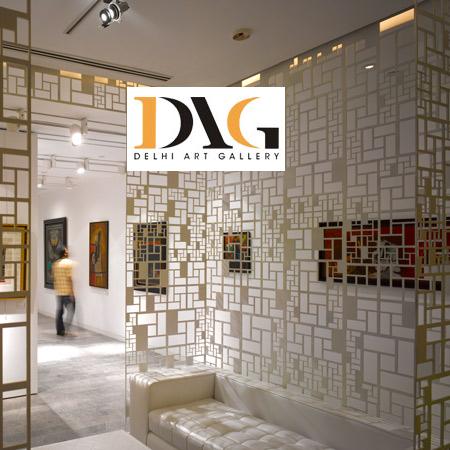
 (Delhi Art Gallery)

If so what are these galleries going to do? To find an answer let me go to the opening example of the STD booths and mobile phones. As I said before, the people have not stopped communicating. They have started using new ways of communicating. Similarly, people have not stopped buying art or seeing art. Nor have the artists stopped making art. Things are happening as usual. But to make the economic activities stronger and faster, the galleries should find new strategies. The art scene itself has found new strategies and unfortunately the galleries have failed to catch up with these changes. People are looking at art as their desire to have something meaningful and beautiful will never cease to exist. But they are looking at different venues. They are looking at art in the virtual space; they are looking at the art in the social media. Via these new platforms, the buyers and collectors are coming into direct contact with the artists. The works are seen online and if need be, the buyers and collectors do not hesitate to travel to the studios of the artists or when they are showing in artists initiated exhibitions. They look at the auction results and buy from the secondary market. When they feel the need to collect art, they even get a few of the artists in camps. Industrial houses are still buying contemporary art via direct commissioning. Bulk buying is still done. More than before, the artists are at peace with themselves for there is no pressure on them from the greedy gallerists. In the meanwhile, galleries are getting closed.

Is there any future of galleries in India? I say there is but in an absolutely different way. A gallery in India would thrive only when it behaves absolutely like a sophisticated car show room. In a car show room, the owner would never come down to explain why this particular brand is good or important. The client relationship is handled by experts educated in client relations. An engineer is employed to tell what exactly the engine does. A wellness manager is employed to take care of the client needs. The brochures are written by the experts. The front desks are managed by smart young men and women. You get a complete experience when you come out of a car show room whether you buy one or not. Now you just imagine a contemporary art gallery. When was the last time someone greeted with you a smile when you visited an exhibition? I don’t say much, you make your own mental comparisons. I would say only this much, the collapse of Indian galleries are caused by gallery owners who instead of becoming good sellers became the ‘makers of aesthetic choices’.  They killed the experts in the field; art historians, critics, art writers, business experts, trained front desk handlers, archivists and so on. India has moved on. Indian art collectors have moved on. But the galleries stand where they have been thinking that their little spaces are the cradles of a civilization. Delusion has never been so strong before.


Monday, April 4, 2016

New Fat Jogger


On the final round of my daily jog

He stops me, curiosity in his eyes

“You look old but not that too old

Yet you look fit with a good gait,”

Says he with some smile and hope

“Not so fit, yet I try to do my bit

To keep things in one place,” say I

He moves his huge frame to side

Makes way for me to pass ahead

“Would you help me to run a round?”

Asks he again, forcing me to doubt

His intentions, yet I give him my ears

“Want to shed it,” says he showing

Me his growing paunch all around

“Like you,” he pants, I cover shyness

“Breath slow but steady, I tell him

Shut up your mouth and run on”

He now hangs all hopes in his pursed lips

And throws his extra weight all around

Each time he pushes himself up to me

He looks at me like a child seeking approval

My aching legs plough the track heavy

Already I know this cannot be too long

But I run all the way keeping pain aside

For at least he could feel better tonight.