Saturday, September 18, 2021

Anpu Varkey Deals with Nostalgia in a Graphic Novel Form


(Anpu Varkey)


If nostalgia has a graphic novel form it is here in Anpu Varkey’s 2019 self-published book titled ‘Summer’s Children.’ Truffaut-esque in nature the protagonists in this graphic novel are a pair of siblings who spend a summer’s day in an extremely ‘meaningful’ fashion. Like a pair of curious puppies they move around their home looking for sensory experiences and ultimate fun. Anpu perhaps transposes her remembered childhood in a sylvan rural scape in Kerala on to these siblings and in a way becomes a witness of their relentless merry making. It could be even a story that she has imagined for her lost childhood.


 (Summer's Children, a Graphic Novel by Anpu Varkey)


Anpu Varkey, an international known street artist who likes to work on the mammoth sized public murals all alone, turning herself into a live brush perching on the moving cranes and hanging from ropes and pulleys, in her graphic novels too prefers to see the world from those high and weird angles. Her style in the graphic novels is different from what she employs while working on the street art pieces. The public art works and their styles are often determined by the spaces available and the structures are inherently intricate on which the artists hardly have any hold. But Anpu Varkey and the artists of her ilk tame these impossible spaces with their sense of images, scale and style.


 (From Summer's Children)


Graphic novels being intimate expressions of an artist who is adept in storytelling demand a different approach mainly because of the human scale as the given surface of expression. There is no need to scale up the images and the distortions demanded by the huge walls and the perspective distances are of a different nature when it comes to the graphic novel. Like a ballerina who is dexterous enough to express both tragedies in grand movements and comedies in lighter flights of the limbs Anpu Varkey too moves her brushes different here in the graphic novel.


(From Summer's Children)


The siblings are like Esther and Rahel, the famous and controversial protagonists in the novel, ‘God of Small Things’ by Arundhati Roy. In fact like Arundhati, Anpu also shares the same local flavor in the rendering of the story. The siblings are so close to each other that they not only resemble in form but also in gender. Though there are no characteristic highlights that differentiate the siblings in terms of gender, one is tend to feel that the author deliberately makes their genders fluid; a sort of hermaphrodites who could be either male or female. One has a knicker with a pair of suspenders and the other doesn’t have it. Do the suspenders indicate the gender of the boy while the other is left to a fluid zone?


(From Summer's Children)


The question is relevant only when we see the graphic novel as an autobiographical tour of the artist/author herself. Keeping the author out of the narrative (which is almost an impossible task) one could perhaps see them as two boys snooping around their home and neighborhood. The story opens with the smell of a jackfruit. Oh yes, in a graphic novel how does one smell the fragrance of a fruit? Anpu has an answer; she starts off with the extreme close up of something which as we pull out, I mean turn the pages, comes to be seen as a jackfruit. Then it is cut open to show the sugary golden fruits and you do smell and see the golden yellow though these are pictures done in black and white. Though the images around the children are done realistically, the children have a painterly fluidity.


(From Summer's Children) 


Constant form shifters they are like the mischief makers in a Truffaut’s movie, they are seen anywhere and everywhere in the village, emulating the acts of the grown up in an imaginary world while the nature goes on nonchalantly. The children imagine all sorts of pleasures and dangers, yet they are unstoppable. Anpu hardly portrays the grownups in the world of children; there is the presence of a grand old lady at the cocoa tree or the hen’s pen or the man who opens the tender coconut for the children. They are like Apu and Durga in Pather Panchali; the only difference is that they don’t wish to travel into the unknown world. The world of imagination ignited by the lascivious greenery around is more than enough for them.


 (From Summer's Children)


Anpu Varkey is an extremely sensitive artist and an adept storyteller as she winds up the story with the children looking wistfully at the night sky filled with stars and suddenly Anpu replicates the world of wonderful lights in the closer to home realities with the chimney light and the light of the glow worm. Lying next to the mother or grandmother the children listen to two musical renditions; of the kri kri sounds of the crickets hiding the fields, enjoying their nocturnal flourish and of the story of a jackal told by the mother in a sing song voice. Sleep creeps into their eyes of the children as they try to see the jackal prowling by and Anpu closes the story taking the viewers/readers outside to show that a cunning fox is already carrying a hen away.


(From Summer's Children)

Graphic novels are the latest fad among the new readers though their favorite styles come from the Japanese Manga and Anime. Anpu Varkey stands differently like Marjari Satrapi, Joe Sacco and Nicholas Wild. Anpu tells the story of a village through a pair of siblings and she doesn’t turn the graphic novel into the more text based productions like Jeff Kinney or Bill Waterson. Anpu in this work remains more provincial and this provincial narrative has already got an international traction through the new genre of graphic novels. Let’s wait for Anpu’s next graphic novel which perhaps would speak of her journey as a street artist.


-JohnyML

Tuesday, August 24, 2021

Parade of Our Own Collective Uncertainties: Paintings by Apurba Nandi


(Artist Apurba Nandi)


The timing cannot be better; Apurba Nandi’s solo exhibition titled ‘A Parade of Uncertain Destinations’ at Delhi’s Palette Art Gallery is right there at a historical juncture. With the images of the faceless and hapless people falling off from the landing gears of the rescue flights in the skies of Afghanistan fresh in memory, the faceless masses that mill around and about in pre-destined patterns in Nandi’s paintings look like fresh wounds that refuse to heal. These images of the human beings dig further into our collective memory that has by now reconciled with the atrocities meted out to the urban poor who were made to flee while the authorities asked them to ‘stay where they were’ during the pandemic lockdown days.


(Painting by Nandi)


Meaning of a work of art largely depends on the readerly/viewerly intentions. One could take the works of Nandi for happy abstractions made out of human-like pigments a la late Chuck Close. Someone else could also take them for politicized citizenry invested with constitutional rights and protections that it assures. The age old theory of urban spaces being a flux where identities merge creating ‘unmarked’ bodies may not hold much water these days, especially after the onset of the pandemic that has changed urbans spaces more controlled, regimented, marked out, surveilled and if need be subjugated as per the needs of the authoritarian governments.


(Painting by Nandi)

In Nandi, these human parades occur as a result of the lockdown woes. These works, I believe, embody an unresolvable helplessness of the artists’ destiny, which is not a collective destiny at all as common pursuits towards a single goal is never imagined or achieved through creative works but for the time being artists cannot but think of the human redemption from this unavoidable viral trap. The fate that has fallen upon the milling masses with whom the identification cannot go beyond the level of sympathizing through empathetic visualization, which is ironically a distant and still distancing way of engagement with the perils that are experienced by someone else, is never the fate of the artists in general. It is where the helplessness of the artists comes in; they could register the pain in their own terms or just be the callous witnesses.


(Painting by Apurba Nandi) 


Whose parade are we witnessing while looking at the largescale paintings of Nandi displayed on the walls of a gallery? And whose uncertain destinies are they encapsulate in precise and fragmented frames? Artist here cannot be the documenter of the individual self of those people who have been rendered abstract not through the enforcement of state cruelties but through the very experience of them on the roads, dockyards, airstrips, fences and so on conveyed through mediatized images. These images in turn become another experience in itself that helps the artists and the people in general to visualize them in their given conditions. It is a complex process of experiential cognition, like a mirrored image of an affliction that could be seen in real if the viewer turns his or her head towards the other side.


 (Painting by Nandi)


The reluctance that we as a survived lot feel collectively to look at the other side helps us to continue with our conscientious existence even in the midst of continuing atrocities. True, the uncertainty of the uncertain masses who have suddenly become intermediary human beings who could be received or rejected elsewhere cannot be given a concrete expression and if one does so it can maximum become press photographs that speak directly and move the viewers to unimaginable pain. Here art does something else; it mitigates the pain, sublimates the reality, reorganize the living human beings into acceptable patterns that not only edify one with their ‘social and art history’ but also entertain as affable art objects.


 (Painting by Nandi)


In that sense Nandi cannot do anything other than transform the human suffering into an affordable visual that could perhaps in the coming years speak of the sufferings of the human lot in a particular time in history, without really feeling the pain instead could make others exclaim about the abilities of a work of art to evoke history and the perils that it contains. This parade is an abstraction of the other and ironically the other is not the disenfranchised, dispossessed and disowned human beings but the artistic feelings for them, which I feel is the responsibility of art because art cannot do anything to assure a definite destination to these people. Art and artists can only display their own inability to do anything towards their rehabilitation. Nandi’s paintings are the parades of our own collective lack of empathy or sympathy; our own callousness is seen queueing up; these are mirrors held unto the viewers.


(Painting by Nandi)

Art historically speaking, Nandi’s works evoke the memories of the early works of N.S.Harsha, who has done multitudes of people engaged in common activity like eating or sleeping. Through the repetition, the images are caused to melt and become a feeling, at times a feeling of absurdity. Nandi’s works, though they do not follow the color scheme or similar patterns that Harsha had used, still goad the viewers to connect with a contemporary master artist like N.S.Harsha. That is not a problem at all because what I emphasis while saying this is art’s inescapable indebtedness to its own past. Nandi subconsciously pays tribute to that past of our art.


-JohnyML


Thursday, June 17, 2021

Auctioning an Invisible Sculpture

 Immateriality of a Work of Art and its Quirky Operation in Contemporary Art History


(Salvatore Garau)


“Salvatore Garau, a 67-year-old Italian artist, auctioned an “immaterial sculpture” — as the artwork does not exist — for $18,300 (Rs 13,33,459.70).” -Indian Express
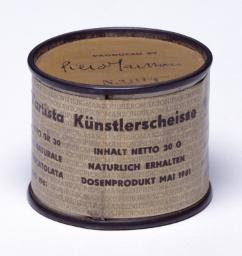
I am not surprised. I am only curious why Italian artists like Salvatore Garau get such ideas. Garau is not the first person to do such non-existent work. In 1960, Piero Manzoni had created his own kind of immaterial sculpture or a sort of non-existing art that commands respect on the one hand and monetary benefit on the other. Manzoni was acting upon the fact of reducing anything into a fetish that could have been easily commoditized. What it needed was simply the signature of the artist. The signature validates art and validated art fetches money. When the validation is not found, the seller makes provenance to validate all his or her claims. That is the story of art market in nutshell.


(Sculpture by Garau)

You could sell a non-existing work of art provided you, as an artist, have enough conviction on what you have done and the ability to convince others. Do not worry much about the buyers because any way they come to buy with this total submission of disbelief at the altar of market. But one should be wary of the critics and skeptical viewers. They may, more often than not, have the tendency of questioning it. They could beat you up if you are too pushy or less of conviction. They have beaten up Marina Abromovic and Ulay in one of their performances.


When I say Garau is not the only one, Italy has produced artists like Maurizio Cattelan who proudly claims that he has never even touched a note pad to make his work of art. Yes, I said note pad, either to scribble down his ideas or make a cursory drawing which could be handed over to the craftsman or to the engineer so that they could make it into its materialist form. Cattelan reiterates that he always got his works done only through oral communication; a sort of expressing his desires to the fabricator and waiting for the results. If the frequency levels are right anybody could get their works done from a good craftsperson.


When it came to Manzoni, making immaterial art, he found his body secretions and breath more useful than any other material. The sheer feeling of abject and disgust that his works evoked, Manzoni thought, would keep his buyers away. Contrary to his belief they were bought and kept in the museums. He even signed the back of the women who would willingly become his ‘living/live sculptures’. In 1960 he breathed into balloons and singed the planks on which the balloons were placed. He called ‘Artist’s Breath’. He even made a work with his own turd and called it, ‘Artist’s Shit’.


Italian artists were perhaps over reacting to the fact that everything about art was being commodified in the US market. The age old resentment of Italy being pushed out of the status of art center, first losing to Paris and then to New York must have made it react ferociously, or even playfully. Arte Povera was initiated by Michelangelo Pistoletto, who thought of making art using the basest of base materials, including trash. Catalan followed the suit and now we have another in the persona of Garau. Americans were also not behind. Sol Lewitt asked the museums to ‘make’ his works on the walls by sending instructions from the US.


British artist Martin Creed, surprised the art world by bagging the 2001 Turner Prize for his work Light on and Off, exhibited previously at the Tate Modern in 2000 and the award went into controversy for the people had been scandalized to see one of the empty halls of the Tate Modern, devoid of even one single work of art but a light bulb going on and off in regular intervals. Even the tabloids picked up the issue, resulting into the making of artist so popular and dear to the British public. You need not always do a good painting to be a national award winning artist. He even shocked the people by putting a blob of blu tack on the wall, arguing that it was the adhesive that held the works on the walls so it should get a chance to be a work of art itself.


I am not surprised to see Garau auctioning off his non-existent work of art. But I am surprised to see people lapping up the news within total willing suspension of disbelief. This had happened also with the Sotheby’s Auction in 2018 when a Banksy work auto-shredded during the time of it being auctioned for $1.4 million. People around the act gasped or the acted so but the people all over the world were amused. They must have felt that once an while a work of art should also go into shredder, irrespective of it fetching money or not. Italians however seems to lead the pack when it comes to atrocious innovations in art making and auctioning them off. Or are they still behind the underground art of China where the artists allegedly chop of human bodies and fetus and even engage in necromancy?
-JohnyML

Tuesday, May 4, 2021

Loss of Decisive Moments or its Endless Continuity: About the Lack of Arresting Pictures from the fields of Death, Despair and Electoral Victories

Deserted streets from all over the world at a given had caught the imagination of the Reuters photographers and the series had become a rage and motivated many other photographers to venture out into the streets and click similar ones. The pictures were eerie in their very appearance but there was a strange beauty to them, a beauty that none had witnessed till then. The undressed virginity of the streets beckoned the human beings who had been locked up for around eight days straight. The photographs were taken on 31st March 2020. Still trying to figure out how to deal with the seclusion imposed on them, human beings were some sort of a living mess without the regular messiness; the cupboards and cutleries remained untouched. Bed lines were not changed. Time slowed down until one could listen to the slow ticking or smooth sailing of the clock hands.


The first wave was photogenic in many ways and there was a constant supply of images from all over the world, especially from India; of laborers vanishing into the remote villages, hapless youngsters getting thrashed by the lawless law enforces and images of uncountable and unbearable suffering and pain. Each picture vied for attention; they shrieked from the pages or screens for our conscience to wake up and do something. Dried rotis scattered all over the railway tracks, blistered feet of young and the old, children walking on their toes on the cruelly melting asphalt roads on the days of merciless Indian summer. Artists safely marooned at homes had many images to bite into and chew too; masked human figures were the mildest of them.


Somehow the second coming of Corona has not provided the world with arresting photographs. Is it because the pandemic is not now orchestrated itself simultaneously and severely in different parts of the world? May be that is the one reason for the lack of impactful images. People dying in the Indian streets, pavements, in front of the failed health care systems did make touching pictures but the images were still isolated in their frames and too scattered within Indian cities to create a solid and focused impact. The funeral pyres burning even on the residential parks and footpaths, the mass cremations and so on were registered for the world by the BBC photographers. An aerial shot of lights; it was the anti-thesis of that day when the megalomaniac Prime Minister had asked the country to light lamps that night for expressing gratitude to the health workers.


Tragedies always do not make good pictures. Prolonged tragedies scarcely make good photographs especially when the decisive points are everywhere, all the time, non-stop. So they make impactful videos and reels, helping television camerapersons to do the needful. Photographs are the static statements of an event whereas video cameras see events as events in its continuity. Or is it the over exposure tragedies through videography that has rendered the photographs of the same event less impactful? I am not sure. I was looking for some interesting photographs from the election campaigns, the winning and losing camps, but could not find any. People were prevented from celebrating the electoral victory considering the pandemic but the photographers were not asked to stay at home. Somehow, none could come up with a good photograph.


Photography is a medium that tells lies to establish a truth but relies on a lot of truth when it wants to establish no lie. News photographers and documentary photographers are destined to capture the perceived reality in aesthetically presentable frames. If that is the case, the perceived reality seems to have turned cold and uninspiring, be it the scenes from the pandemic affected locations or from the victory stands of the election candidates. Most of the thanksgiving photographs issued by the political parties and the victorious candidates are not candid; they are photoshopped and airbrushed images. We are in a time when photographs from the real locations do not look real. They may be look like pictures from wastelands nothing but endless agony in offer. Has death and despair killed the photographable moments? Has victory itself gone into the depths of existence to negotiate with the futility of winning and losing?


-JohnyML

Wednesday, April 28, 2021

Art Thoughts 3. Importance of Cultivating Friends in Media


Cultivate friends in media and if you are an artist it is a pre-requisite. Do not wait for the art historians and critics whose nose are up in the air, to come and take a cursory glance before they go back to their dens to pick up their pens or log into their laptops and jab in the words and ideas about you and your works, stuff you have not even thought about or dreamt of and come up with a critique of the art work that you have taken a few months or a few years to create, and demolish it in one go or praise to the heavens where your work in fact do not have any space as you yourself are sure about but have already found its place in the hell of discourse down there on there on the earth itself. So cultivate friends in media who talk about you and your works the way the bees do when they come to the flowers. Don’t you know the bees do not do anything to the flowers nor do the change the fragrance of the pollens; they just carry and disseminate elsewhere.


Do you think I am cynical when I say this? No, I am not cynical but am trying to be as sincere as possible, as vehement as a critic who could muster up courage to tell the truth. A critic or a historian is not going to help you immediately, here and now. Their job is there in the future and they are like the carriers of a certain gene along the streams of thoughts and bloods, striving to make them relevant at some point in time. Think of it. Maximum that could become revelations gained as you pour into the toms in real time or scroll up or down in the virtual time. Minimum is that they could become the provenance in some auction where works literally go under the hammer of economics and get encased in super strong cases that would in turn go into the vaults or walls till they are called up again to do the service to economics. But people from media are not like that. Aha, they talk about you and your works, exactly the way you want and the way you desire.


Oh dear media men and women who come to the places where works of art displayed, take your seat at the reception or art the café out there, go through the press material that you hold dear as your life line, and much over the goodies that you have just been given and hark upon the words that the artists have in reserve. You may hear an odd word that sounds so high and mighty among the simple talks that the artists usually have. You run to the urinal first to ease yourself once you are back in the office, then to the online thesaurus so that you could discern what is said and what is unsaid in the press release. You have a tendency to copy to repeat the press release so it is always good for the readers, no matter the daily that they subscribe most of the have the same material on art. And I do not make this condescending comment on the journos. Some of them are so good that they kick the press release into the place where it belongs, a dust bin and take out their smartphones and play the record in which they have registered your seemingly intelligent rambling.


See artists, unlike the critics, these journalists are gifted with readable vocabulary and they know how to employ them in the right contexts and eke out the right responses from people. And remember, they are so good at cooking up things when it comes to making up a feature that explains the life, times and works of an artist. Any artist invariably starts off from a remote village where his father was a communist and mother, an illiterate. Then he goes to the big town to study art because he was inspired by a local school teacher. He gave him some books and some names and he is hooked. Good they were not crude pedophiles. After the education you to the city to struggle and you make it and you come back to the village. All what you want to do with your life is to uplift your state into the heavens of international art. If you were born in a rich family and had the luck to study abroad, the story is always like how you have spent all your time in the museums and galleries and got a head start with good art. Stories are made for you neatly by the media friends and you need them. If you don’t have friends in media you are as good as dead.


-JohnyML

Tuesday, April 27, 2021

Art Thoughts 2


Artists of the world wake up! You have a lot to lose, not just chains. In fact there are no chains around you no. If you think you have one, then you must be hallucinating. The governments are no longer interested in your paintings or sculptures or any other work of art because your artistic acts no longer matter to the governments. They have become so apathetic and ruthless therefore they are not going to chain you. Governments are only concerned about facilitating the corporations. The corporations are concerned about manipulating big data. Data, as they say, is the new crude. In the long run the majority is going to be irrelevant in the game. Artists are a lot that faces the threat of irrelevancy. Why so, let me explain.


Creating art is one thing and making money out of it in the market is another thing, so says Jasper Johns. And do we need a Jasper Johns to tell that now? He had said it long back before many of you were born even. The current market is all about the object experience of art and its conversion into monetary value. But of late, we are talking about the NFTs- the Non-Fungible Tokens. It may sound so good to the ears of the artists. Your work cannot be replicated once the NFT is here. You are the unique creator and your creation has been transported into the digital realm, with a virgin code, so pristine, and the kind of one that goes back into the previous state once the monetization with it is done. But in the long run, it looks like there is a problem.


NFT talks about the digital piece even without the original one; original is perishable. At times it is forcibly destroyed depending on the nature of transaction. Next is nothing but an NFT whose original never existed! Who is then the maker of it? It is a simple question with a simple answer. The AI could do it for the market as you are made obsolete by the market itself. A work of art made to order to serve a particular economic purpose. It is projected that in the near future the number of global population that understands economics operations in the digital realm will be zero. You cannot fight against a system that you don’t understand.


So what are you going to do with your art and artistic skills? Your art could give you some sort of existential relevancy for the time being. But then even if you are a professional artist, your services are no longer needed. What is the point then in continuing with something that doesn’t create any value in the market? You may find some aesthetical value within your own limited functional society. But that society also would go for a sea change sooner than later.


When AI can replace HI (human intelligence), and if it happens in a decade or so what will be the role of the artists in the society? I am no doomsday prophet. But there are chances of art becoming obsolete or turning into some sort of a primitive human act. May be it is time that artists wake up and think about the present day deeply and derive strategies from a world that keeps evolving in terms of info-technology and bio-technology, two factors that speed up change in unprecedented and unpremeditated ways.


-JohnyML

Art Thoughts 1

Bad artists tend to look for and talk about good art and often they are excruciatingly right in their findings and appreciation whereas good artists always tend to look for bad art why because in bad art lies a lot of elements that given a chance could bloom into good art. Interestingly enough good artists are wonderfully adept in picking up those little good elements from bad art and giving them a fantastic flourish in their own works. What does it say? Bad artists in their search become scavengers for good art and are enamored by its ability to enthrall and also slightly put off by their own inability to make use of those elements from the good art to better their own works. But the good artists who work on the elements from the bad art further the very idea of art making. In a way bad art is what triggers good art and there is a strong connection between the good and bad art as well as artists. The difference between them is fundamental though. Bad artists appreciate the living good artists but the living good artists are stingy in returning their appreciation. So they reserve their good words only for the dead and well documented bad artists.

-JohnyML