Saturday, May 5, 2012

The Curious Case of Subodh Gupta

(Subodh Gupta)


Delhi based photography artist and my dear friend Anurag Sharma asks me, after reading my take on the tendency of artists copying themselves, about Subodh Gupta. He asks whether Subodh’s works that have kitchen utensils as their major component could be called ‘self repetitive’ works. Close to the heel of this question, my former student and artist Vaibhav Sharma writes to me a very long mail to tell me how he looks at the whole issue of artists’ tendency to be self repetitive. In this mail he takes up Jitish Kallat’s ‘bone’ works as a point of reference and debates by saying that couldn’t it be a sort of ingenuity that helps the artist to do make different forms and shapes through the repetitive use of a catchy material.

Perhaps I have been always waiting for these questions. If anyone raises the issue of installation, style and repetition in the context of Indian contemporary art context, can there be a situation that does not invite a question on Subodh Gupta or Jitish Kallat? There cannot be one. Many, in their circles must be asking these questions quite loud and harsh and must be debating it with due vehemence and clarity. However, many would not dare to ask these questions because as these artists have been transported to certain levels of godliness vis-a-vis our art scene, very few dare to question them in public. It is not just about ‘questioning’ them in a negative sense, but raising questions so that the artists feel the responsibility to answer those questions, of course in a responsible fashion. I am happy for these questions put to me because it tells the artists indirectly that ‘Look, here there are people who are watching you. You just cannot get away with anything that you do.’

To anybody who looks at the recent works of Subodh Gupta, it would be quite natural to think that Subodh repeats himself, not only in methods and materials but also in ideas. It is very easy to hurl an allegation and step back. But we need to address the contexts in which Subodh, consciously or sub-consciously, feels the pressure to repeat his own methods and materials. To address this issue we need to look at the creative practice of Subodh in its entirety. Also we need to see how Subodh as an artist evolved during the last two decades as an artist whose name rings familiar when uttered even in the international art circles.

(Subodh Gupta giving a lecture)

I remember Subodh giving an interview to some foreign corresponded a few years back (which is available in youtube and you may check by youtubing Subodh Gupta there) where speaks of his childhood and his encounters with Indian mythology through films and other popular cultural forms. This is a pointer to understand Subodh’s personality formation and the ways of his thinking. Though the comment might be a momentary response to a question asked to him by a foreigner in a foreign location surrounded by not so familiar people, the sudden establishment of his connection with Indian mythology should be taken both as an anchor of his cultural outlook and as a context of his creative understanding.

Subodh comes from a Hindu family and milieu soaked in Hindu mythology. When you are a child you tend to believe in demons, angels, gods and their various incarnations. You believe in the largeness of life and the life before and beyond life. You develop this idea of magnanimity through the medium of your innocent imagination.  You don’t differentiate much between you and the mythical characters. A young child could speak to his invisible companions because those invisible presences are so real for him. As he grows up he loses this sense of reality and is replaced by a strong sense of material realism. You grow sceptical and negate the existence of gods and demons. You develop your social thinking that leads you to a political thinking. You become so frustrated and disturbed by the existing material realities and you feel like breaking everything down and creating everything new. But soon you realize your incapability of doing so. Shamed by your own impotence, you leave your place and walk to another land in order to gain strength and visibility so that you could go back and facilitate changes in your own place.

(Subodh Gupta with one of his works)

You are political till you have this idea of changing. Self perpetuation of the existing reality is a stagnated situation and you want to change it. Subodh Gupta comes to Delhi with this fire in his mind. His early works (including the theatre and films he has acted in) have the fire of a young man who wants to change his reality. Like anybody who comes to an urban centre where opportunities beckon you like the displayed dishes in a sweet shop. Only you need to gather enough money and momentum to buy those sweets. Opportunities are abundant. Subodh also had seen these opportunities and he knew that he needed to find out ways to make use of those opportunities. And opportunities came through contacts and affiliations.

In a performance work he did during the initial years of Khoj in late 1990s Subodh lied down on a clearing covered all over with mud. Before doing that he had created a huge hut out of dried cow dung cake. This mud/sun bath and cow dung cake hut that reminded one of the domes of a nuclear plant was interesting because this was how Subodh was introducing his past and its present and the huge possibilities to a larger audience in Delhi. It brought the mythological affiliations he had besides the rural milieu within which he had grown up. This work had set the tone of Subodh’s future works. And that’s why when his major solo show happened with the Nature Morte gallery in Delhi, he could bring the lathis, bicycles, milk cans and so on casted in aluminium and bronze.

(Work by Subodh Gupta)

As far as Subodh was concerned at that particular juncture of success in his creative life in Delhi, he was coming out as a political artist with a sheer sense of cynicism towards the aesthetic object. This Bihar rural boy with no linguistic skills (Subodh’s speeches for the scholarly audience could be compared to the speeches of Lalu Prasad Yadav, former Bihar Chief Minister and Central Railway Minister, who had given lectures in high end institutes like IITs and IIMs regarding the topic of effective management after his successful stint as the central Railway Minister) was responding to the urban public’s taste in a critical way by placing something totally non-palatable before them in highly solidified sculptural forms. The lathis (long sticks) that he used were emblematic of the violence as well as the quotidian like of a rural Bihari. The milk cans and cycles were the daily reality. How they could be brought into the plush houses of the art collectors. Subodh was successful in getting even his cow dung cake hut into the dining room of one of the richest collectors in India. How could one afford to have cow dung cakes in a posh dining room when cow dung cake cooking is considered to be quite ‘vernie’ and ‘desi’ for the rich and the sophisticated?

Making the rich and the sophisticated to buy the rural Biharis’ lota (a metal pot that is used both for drinking water from and washing bottom after toilet use)  and to go gaga over their latest buy of Subodh Gupta was a critical ploy used by Subodh Gupta in late 1990s. His political aesthetics became quite handy as he could find not only lathis and cycles and many other things from his repository of images from the rural life and imaginations. Bringing the urban middle class and all his vagaries and cleverness to survive in the big bad world, and also the ultimate survival of the politicians in this country called India, Subodh meticulously chose the images like Bajaj Scooter (the pre-globalized Indian’s ultimate dream of mobility), and the Ambassador car (the arrogance of a nationalized economy embodied in the body of a car which could masquerade both as a powerful symbol of political supremacy and an ordinary man’s taxi) for his sculptural renditions. And it was first time in India that someone casts the whole object into another medium. A car could be made in a factory but what about a car that could be casted in a factory and render it completely useless as a car and elevate into the level of an aesthetic object? Subodh did it and it was quite political move in art.

(Ambassador- Subodh Gupta)

But this was that juncture when Subodh slowly turns into a victim of the revenge of the urban art collectors who strategically makes him into a celebrity of sorts. Though one, with the increased visibility naturally turn into a celebrity, the mechanizations behind this image boosting was a result of the investment point that the rich and powerful had seen in Subodh at that point of time. But Subodh was a rebel. He shirked off such attributed glamour by turning his attention to the plights of the NRIs in general and the NRBs in particular (Non resident Indians and Non Resident Biharis). Ambassador cars that ply as taxis near the airports, the luggage tied on their carriers, the baggage trolleys and so on became a part of Subodh’s paintings and sculptures at this point. With this introduction of image ensemble in his works, Subodh was talking about the labor export and migration of the Biharis since the time of colonialism. He knew that poverty, illiteracy, hostile climates, bad governance, feudalism, casteism and so on had sent the Biharis as indentured labours in foreign farms. Subodh, consciously or sub-consciously brought all those discourses in his art. I don’t think it was addressed fiercely by the Indian critics and curators as they were more interested in Subodh as a celebrity than a politically inclined artist.

From here Subodh turns his attention to the utensils. It is here that I would like to underline Subodh’s upbringing in a Bihari Hindu household and in the milieu of mythologies. In mythologies kitchen utensils play a great role. It is totally connected with food and satisfaction. Most of my readers must be knowing the story of Akshaya Patram (the vessel that could bring forth any amount of food. Krishna eats a grain of rice from it and sends all the visitors full and happy). If you visit any rural household one could see the way the people give respect to their utensils. They keep it clean and arranged. They literally do installation art with their vessels and utensils. A society that lives a hand to mouth existence, kitchen utensils are very important. Even the pavement dwellers keep their utensils arranged and clean. In the Indian dowry practice, especially amongst the middle class and lower middle class sending the bride away to her bridegroom’s house will not be complete affair if there are not enough kitchen utensils in her dowry package.

(Painting by Subodh Gupta)

Subodh was trying to bring all these experiences in his works when he was taking up utensils as his dominant imagery. He used chimtas, vessel racks, huge eating plates and so many of their permutations and combinations. Even he could develop a whole city on the move out of vessels and motor mechanism. It was fine till then. I have feeling that when you reach some stage of your glory, you tend to perpetuate the same glory. You become worried about your own status. Then you need to replicate the same situation again and again. Subodh seems to have fallen victim to this idea of perpetuation of existing situation, which he was completely against, when he came to Delhi first time. Now he realizes that he is Subodh Gupta brand and the brand needs the brand identification marks. The utensils have become the byword for his brand value.

(Spirit Eaters-Performance organized by Subodh Gupta)

I should explain why and how Subodh has lost his political edge: When he was introducing the quotidian materials with sufficient cynicism, he was aspiring for the changes that he could bring forth in the society, at least to his own society through a cultural discourse. For that he wanted to remain terribly political but cleverly subtle on the expressions of the same. This strategy worked well for him. But when he realized at some stage that he could replicate and magnify the already saturated images not only in his memory but also in the public memory, he lost his political edge. Now it is like a play. Give him anything he could replicate them with utensils welded together. It is like someone practicing juggling. First you start with two balls and then you increase the number. You get some kind of fun out of doing it. But a juggler muses the public only up to certain extent because they would move on as other spectacles in a carnival or mela appear before them.

(Line of Control- Subodh Gupta)

Postscript: You may ask me then what about Christo who covered objects and cars and then Reichstag of Germany. I have the answer. Christo idea of packaging came as a response to the packaging culture of the west. It was sort of reaction against the commoditiy fetish-ism of the society. But then he wanted to cover the ‘un-coverable’. German parliament, the seat of power was considered to be beyond all creative and critical interventions despite the cruel histories involved with it. Christo fought a legal war with the government and that lasted for almost twelve years. Finally he could cover it. A work of art transcends itself into a political dialogue when the artist consciously does it. Of late, Subodh has started attempting at food and waste as a concept. But orgy of the rich happens often on the waste of their own richness including food. Subodh’s critique of the same through the large scale paintings of unwashed vessels and the eating performance does not turn effective mainly because today Subodh’s personality is considered to be closely connected to that orgy culture. Subodh needs to take a sabbatical as even his negation of the very aspect of paintings through bronze casting the reverse side of canvases seems to be falling only in the zone of spectacle and juggling in the carnival. Subodh Gupta should sit under a Bodhi Tree. Perhaps he too wants it. That’s why recently he did a  ‘bodhi tree’ of utensils.


Friday, May 4, 2012

Does An Artist Copy Him/Herself?

The Spill by Subodh Gupta


An artist friend of mine, after reading the answers regarding the questions on Installation Art and Style raised by Vineesh Vijayan, asked another interesting question. Though she does not want to be named here she has a special request for me that I should answer her question. So I quote her question first and then try to answer it. It goes like this: There are some artists who repeat themselves; they become so addicted to their own works and do not look elsewhere for inspiration or influence. Is that a problem?

An artist copying another artist formally, technically or conceptually is an act plagiarism. There is a difference between plagiarism and reference. When you acknowledge the source of your image or statement, it becomes a reference, while you hide the source and present it as your own, it becomes plagiarism. Remember, even if you feel that an image that you have lifted from obscure part of the world and think that none will come to know about it, you will be proven wrong, if not today, tomorrow because we are living in an image saturated world. This innocent ‘lifting’ of image was quite a rampant practice during the hay days of mediatic realism aka photorealism. There used to be embarrassing moments during the art openings as people get to see some image used in the same way by two different artists who also differ in their stature and reach. Artists used to have special folders in their computers and their sophisticated cell phones that contained the ‘original’ images that their close friends were working on at that time. This used to be a cruel time pass amongst artists.

(The Kiss by Rodin)

I will tell you a story. An artist did a sculpture that showed a mule being hurled up in the air thanks to the weight of the load that it was pulling. Some sort of steadiness and stiffness was infused in the modelling of the mule in its posture of being suspended in the air. Soon his friends worked an extra shift to find out the original image of reference and it was from some Middle East artist. Slowly, our artist also came to know that his friends too were having the image of his reference. So while exhibiting the work, for a change he laid the mule down on the floor rather than hurling it up in the air. It worked well but after a few seconds of viewing one thought why the mule was so stiff while lying on the floor; it looked like a frozen corpse straight from a cold storage. There were hush-hush talks everywhere. But as you know the modelling of the mule was done on a different context and the way it got displayed was different.

I know I have digressed a bit here. Let me come to the point. To answer my friend’s question, I would consider the material and spiritual circumstances that facilitate the act of copying oneself. An artist copies his or her own works in the following circumstances. First of all sculptures, graphic prints, digital works, photographs, videos and so on could be done on limited editions. In these genres the artists deliberately allow making multiples of the same work. However, the question of originality does not arise here. Though technically speaking we could say that A or B was the ‘original’ and the rest are the editions, we cannot say for sure that which one copies the other. There is an aspect of simulacrum involved in it- a situation that facilitates copies without original. Technically, again we could say that the original is the mother mould/etching plate/raw file and so on. Here though artist ‘copies’ his works within the ethics of ‘copying’, it is not ‘copying’ him/herself.

(Narcissus by Caravaggio)

Secondly, artists copy their own works or works that look very similar to the other because of some sort of narcissism. Artists, irrespective of their mediums, are narcissists. They like to see certain aspects of their works repeated in most of their works. At times, they repeat the same image, at times they repeat the same concept and at other times they repeat certain ‘signs’ which could signify the presence of the author. Here the artist makes a replication of his or her own self through these acts. We could say that artists are intensely in love with each other at times verging into pathological modes, and they tend to repeat themselves, which obviously is a trap if not handled carefully.

The third situation is a sort of desperation and dissatisfaction. Artists are great perfectionists. They could be shabby in appearance but like Hamlet’s madness, their shabbiness too is methodical. They want their works to be perfect. And each time they do a work, a sort of repletion happens. They want it to be pushed more and more towards this abstract notion of perfection. It stems from the feeling that their works are not expressive enough to say what they have been trying to say through it. This dissatisfaction could lead to self repetition.

(A scene from Nostalgia by Tarkovsky)

The fourth aspect of copying oneself without heeding to the movements elsewhere is sheer nostalgia. When someone feels a lot about the past works and keep revisiting those works and bring back the elements and motifs from the past works, we could say that the artist is a prisoner of his own past. It is not a wrong thing to be attached to one’s own past. But there should be occasions of detaching oneself away from the clutches of the past and intensely live in the present. This artistic present does not mean living in the temporality of present, instead I would say that an artist living in the contemporary times and intensely understanding its nuances developed through historical evolutions. This is a positive nostalgia. That means, one artist could think about a 17th century painter and get inspired and could avoid looking at the contemporary artists for inspiration. Such nostalgia comes as a part of the research that an artist does on his personal level.

The fifth context of self repetition is sheer felicity. For example, I have understood artists like Ramkinkar Baij, Nandlal Bose, Benod Behair Mukherjee, Picasso and many other modernists used to be very passionate sketchers. They kept on sketching things. They go to some places or perhaps to the same place every day and sketch that place or people. It is neither nostalgia nor passion for perfection. It is the artist’s perennial interest in showing his inborn skills in a very natural way. Fish swim in water and birds fly in the air. Swimming and flying are quite natural to them. Birds fly not just for preying. They fly like Jonathan Livingston, the seagull, who fly for sheer joy. The artists who sketch the same place in the same way or with a different passion are like Jonathan Livingston, the seagull. They cannot do without it. Look at the innumerable landscape sketches by Baij or the artist and model series by Picasso. They could not have done without that. This is a kind of self repetition but it is not copying. They open themselves up to a different world by doing it.

(Artist and Model by Picasso)

An artist becoming complacent by copying his own images and shutting himself out of the world of other creativity and influences is a tragedy and farce at the same time. Often artists do repeat themselves because the market wants it to be like that (I have discussed it in my previous blog). If you ask me which kind of self repetition I prefer, I would say I am Jonathan Livingston the Seagull.


Thursday, May 3, 2012

Sexy Styles and Works of Art

(Work by Yinka Shonibare)


Vineesh Vijayan asks: Sir, I have noticed artists getting into certain ‘style’ of works. For example Subodh Gupta works with his utensils and that is his hallmark style. Is it necessary to have a ‘style?’ Or is it a curse? How does a young artist come to have his or her own style? Or how does he or she recognize that this or that is his style? Two years back I attended a camp in Chennai. Artists came and did whatever they do in their studios. Are the established artists afraid of experimenting with various styles? (Vineesh had asked me a question regarding Installation art. To see the answer please refer my previous blog)

This question has come to me in different forms while I go around teaching and lecturing on art. While the young artists strive for arriving at a unique style of their own, the established one continues with their styles. As Vineesh cited in his question, some people take style as a curse and for some others style is an inevitable and indelible mark of personality and genius of the artist. Looking at the history of art, especially that of the contemporary art, I would say that for most of the sensible artist, style is a point of realization and for many others style is a feasible spring board. Let me explain it.

(Vineesh Vijayan)

There is a saying that man is the style. We could say it other way round also. Style is man. A man is recognized for his style; a woman too. At the same time, a style also could be a stand in for someone’s personality and genius. For example, when we see any work that has some kind of resemblance with the cubist style of paintings, we generally say that he is influenced by Picasso. Not that Georges Braque was a lesser figure in Cubism and lacked in his own style, thanks to the proliferation of the idea that cubist style is developed by Picasso and the unprecedented popularity of the images of his works all over the world make people think that cubism is all about the style of Picasso.

I do not say that style is a wrong thing; that’s why I say for many sensible artists, style is a point of realization. When an artist, whether he/she is academically educated or self taught, starts off his career, invariably he comes under the influence of someone. History and tradition makes their presence in the new generation of creative people, irrespective of their field of activities, during these initial influences. Influence is not a bad thing as far as a beginner is concerned. Influence of a particular artist or his style or many artists and their styles, help the artists to test their own creative genius and talent against the historical given. As they progress in their works, slowly they find out what they have been searching for all these years. In this sense, style becomes a path before it becomes a point of realization.

(Pablo Picasso)

Once an artist arrives at that point, though the remnants of the early influences appear here and there as traces, then ideating through materials or methods becomes much easier and it would flow like water. An artist could react to any given situation and the point of realization persists and that leads to the organization of that artistic response to the given situation. This is what makes an artist’s style prominent. Subodh Gupta could utensils to respond to Hunger and wealth alike; that is not a problem. That does not mean that the artist does not have any other mediums or materials available at his disposal. It is not like that. The point of realization makes him or her feel that ‘this is it’. And ‘this’ is capable of addressing and ideating the artistic concerns.

This is not only applicable with the artists who work with physical objects or materials but also with all those artists who work with ideas, concepts and even virtual materials. That’s why if an artist recognizes his point of arrival as archiving, wherever he goes, his idea about that place would be related to archiving. If an artist goes to a country where industries have been closed down thanks to certain reasons, this artist could attempt either documenting the closed factories or documenting the lives of those people who were rendered jobless thanks to these closure of factories. If you look at any artist from any geographical location, you could see how artists going ahead in their creative careers with this awareness of the point of arrival.

(Very Hungry God by Subodh Gupta)

However the flipside of style lies in the demand that a work of art generates in the market. The market is a phenomenon that works through the generation and satisfaction of desire through commodity consumption and amassment of profit. This results into a different social dynamics that generates profit as well as desire. While profit has a lot to do with the actual exchange of commodities and wealth, the desire has a lot to do with the social hierarchies that include peer pressure amongst the rich. When some wealthy person has a work of an artist with a particular style and he keeps it as his price possession to further his wealth and position, his peer group people also desire for the same work or the works that look like that particular one. So there generates an artificial demand for a particular style of work and if the artist falls for it and keeps ‘producing’ that kind of work, there is a huge problem not only of aesthetics but also of ethics comes to take place.

Now, coming to the idea of style as a spring board: We see a set of artists who do not have much of a history in the field, suddenly throw some surprises for the art world with some extravagantly and extraordinarily stylized works. These artists are manufactured artists either by themselves or by a group of people who have vested interest on them or through them. They come up with certain style of work and their first work itself would have all the ‘possible stylistic statements’ which their last work would be having at some time in future. In my opinion, these manufactured artists do not stay in the scene for a long time. They will use their style as a spring board to make an initial leap and after a few experiments they would perish and go out of the scene even without leaving a trace. In that sense, a manufactured style is a short living phenomena.


Wednesday, May 2, 2012

Is Installation Art Still Sexy?

(Vineesh Vijayan at work)


One of my young artist friends in Facebook, Vineesh Vijayan asked me a question. I quote him:  “I have a question. Many artists are doing installations art using perishable materials like paper cups, house hold items, tooth picks, body fluids etc. In one of Vibha Galhotra's installation 'New Cultivars' she used Grass. 

My question is will works made out of this kind of perishable objects have market in Contemporary art Industry ?

How much importance should an artist have to give in choosing right materials to do installations?

I think it is very pertinent to answer these questions. I could have made it a very private dialogue with Vineesh, however I think it is important to share with other friends who perhaps have similar questions but don’t find an opportunity to ask.

(Fountain by Marcel Duchamp)


First of all let me try to define Installation Art. The origin of installation art should be sought somewhere in the second decade of the 20th century (exactly in 1917) when Marcel Duchamp brought in an industrially produced urinal into the context of art and called it a ‘Fountain’. In the same vein, Duchamp attempted a few more works using cycle rim and stool. Also his drawings like ‘The Bride Stripped by Her Bachelors ‘showed the possibilities of installation art. Art historically speaking installation as a genre of art was not formulated theoretically during the first half of the twentieth century.

However, the Cubists and the Dadaists attempted at various ‘assemblages’ though small in scale, which could be called the precursors of installation art. In India, Abanindranath Tagore had done some kind of installations with found objects in 1920s. Installations, if you observe always had found objects or objects that were not included as dignified ‘art materials’ as the major component. The artists put them together in certain ways in a space of their choice in order to evoke some sort of objective realities or a new meaning to the given objects.


(Bull Head by Picasso)


‘Installation’ comes from the word ‘install’. But going beyond the surface meaning of it, we could discern that in the classical or renaissance or even the late 19th century art traditions, the word installation was not used for ‘installing’ works in a given space. Instead, often the words like display or arrangement was used. Installation was strictly affiliated to the establishment of certain machinery or objects within an industrial or militaristic context. By the turbulent 1970s we see the seeping in of the meaning of this word slowly into the art scene.

Governed and controlled by the Western scholarship of art history, we should take this fact for granted that the idea of installation art came from a western aesthetic discourse. After the Second World War, once America regained its prominence over the world through economics and military aggression, notwithstanding the efforts of counter balancing by the then USSR, it could push the idea of commodification of anything and everything in the field of culture through aggressive marketing and militaristic incursions. The artists in the Western world including those from the US were not that happy with the politico-economic and militaristic strategies of the US during 1960s and 70s.

 (Katum Kutum by Abanindranath Tagore)


Dissatisfied by the growing commercialism and commodification of aesthetics, there was an effort to decommodify art by several conceptual artists as well as the politically inclined artists including the feminists. Decommodification demanded a sort of dematerialization. One has to do away with the object-ness of a work of art in order to de-materialize a work of art. At the same time, they had to strip the objects of their commodity possibilities. It was against this backdrop that many artists started using art povera materials (art made out of poor materials) and this was proposed mostly by the Italian artists.

This became a viable alternative for many and artists like Joseph Beuys propagated the very idea of turning anything and everything into art provided it is done with some level of intelligence. They sought perishable materials and unconventional materials in order to produce their works of art which came to be known as installation. Installation art attempted not only at making art using decommodified materials but also it attempted redefining the spaces around it. There was tremendous amount of site specificity attached to the initial experiments on Installation art. Joseph Beuys, Robert Smithson, Carl Andre, Richard Serra, Christo even Gilbert and George and a whole lot of feminist artists including Marina Abromovic (who used her body as a decommodified and defetishized medium) and Mona Hatoum could be cited as the early exponents of installation art using differently perishable mediums.

(The Pack by Joseph Beuys)


Initially installation art was successful in decommodifying aesthetics because the objects used by the artists were not the ‘collectibles’; either they were abominable or they were perishable. But slowly, by 1990s international museums started catering to the idea of installations and by the time the early installation artists have proven their mastery over the new language they had helped to establish. Once turned into masters, these artists were included in the museum shows and displays and even younger artists were commissioned to create new installations. India resisted installations till new millennium by keeping installations out of museums and galleries. But the inevitable commodification of installations happened all over the world as it became a trend in most of the art fairs and biennales.

Contemporary art market/industry has adequately allotted a space for installation art. Any art form becomes commodity when the market co-opts its different into its fold. Or else market would play up this difference for making it a covetable commodity. It often happens after a period of initial resistance. In India we witnessed resistance against installation art throughout the 1990s only to be co-opted by the new millennium. A movement becomes a ‘school’ when it is accepted by the market as well as academies. The street graffiti art today is one of the hot properties in the market thanks to Banksy. He resisted for a long time and finally he too had to succumb to the pressures of the commodity market. Only sanctity that he keeps himself is the anonymity that he has been keeping about his actual personality.

(Work by Banksy)


Installation art made out of perishable objects now demands its own ways of preservation. That’s why Marc Quinn, the British artist famously said that if the refrigeration fails his sculptures made out of frozen blood would become a pool of blood. Joseph Beuys installations made out of found wood, felt and fat are now preserved spending several thousands of dollars. Similarly, the ephemeral and temporal performances and performative installations are now preserved in commodity forms by making them into digital images or prints or movies. Documentation and archiving itself has become a form of art. Isn’t interesting to see a university setting up a post graduation program in performance art, while this art form is one of the most subversive forms of art that negate commodification and negates all sorts of grammar and structure?

The rise of installation art has a lot to do with the advent of technology, interdisciplinary approaches towards aesthetics and global resistance against market, military and political hegemony. The theoretical anchors of installation art should be sought in Walter Benjamin’s ‘Work of Art in the Age of Mechanical Reproduction.’ Structural linguistics and deconstruction along with the notions of death of author contributed to the production of installation art. Counter hegemonic ideologies helped the installation art practices to grow in a big way till they were subsumed by the very same hegemonic powers.

(Reichstag by Christo)


An artist who does installation art is and should be intensely aware of the material that he or she is going to use. Richard Wilson’s installation with crude oil is an interesting example of it. Christo’s use of clothe, Anthony Gormley’s use of iron and clay, Coco Fusco’s use of documents, Hans Haccke’s use of research materials and so on are the outcome of well thought out strategies. But unfortunately today many of our contemporaries use materials because they are just trendy and aesthetically appealing.


Monday, April 30, 2012

Beads of Spirituality; Meet Sajeev and Madhu- Two World Renowned Choreographers

(Vakkom Sajeev and Madhu Gopinath)


Have you ever seen beads breaking off from a string and falling one by one on the ground, galloping happily, going and hiding in the places that you often find difficult to reach? Cinematic imaginations have done this both in speed and slow motions in order to highlight both love and violence. A pair of sensuous parting lips in the medium range shot and slightly out of focus, and in the tight focus a stream of beads falling one after another accompanied by the tickling resonations of sitar strings; that is love or love making. When the same shot set in a different sonic ambience and torrent of beads ends up in a drop of blood, the scene could be an act of violation. Beads are like that.

Cascading beads from an accidently broken string could take you to a different plane of sensation. I would call it a spiritual sensation. That’s what exactly happened when Madhu Gopinath, one of the lead dancers of the Samudra Dance Group from Trivandrum, let his necklace break and the beads spill when he was performing with his identical pair Sajeev Vakkom, an exquisite performer and choreographer at the Tagore Theatre in Chandigarh. I was in the second row from the stage and I could have a better view of the dancers as if I was seeing them caught in a permanent zoom in mode.

The necklace broke and the beads fell one after another, at times tracing out the body contour of Madhu Gopinath and at times like truant school boys running away from their teacher, uproarious in their own mirthfulness. Finally the locket, gold plated and made out of thin metal sheet with embossed symbols fell on the wooden platform of that wonderful proscenium stage. Sajeev was flying like, if I use the expression that Vandana Shukla of Tribune was using sitting just behind me, ‘a flamingo’. I have seen migratory birds flitting across the sky during their roosting time at twilight. They make godly formations of aerodynamics. Sajeev, Madhu and their troupe members were doing the same.

(From their production, Jalam)

They were like flamingos; but flamingos not permanently floating in the air. They came down on the ground, stamping their feet to the rhythm of music and percussion. I saw the beads moving on the stage and the metal locket lying down there. The dancers stamped and jumped, they floated and flowed like thick fluids thrown into a differently lit large container that the stage was. The moved like the spangles of light in a electrically lit lantern. They moved as if they were the embodiment of movement itself.

But I was in throes. I was watching the movement of the beads and the locket. I knew the landing of the dancers’ feet was so subtle and momentary that an accidental stepping on one of them could have thrown them out of balance. While Madhu and Sajeev rolled on the stage like waves of water, making their brown complexion to merge with the lacquer of the oak panels on the floor I thought the beads would hurt their body. I moved and sat at the edge of the seat as if I were witnessing a suspense thriller. I was feeling the pain on my soles and I was feeling the pressure on my shoulder muscles. The pain was akin to the pain that Maria had experienced in ‘Eleven Minutes’ when she walked barefooted on sharp pebbles submerged in ice cold water. And lo.. to my surprise I found the beads moving on their own away from the body of the dancers. They were behaving as if they had their own lives and they wanted to save the dancers from the pain of accidental collisions and collapsing on the stage thanks to them.

“I shiver and goose pimples come all over me,” says Madhu Gopinath, when I meet him on the next day of the performance. I was there at the Nek Chand Rock Garden, feeling myself like a tourist. Madhu, Sajeev and their team were also there seeing the wonders in the sculpture garden. When I narrated my spiritual experience while looking at the beads and their bodies moving over them, Madhu said something that made me happy about my own conclusions: “There have been a lot of breaking of ornaments on stage in our dancing career. But till date they have never hurt us.” Sajeev Vakkom endorses the fact. Madhu says that the necklace was hurting his neck like anything as the locket had a rough edge which he could not polish before he entered the stage. “And I thought it was necessary to get rid of it. So with a covert movement I broke it,” Madhu tells me.

(Madhu Gopinath and Sajeev Vakkom, a few years back)

I hug them. And I take a photograph with them. I had gone to the greenroom on the previous night after their performance. The performance conceptualized and choreographed by Sajeev and Madhu is titled ‘Jalam’ (Water). It shows how water has emotions like human beings. How water gets happy when people live one with nature and how it gets angry when it is exploited and curbed through damming. And the meeting at the greenroom was an overdue meeting. I hugged Sajeev and Madhu and spoke to the rest of the team.

There is reason when I say the meeting was overdue. Ten years back, when Sajeev and Madhu from my village (Vakkom and Chirayinkeezhu respectively) established their dance troupe, ‘Samudra’ in Trivandrum, they had called me for my blessings. I did not know what I could do for them. They told me that they expected an article written by me on them. I had agreed but I could never fulfil their request or lovable demand. So the meeting now was a sort of atonement. However, I have been following their programs through internet and newspaper articles. I was so happy to meet these two young dancers in an unexpected place and fashion.

Sajeev and Madhu have travelled all over the world. Perhaps they are the most famous contemporary dance troupe in India today. Perhaps you would not believe that the opening ceremony of Commonwealth Games and Venice Biennale were choreographed by these two young men from my village. They have also choreographed for a few movies.

(Madhu Gopinath, JohnyML and Sajeev Vakkom at Nek Chand Sculpture Garden in Chandigarh)

The journey for these two village boys was not so easy. During their school days (we studied in the same school) itself they were learning Bharatanatyam. Then they learned Kalarippayattu and many other traditional dance forms. They went ahead to learn contemporary ballet and choreography from several world masters. And you should know all these while they also learned plumbing and fitting as their parents insisted. They did not believe, fifteen years back that these boys could eke out a living by dancing!

They globe trot these days. But when you see them they are not jet lagged. They don’t throw their weight around. I was shocked when Sajeev and Madhu told me the following: “Brother, we need to sit with you and discuss a lot. We don’t know how to go about with offers. We get a lot of offers. You should advice us.” I was humbled. I hugged them again. I am no authority to advise this internationally known choreographers. Still, the love and confident that they showed towards me brought tears into my eyes. “Whatever I could do, I will do for you,” I told them.

 (Madhu, Sajeev and two other members of their team striking a pose for me)

Before I close this short note on my favourite dancers from my village and its neighbourhood, let me tell you one more thing. Sajeev and Madhu look identical twins. But they are not. They are from neighbouring villages and do not have any blood relationship. “Wherever we go people ask us this question whether we were brothers or twins. But god destined it to be like this. We met in one of the dance competitions and ever since we are together,” says Sajeev Vakkom. And both of them are happily married to their wives with kids. 


Sunday, April 29, 2012

Fingering the Clit and Our Brittle Religious Sentiments

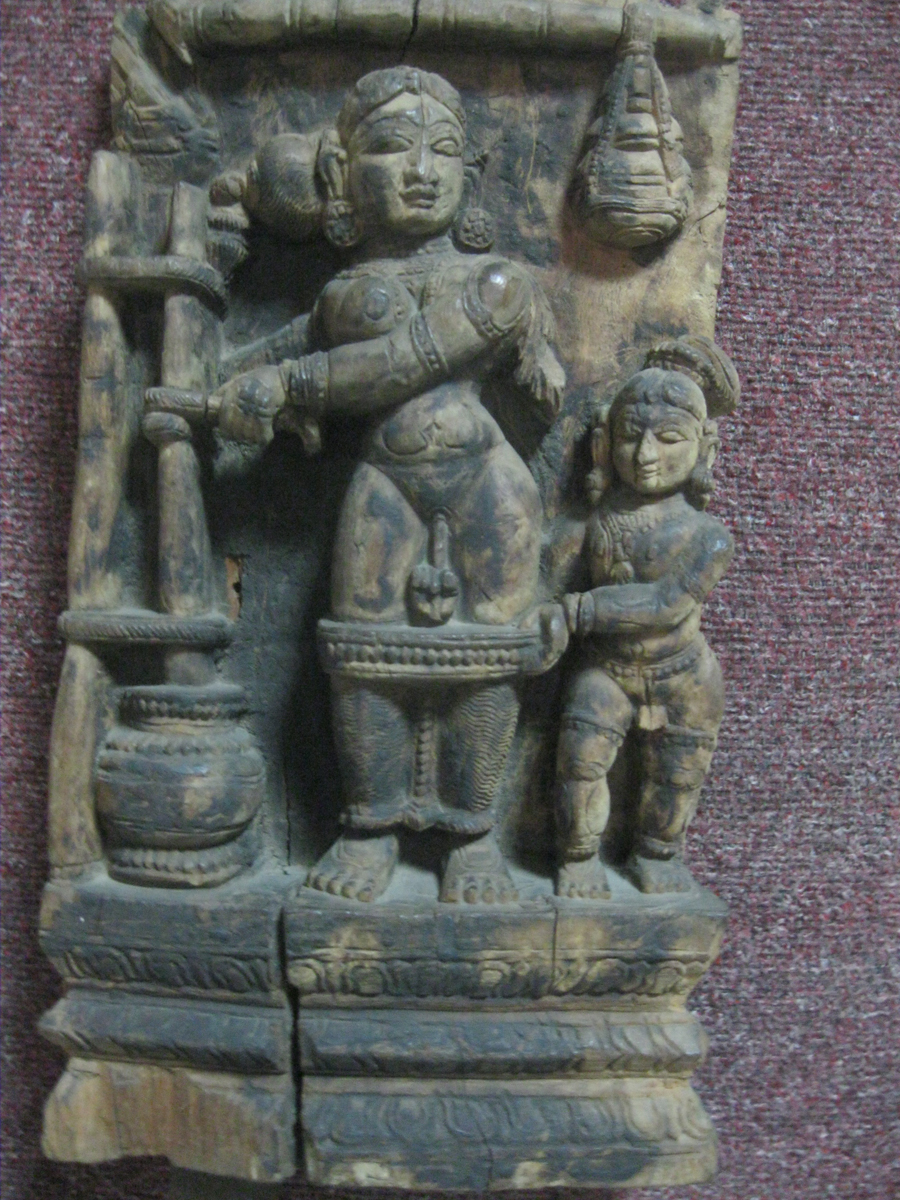
(Lady Churning the Milk- wooden sculpture 19th century AD. South India- Currently at Chandigarh State Museum)


Those who get their religious, moral, political sentiments hurt so fast please read this article. We are a country full of people and almost 1.2 billion of us feel threatened by one single idea called religion. We believe in our gods so much that we don’t let our gods to be a bit playful. We have made headmasters out of our playful gods. Anybody who touches upon religion in a critical way is bound to face the ire of a majority that considers religion as a set of ideas beyond any kind of criticism.

Religion thrives in illusion and spirituality thrives in reality. But unfortunately most of us take it other way round. We believe that religion is ‘the’ reality and spirituality is an illusion. Hence, anybody who touches this assumed reality negatively becomes a culprit prone to larger censorship by the religious establishments that often get the sanction of the so called democratic governments. In Greek mythology we see gods and goddesses intervening in the lives of ordinary human beings and making their lives hell and heaven alike. Indian gods and goddesses (read Hindu gods and goddesses) used to do the same. But over a period of time we have worked well to make them headmasters, who sit in their cabins with a cane always ready on their sides to spank our unruly bottoms.

(Raja Ravi Varma)

In fact it did not take lot many years to turn the ‘leela’ of our gods and goddesses into grave political aloofness. Gods and goddess became so estranged from the human lives that they became the victims of the immature thought process of the human beings. That’s why irrespective of religions, people go to drink dirty water and hail it as a spiritual act. Gods never send chemical water for mass decimation of those people who believe in him or her. If someone says that milk drinking Ganeshas or crying Jesus Christs are scientific realities masquerading as religious frenzy, we take him to court. If someone eats beef, we deny them their food by saying that they are eating our mothers’ body.

Blame it on Raja Ravi Varma. He was the one who gave nav vaari sari to Indian gods and goddesses. We never knew that Indian goddesses dressed up like Maharashtrian women. Had Ravi Varma gone to North East and had set up a studio there I am sure our gods and goddess must be wearing wrap arounds today as their dress. Our sartorial imagination vis-a-vis religion would have been completely different from this. Raja Ravi Varma had his reasons to be in Maharashatra. And Maharashtra had its reasons to be in a revivalist Hindu mode. Theatrical and visual imaginations inspired by the occidental imaginary imports were making our nationalists go a bit overboard. Raja Ravi Varma fell a victim of these sentiments of that time. He did not imagine the goddesses as women wearing mundu and neriyathu as the aristocrat women in the royal households in Kerala wore during the time. We would have got a different set of goddesses had he done that. But Ravi Varma was looking for more a pan national representation of gods and goddesses. It is an irony of the history (not only art history but also history in general) that this pan nationalism took clear Maharashtrian feel as Maharashtra was playing the centre of a resurgent Hinduist nationalism after almost nine centuries of submission to other religions and invasions.

(Lakshmi by Raja Ravi Varma)

Our country was full of playful gods and goddesses. We were not primarily Freudians or Lacanians. So for us playing with sexual imagery was very normal. Our artists let their imaginations take wide leaps into the unknown territories of desire. Many depicted incidents and activities of gods and goddesses as if they were just human beings; they were sexual escapades, extra marital affairs, graphic detailing of sexual intercourses and banal activities of frivolous youth. Gods and goddesses did these things. Perhaps the artists who were depicting these images and figures did not alienate the gods and goddesses during all those years. They were equally playful like the gods and goddesses. According to artist and activist Subodh Kerkar, it took just two hundred years to undo our religious and imaginative liberalism of more than five thousand years and push ourselves into the false morality of Victorian sophistication as forced into our thoughts by the colonial and the religious establishments. Hindu activism perhaps imbibed this Victorian morality a bit too faster than the other segments of the society.

(Detail of Lady Churning the Milk)

Look at the image that I have been using to illustrate this article. This is a one foot tall wooden sculpture dated 19th century and is from South India. This piece of art is currently displayed in the Chandigarh Museum. This work titled ‘Lady Churning Milk’ is a very interesting for two reasons; one, it is created in 19th century. Two, it depicts the legendary Krishna-Gopika relationship. What makes this sculpture all the more interesting is the intense erotic suggestion. Here the unknown artist plays on the word ‘churning’ and he uses it as a pun to connote both the act of churning milk to make butter and the sexual act of titillating the clitoris by fingering the vagina. While the former act is done by a Gopika the latter is done by a much young Krishna for her.

Aesthetically speaking, this subversive work (as in today’s perception) must be from that tradition which made fun of gods and their activities from a human level. You could see several Kalighat paintings depicting the lives of gods and goddesses as if they were just ordinary mortals. From a different perspective we could say that the artist must have been doing a very subversive act against the Brahminical hegemony by the depiction of one of the gods doing such very human act! However, the important thing is that such subversions were allowed or were normal even during the 19th century. The society was more tolerant towards such aesthetical celebrations or aberrations, depending on the perspective of the society towards art during those days.

(detail)


But in no time, by late 19th and early 20th century our idea of morality changed into something absolutely different. The Hindu nationalists imbibed the Victorian moral codes much faster than other religious groups. The historical irony was that in the name of acting against colonialism, it fell for the colonial morality through the exclusion of celebratory aesthetics from the public domain. Here we see a child god enjoying a sexual act with a willing woman. Sociologically speaking such gallivanting must have been quite normal in those days as we know that it is not too unusual even in these days either. What makes the image enthralling is the introduction of a god figure into a very localized situation. Nobody’s sentiments were getting hurt by that.

Art depicts a society’s ways of thinking; it is a like a forensic evidence. However minute it may be in appearance, the traces that it carries contain a larger picture of the society. This act of fingering a woman while she is at churning milk, also connotes a permissible act of finger the vagina of a cow when it refuses to give milk. The vaginal titillation, it is believed, helps the cows to give more milk. It is said that in the rural areas, even today milkmen and women use the same technique to ease their professional activity. The artist brings the same sociological reality into the zone of art and incorporates that act into a different scene of churning linking up social and sexual imaginations within the same body of a work of art. Interestingly, the society was still tolerant and was not a victim of the Victorian Hinduism that we follow today.

(Detail)

Let us undo the Victorian Hinduism and its socio-cultural morale. But it seems to be difficult as the government plans more and more restrictions on freedom of expression. It is when art becomes more subversive than celebratory or a subversive celebration. As of now, artist seems to be less aware of the situation as they go on with their routine based works of art.