Tuesday, March 27, 2012
Artist, Art Scene, Undone
Harsh Sinha, fat, forty and fucked decides to take a one year sabbatical from his advertising career and wants to throw a surprise to his wife who is living with their daughter in Chennai. While toying with this idea, he happens to see a painting by Natraj Sharma titled ‘Fat, Fucked and Forty’ and Harsh gets hooked. He buys it for a whopping sum of Rs.27 lakhs. Since then he is a changed man. He has been away from his wife Gayathri and daughter Poornima for almost eight years. To be precise, throughout his married life Harsh has been a weekend father and husband. He goes to Chennai by the weekends and comes back to Mumbai for the weekdays. Now he wants to announce to his wife that he is going to be with her for a year. Also he wants to surprise her with his new catch; the Fat, Fucked and Forty painting. But something else was waiting for him in Chennai. Gayathri turns him away without giving much of an explanation. So now Harsh is jobless and homeless. Suddenly found anchorless in life, he wants to sell off his painting.
That is how Harsh Sinha’s tryst with art starts and that’s how the novel ‘Artist, Undone’ written by V.Sanjay Kumar starts. Published by Hachette India and priced at Rs.495, this book had raised a great interest amongst the art lovers and like many others me too before reading the book had thought that it was a ‘fact finding’ book about Indian contemporary art. But when it was published (read, promoted) during the India Art Fair 2012, the book gave a pleasant surprise to the readers for it turned out to be a book of fiction pitching mainly on the ‘events’ of Indian contemporary art scene. Before delving deep into the literary flourish of the book, let me tell you that it is the first work of literature that directly deals with the nuances of Indian contemporary art scene.
Author, V.Sanjay Kumar is an insider of the art scene and he is associated with Geetha Mehra of the Sakshi Gallery, Mumbai and Taipei. He gets into the skin of the protagonist, Harsh Sinha in a peculiar way that the reader is left to wonder whether he is narrating his own story. But through the skillful weaving of fact and fiction, Sanjay Kumar deflects the preconceptions that the readers tend to develop as the act of reading progresses. Harsh Sinha finds that his neighbor, the controversial artist Newton Coomaraswamy at the Coromondal Artists’ Village in Chennai, an acclaimed anarchist, plagiarist of Francis Newton Souza and a much envied womanizer making advances to his wife, Gayathri.
(Author Sanjay Kumar - Photo courtesy- Tehelka)
Harsh visits many galleries with his friend Roongta in order to find whether he would be able to sell his paintings. Slowly, Roongta, the resident Baniya too develops an affinity for art. In the due course Harsh meets Manoj Tyaagi, a financial consultant who now struggles to redeem his name from a grave financial scam that the government believes to have created by him. He is an avid collector of Newton’s works. And he says that he collects everything of Newton because like him Newton too is fighting to redeem his name. Harsh is introduced to Bhairavi, a Mumbai gallerist who is so passionate about her profession. Bhairavi is in the process of having a solo show of Newton Coomaraswamy. The opening press conference turns out to be controversial and Tyaagi buys the whole show.
In the subplots we see a couple of American art students trying to know more about Newton who in his first New York solo hosted by Bhairavi surprises everyone with his landscape paintings, a scandalous departure from his much talked about and maligned Souza like works. Also we see Gopi, a fellow painter in the Coromandal Artists’ Village and Marthandam, a retailer of mobile handsets keeping a track on Newton’s life and activities. They are hurt because Newton could cajole Gayathri into his life. There is love, passion, incest and false morality in their concerns. Years after, Tyaagi’s son becomes a gallerist and works towards buying the studio of Newton and becomes successful in it. Newton Coomarswamy passes away silently in one night. Harsh gets a call from his wife Gayathri. He is all in anticipation to see his wife now in graying hairs. But before she opens the door, Harsh decides to walk back. And Sanjay Kumar never says, to where.
The narrative moves between Chennai, Mumbai, Delhi, New York and many other mental spaces. What makes the reading exciting is the surreal intercuts between present-past and past-present. As we read on we feel that we know the places, the people and the galleries and cafes where Harsh and his friends walk into. Sanjay Kumar works through the familiar and makes them strange. Perhaps, this is the technique of the contemporary art itself; it takes the mundane and transforms it into the unfamiliar. In this transformation, the real people become characters and Sanjay Kumar makes it a point not to stereotype them. We cannot but smile when we go through the narrative about how the young gallery assistant behaves when they are confronted with novice art collectors and art lovers.
The book is amply illustrated; not in the Bergeian way but in the Pamuk-ian way. The paintings reproduced here in the book are the real markers/paintings that connect to the real people who have painted them. But the narrative like a Tony Ousler video juxtaposes one character with the other. One interesting thing about this book is the inbuilt discussion on plagiarism, influence, adoption, inspiration, co-optation- all phrases involved in the discourse of contemporary art and the idea of originality. Newton Coomaraswamy accepts that he incorporates Souza in him but he demands that one should see what he has done to the Souza in him. Without entering into the theoretical blabbering, Sanjay Kumar raises this issue of originality through his protagonists. So is his scathing criticism on the state of art critical writings. Sanjay Kumar in his characteristic narrative style, quotes critics like Geeta Kapur and Ranjit Hoskote and debates whether lucid writing is still a dream in the Indian art criticism.
I would conclude this review with a statement on art collecting by Harsh Sinha, the protagonist: ‘People buy art for aesthetics, for vanity, for pomp, for splendor, for peer-level masturbation, for a lark, to try to belong, to make money, because they can’t say no, because they can’t stop, because for a public rush of blood, for the rush that possession gives, for nostalgia, for the sheer joy of buying…’
Thursday, March 22, 2012
That’s How One Thinks After Turning 43
(A birthday gift sent to me by Sesha Brahmam, FB friend)
‘I am overwhelmed by the kind of greetings that I received on my birthday..thank you buddies,’ that’s what generally we say after getting more than a hundred messages in our profile page of any social networking sites. But I don’t want to say that to my friends. I don’t want to say this clichéd sentence mainly because I am not overwhelmed.
I am not overwhelmed. But I am afraid. I am afraid of the responsibility that your love and affection renders on my shoulders. The skeptic, the arrogant and the irreverent who resides in my mind asks me whether I am able to carry such a great responsibility. When people wish someone good on his/her birthday, they expect and they demand the person of their interest should be worthy enough to have such greetings.
If I fall short of their expectations, in fact I must be insulting myself through hurting their faith. But then I remember, the folk story, which had been painted by Bhupen Khakkar, ‘You Can’t Please All’. Yes, none can please all. But there is one person in this universe with you could tell the truth of your mind and that is ‘you’. You can look into your mind and ask whom are you going to please.
None in the world would get pleased by your acts. As Eddie Murphy puts it in a comic context, even your wife would ask you, ‘what have you done for me of late?’ You don’t have an answer. But you have an answer for you, for your own self.
(A birthday gift sent to me by Sekhar Aiyanthol, senior artist and fb friend)
At the age of forty three, when I sit in front of my FB profile and see all these friends wishing me great, I realize that they all helping me to looking into myself. They don’t want anything from. If at all they want anything from me, that is this; you just look into your own soul and see what you have done so far.
Forty three is not an important mile stone in anybody’s life. When you are thirty, people say it is time to start a life. When you are forty, people say tread cautiously. Now it is the time to grow. But several things keep knocking at your own soul and body. Your lungs would tell you to stop smoking. Your heart will tell you that it has been there all the time giving you free service. Now it is time to hark to its rhythmic heaving.
Friends tell you, it is time to have a complete check up. And you refuse to do. So one day when you sit in bus or a car or an aircraft you feel like choking. You just do not know what to do. You try to read, you look at the beautiful faces around you. Then you suddenly remember all what you have done in your life. Your rights and wrongs. You see your children’s face. You see your wife’s face. You see your mother’s face. You see your dead father. You see your friends and soon everything go out of focus.
(Birthday gift sent to me by Garima Jayadevan, artist and FB friend)
When you get up from a physician’s stretcher with semen like jelly messing up your chest hair, you realize that you have a heart and now it is time to quit many things. Doctor advices you to be cautious. And he reiterates your faith by saying that you are as fit as a nut.
Yes, you have gone nuts. That’s why suddenly at the age of forty three you feel like forty three years old. Your wife tells you to behave like a forty three year old man. Your girl friends say, don’t. You are still young. Your kids, if you jive with the song in the television, ask you to go and sit at the computer. Your neighbors really don’t know; they feel that you are too young to be respected and too old to be neglected.
So you take revenge in the bed. Your wife tells you that it happens, don’t worry. Friends tell you, one day you need to dye your hair otherwise your kids would tell you not to go to their school when the session is on. They don’t want to see an old man coming in looking for them.
At the park, when you overtake the young couple in the walkway, they look at your with some kind of suspicion. The husband doubts your vigor and the young wife likes your rigor. You take pride while examining your mid riff; you are still fat free. You have an ironing board for a stomach. You have nothing to cut; even your living cost.
(birthday gift sent to me by Prince Vakkom, a young fb friend)
But then end of the day what are you supposed to do after turning forty three. So you masturbate and you ejaculate your humiliation on the bathroom floor. You can count the sperms in that. They are too less. You look at the mirror. The reflection laughs at you. So you flex your muscle and curse under your breathe.
Then you smile. You want to forget everything. You want to move away from all these worldly ties. You just want to be alone. You just want to be one with yourself. You don’t want to listen to your children screaming. You don’t want the flushing of toilet from the next door. You don’t want to see lovers walking hand in hand and exploring their secrets under a chunni. You don’t want to read anything. You don’t want to do anything.
(Another gift by Prince Vakkom, FB friend)
But then it is at forty three, they say, one gets the real maturity. This is the time you start your professional life. It is the time you make schemes for your future. If you need a happy ending you need to pay for it.
Life, like a whore sitting on your knees would tease your organ with her index finger and ask, do you need a happy ending. To get that ultimate explosion of your nothingness you need to pay. And to pay for that you need to work.
So here, I am friends, working and trying to tell you that’s why I am working.
Sunday, March 11, 2012
Men in the Xerox Pictures
In Kerala two types of people appear as xeroxed prints on A4 size paper; one, those who have gone missing, two, those who have passed away. The print status shows their social standing. Rich and powerful, when go missing, appear either as front page news or as columns. When they die, their pictures appear in embroidered frames in the third pages of the newspapers.
The hapless ones appear as Xerox prints. There is one more category of people who make their appearance as Photostat prints- the wanted ones, not the ‘most wanted’ types, but the locally wanted thugs, pickpockets and debtors. They all look at you from pillars, closed shutters, broken walls and street corners reeking in the ammonia smell of urine. Perhaps, this is not the story of Kerala losers alone. This is the story of every where, especially an ‘anywhere’ in India.
From these white sheets accentuated by the bleeding of black ink from the malfunctioning Xerox machines in the dimly lit corner shops, these people stare at you; a kind of stare only the people who have gone out of the normal trajectories of social life could give you. The moment the photographs are transferred into Photostat copies, they wear a cloak of death and distance. They look like people who have lost in themselves. They look like people who never have been.
People in the Photostat pictures are apparitions, framed tightly as decaying busts. The erstwhile smile that had been frozen by the click of the unknown camera person looks like an eerie mask that makes each of them look more and more like unnumbered and obscured creatures in a penitentiary ledger than those entries in a real voters list.
Such was that figure that was looking at me from that A 4 size paper. It was following me like a half moon stalking me throughout my nightly trips. It was there on the electric post, roughly glued so that I could trace the Braille codes made out of cement blobs. That man, to be precise that no-man with no-eyes and no-smile, but a stare that throws you into the whirlpool of nightmares, was looking at me from everywhere.
“He was sixty one year old,” someone told me from the next seat. I was almost finishing my 173 kilometer journey from Kottayam to my village. The man who told me had no ears. In their place I saw two crumbled pieces of flesh fused into the shape of a wax effigy. I looked into his face and it was hollow and it resembled the man on the Xerox copy. But the difference between them was this one next to me was simply breathing and talking to me.
“He never went to attend anybody’s death,” the man continued. And I noticed that he was burnt from neck to finger tips. But he was gleeful and the local guys traveling in the bus were acknowledging him as if he were quite an important person. Suddenly I found myself in the midst of total strangers who I thought were conspiring against me, my alien presence through their side glances and half broken smiles.
“He never went to see good bye to anyone as he was busy with his small shop,” the man continued. “And you see, one day he himself is gone. He has just become a picture on the wall. Perhaps, these guys who posted his pictures all over, are taking revenge on his pettiness that he used to flaunt as his virtue when he was alive. Now, look at me. I am a burnt stick. But I am still alive. This driver may apply breaks now. I may fall on you or you may fall on me. Who knows? Tomorrow I may be the one to go or are you the one?”
I was curious and the sudden invocation of death shook me up a little bit. The good stereo in the bus played a good music; an old song. The half burnt man started humming along. He asked me, ‘Can you identify the movie?” I made a quick calculation and said ‘CID Nazir’. Yes, right, he said. I had won that round for the first time after getting into that bus full of strangers.
‘You know, now everyone wants to know how I was burnt,” he told me. I asked him the same question. Come home, I will tell you, he replied. Funny, I thought. If you come home, I will tell you why I was burnt. Now the television channels want to know how a person comes back to life after going through death. I am treated as a person who has seen the other world, the world where you have not gone yet, he continued.
Suddenly, I thought of V.K.Sreeraman, a writer, actor and television program producer. He had produced a series of tele-documentaries on people who were different from us and showed distinct social behaviors. So I asked him, did Sreeraman come to you? “What the fuck is that?” he spat heavily on the floor. By the time the bus had stopped at the terminus. “I know only one Sreeraman and he was Sita’s husband,” saying this he walked off.
I saw my Photostat image on the floor, now covered with the phlegm that he had just spat out.
Thursday, March 8, 2012
The Nudes that I See- A Series on Beautiful Bodies of our Times- 1
(A Photography work by Abul Azad)
I have been thinking about writing about nudes for a long time. I have come across several nude men and women in my life. Many of them have stripped willingly for me. I have also taken pains to peep into somebody’s privacy and see their naked bodies. I like naked bodies because they tell you a lot about that person. I don’t judge people according to their colour or size. I just look at them. Admire them. And in several of my writings I have incorporated those impressions I have received while looking at those naked bodies.
Nakedness is an original state of body. For several reasons including religion, climate and sexual arousal people dress it up or deck it up. Wearing clothes is a daily ritual that all the people do without fail or drudgery. But undressing or taking out clothes is a rash act, perhaps and unmindful one. You can be thinking about something and take out your clothes as if you were doing something quite mechanical, like changing the gear while driving. You don’t tell yourself, ‘now I am in third gear, as I need to increase the speed, I am going to shift it to fourth’. You just do it. Unclothing is a mechanical act.
Nudity is a resultant state of the body as witnessed by someone. When someone decides to become nude, the unclothing happens very consciously. Imagine those particular moments in your life; you are alone in your dressing room. You have just come out the shower. The towel around your body is hot enough to suck the wetness away from your skin. On the left cheek you feel a tuft of wet hairs stuck as if they together were defining the contour of your face in a different way. You stand before the large mirror. You take the towel off from your waist or chest. You know you are going to wear a set of clothes that you have chosen specially for that day. You may have to attend an interview, impress a boss, meet a date and receive someone from the airport or just to feel happy about yourself. But suddenly you see yourself reflected in the mirror.
(Saskia by Rembrandt)
You look at yourself carefully. Your eyes run along the imaginary contours of your body. You shift your legs, turn a bit to the right and see whether that posture of yours is appealing. And you shift to the left and see again. Your eyes run through each and every inch of your body. You can stand like that for hours. You love you; more than anyone else love you, you love yourself. But what do you love in yourself? Your body? When you love your body you are just loving your nudity; you are the actor and the result, you are the object and subject of your gaze. None could enjoy your body much better than yourself. Being Narcissistic is not a deranged psychological order. It is the final step to philosophical contemplation. You love your nudity. When you love your own nude you love the nude of others also.
But how do you differentiate between nudity and nakedness? Nakedness is natural. It is like sky and your mind or the sky reflected in your mind. You wear sky in your perennial nakedness. Nudity is something created out of a context. You enjoy your nudity because just before that moment of pleasure you were clad in a towel or a pair of clothes. Nudity is a zone of transition that allows you to have glimpses of your perennial nakedness. In your ultimate nakedness, your body, your nude body becomes irrelevant. However the pathways become irrelevant, they don’t cease to be pathways. So it is always good to enjoy your own nudity and the nudity of others. That does not mean that I am propagating the idea of peeping and voyeurism. Nor do I promote pornography. Pornography is a zone of ambiguity and meaninglessness where nude bodies are posted or posited for unproductive gazing. Pornography is manufactured by irreverently mixing nakedness and nudity for commercial purpose. Pornography always acts out of the body; it is a simulacrum and operates in a simulacral space. It gives out the impression of being there but it is never there.
In Sabeena Gadihoke’s documentary on the life of the veteran woman photographer, late Homai Vyarawalla, there is a very touching scene. Homai looks at the camera and tells in a tired but firm voice, “This is a biological thing to age.” She knows that she is decaying in her body and dying day by day. But even at that point of time what she likes to talk about is her body. “I am not this body. This is just a shell and this shell is bound to break. But even when I talk to you now, there is another Homai in me. Another young girl in me. It is she who is talking. What you see is nothing.” (This is paraphrased by me) Only an artist or philosopher could talk like that. This body is nothing. This body is bound to break. But still we love it. The more we love our body, the more we love the body of others because...
(Painting by Modigliani)
Because, a beautiful body is a nude body and you would like to see nude bodies. That does not mean that clothed bodies are ugly bodies. Nor do I believe that when someone becomes nude he or she naturally turns out to be beautiful. But my view is that one could be beautifully nude by undressing for oneself and for others. Nudity lies in trust. It is a trust between you and your own self. It is a trust between you and your witness. You become nude before someone does not mean that you have sex with that person. Two people could be completely at ease with clothes. Similarly they could be at ease even if both are nude or one of them is nude. Clothes cannot decide the moral code of conduct of a society. Clothes are a pretext to keep people under hegemonic control.
When a painter, sculptor or a film maker does a nude, he or she collapses the hegemonic controls. Feminists say that male artists painting nude females represent the male gaze therefore male chauvinistic morals and rules. This is absolutely true. But an artist is a person who ultimately reveres the nude body of a woman or a man. A film maker, if he or she is sensitive, could bring the soul of a character through the nude body of an actor or actress. It is very difficult to write about nudes in words. You can theorize nudity and nakedness the way Kenneth Clark had done. You can argue for and against the idea of nudity in art, film and literature. You can go on giving details of nude figures in words. But what about a series of writing on nude people, both male and female? I think that is the task that I have taken up for myself. I don’t know whether that would be successful or not.
I remember a situation written by the noted Malayalam novelist, (Late) V.K.N in his novel ‘Aarohanam’ (Ascendance). The protagonist of the novel who goes by the name, Payyan (A Guy) is a supremely clever journalist who could enter even into the bedrooms of politicians. One of the politicians wants to be a prominent minister in the centre. Sunanda, the wife of the politician is in love with Payyan. In the drawing room a heated political discussion is on. Payyan walks into the bedroom. Suananda hugs him and kisses him. Then V.K.N says, “Payyan looked at the large mirror. There Sunanda was coming out of her white saree as if the moon from a thicket of clouds.” This is a very pathetic translation of the original Malayalam. But when you see this imagery created out of words, you could see the nudity of Sunanda willingly revealed for Payyan because he trusts herself and there is an unwritten trust between her and him.
(Work by Robert Mapplethrope)
I have seen hundreds of naked bodies. And a few nude bodies. But I can say that I have seen enough nude bodies to write a series on nude men and women. Kiyari, was a young boy of seventeen, when I first met him. I too was seventeen years old. I was in an artist’s studio. Kiyari was a friend of the artist. When he came inside, the artist introduced me to him. My artist friend was making a portrait of me in oil colours. I was wearing a blue shirt with horizontal white stripes. It looked like a camouflage clothe, the kind of clothe worn by LTTE leader (late) Prabhakaran. My moustache was not thick and beard was sparse. But the wild hair gave me an impressive look. Artist friend too was young and he was deeply influenced by two artists then; Vincent Vangogh and Pablo Picasso. Hence, this portrait of mine was in the post-impressionist mode with thick impasto of strokes.
Kiyari stood before me and smiled at me; at that age I had seen that kind of smile only on two creatures. One, the sculptures of Buddha. Two, sleeping dogs. You also might have noticed the dogs smiling in their sleep. If you have not, please look at the sleeping dogs. Kiyari smiled at me like a sleeping dog. He did not say anything. He removed his clothes one by one. His breasts were sagging. And he had a pot belly. His pubic hairs were not so thick and he had a very long penis. It was circumcised. His hands hung from his shoulders as if they were two unwanted protrusions of his body. His back was a bit bent and his buttocks were round. He again smiled at me. I was not a stranger to homo sexuality or such acts. My artist friend went on painting my portrait as if nothing had happened. Kiyari, the nude man stood in front of me.
I was not sure whether there was any trust or pact between me and him for I was seeing him for the first time in my life. My trust, however, was unimportant in that situation. It was Kiyari who was trusting me. He thought he could show his nudity to me. He wanted to flaunt what he had. Then he kneeled before me and started kneading my thighs. I smiled at him. His hands moved along my body and I don’t remember whether I liked it or not. My young artist friend went on painting. Kiyari, after touching me for a few minutes, went and reclined on a mattress. I imagined the paintings of Modigliani. And I thought Kiyari was really a handsome young man.
Sunday, March 4, 2012
Un-Abort-Able Friends: To My Children Series 27
(Shijo Jacob)
From a distance I could hear metal sticks striking against the cemented walkway. The sound is rhythmic; like music beat it comes in regular intervals. If I try to recapture the sound, it would be something like this- a firm hit on the ground and with this the metal piece at the end of it tells the earth, hold me. Then you hear, if only you have trained ears, a wheezing sound of leather grazing the ground. A moment of silence. Again you hear another sound of metal crushing the cement. Slowly the sound comes closer. It enters the dark and gloomy entrance that most of the Delhi Development Authority (DDA) flats have. Then the sound creeps up; the same sound and beats but now tapped in a different rhythm. The grazing of leather on the ground seems to be a bit laboured and the metal sounds a bit cautious. Slowly it comes up and it comes and stops in front of our door.
Mrinal and myself would be reading or writing or making love. When we hear this voice, we look at each other and a smile blooms on our lips. We know the meaning of that sound. We extract ourselves from whatever we are doing and rush to the front door. Before the door bell rings, we open the door. And we know who comes with that music of metal touching the ground. The man there at the door is none other than Shijo Jacob, then art student at the Jamia Millia Islamia, now a professional artist and an assistant professor in the Painting Department at the Fine Arts College, Mavelikkara, Kerala.
Shijo came to our life in Mayur Vihar Phase III with this music. And this music of his gait was created by the metal crutches that he carried with him. This handsome young man was affected by polio when he was seven years old. But against all odds, Shijo kept his spirit high and walked the distances that generally the healthy people do not dare to walk. Climbed the heights that people like us thought to be dizzying. Shijo Jacob is a handsome young man with a thick moustache and a smile that disarms anyone and invites him or her into an embrace. Whenever I think about Shijo and his smile, I think about soothing ring tones in some people’s mobile phones. You may be mad at those people and you really want to scream at them. You dial their number as if you were sticking the voodooist’s needle on an effigy. And finally the bell rings. No it does not ring. Instead, it plays out a song or a tune that melts you into a piece of helplessness. You really want to shout at the person who picks up the call. But when he really does that, you just ask, ‘how’s it going man?’
(Shijo Jacob with his work)
With such hearty smile Shijo had won everyone’s life when he was in Delhi. He lived with his sister’s family in a very small accommodation in Mayur Vihar Phase III and it was from there he did his works, pretty large canvases that expressed his pleasure and pain, philosophy and world view. Perhaps, Shijo Jacob was one of the first few artists in Delhi who had taken mediatic realism quite seriously and incorporated autobiographical narratives in that mode. I remember a body of works that Shijo had done in late 1990s, which should have really generated a serious discourse on the notion of disability and gender. Shijo painted his own disabled body along with the images of two super models on either side of him and titled the work as ‘Come, Model with Me’. Also he did a series of large paintings where he painted his polio affected body as an iconic image. Mrinal and myself presented Shijo in the shows curated by us doing that time. Unfortunately, the idea of curatorial practice was totally a non-starter at that time. Though our efforts were lauded by well wishers, our artists were not hugely picked up by the mainstream galleries.
Though I would write about my London experiences in one of the forthcoming chapters, I feel that it is pertinent to talk about physical disability in the context of Indian art. In 2003, I was awarded with the Charles Wallace India Trust Scholarship to do a post graduation in Creative Curating at the Goldsmiths College, University of London. I was very happy to have that opportunity and I was sure that the scholarship was awarded to me for my efforts to build up a scene of curatorial practice in Delhi during 1990s when none was talking about curatorial practice in the city. In London, I visited most of the public and private galleries. I was thrilled and at the same time I was sad too. What surprised me was the public awareness on disability. The low-floored buses had an appendage that would come out when a passenger on a wheel chair came to the door. Any public transportation system including the tube trains and taxis had this provision. All the galleries, both public and private had ramps and side bars that helped the people with disability move easily. The lavatories were a real revelation to me. I sneaked into the lavatories for the disabled to see how they are designed. Overwhelmed by these findings, I wrote a mail. I was an email activist since 1997.
(A recent work by Shijo Jacob)
I wrote a mail to all the gallerists in India asking them why they don’t have a ramp and disable friendly environments in their galleries. Shijo Jacob was my point of reference though I did not mention his name in the mail. I had seen him walking with us everywhere, to each opening (we did not have money to hire a taxi or auto). I had seen him climbing stairs of the private galleries with great difficulty. So when I was writing this mail and sending out to hundreds of people, I was literally furious. Soon came answers, out of that two of them surprised me. Many sent me sympathetic mails that said we needed urgent relook into our spatial designing of the galleries and public spaces. One gallerist in Mumbai wrote to me: ‘Never write to us such nasty mails. If you do, we will remove you from our mailing list.’ I think Mumbai gallerists have a special way of handling criticism. In 2009 a few gallerists came together to ban me from Indian art scene. They also sent mail out to many saying that I should be kept away from the scene.
One good mail that I got was from the senior artist Arpana Caur. She wrote to me: Johny, our Academy of Fine Arts and Literature at Siri Fort, has a ramp and our gallery is disable friendly.’ It was the only mail of consolation for me at that time. Sitting in the Goldsmiths’ computer room, seeing snowflakes falling like frozen sighs of the heavenly dames, I looked at Arpana Caur’s mail and felt happy. At least there was one gallerist/artist in India at that time to come out boldly and say that she was sensitive towards such issues. My relationship with Arpana Caur is a long one. She was one of the first few along with my mentor, K.S.Radhakrishnan, who had given me free spaces to do whatever I wanted at that point of time. We met Arpana Caur in 1996 and in the next year, she allowed us to use her gallery premises to conduct our activities. We used to hold fortnightly illustrated lectures and I can proudly say today that it was on this platform most of the successful artists learned their first lessons of public presentation and speech.
These illustrated lectures were really interesting. We honed our curatorial skills while the artist friends polished their presentation skills in this platform. When we proposed that we wanted to conduct regular slide shows and talks, Arpana Caur chalked out a plan. She said that she would give the space free and also she would give Rs.500 (Five Hundred) to the presenting artist. It was a great incentive. For us Rs.500 was a big amount then. Besides, Arpana Caur ordered tea and samosas for all the people. Though our idea was to have illustrated lectures, suddenly we faced a problem. None of us had a slide projector. Roy Thomas pitched in then. He procured a small manual slide projector that looked like a toy. It was a stand in device bought from Old Delhi for fifty rupees or so. We ran a few sessions with this projector and in the meanwhile K.S.Radhakrishnan gave us his German slide projector. This projector came to him from some other friend and was really old. Its service ended after a few sessions. It was then Atul Bhalla came to offer his services. His school, Mira Model School, Delhi, had a good projector and he brought that for our programs. After a few sessions, Atul Bhalla found it difficult to get the projector quite regularly from the school. It was then Arpana Caur came once again into the picture. She started offering another five hundred rupees so that we could hire slide projector from professional agencies. These sessions went on till 2001.
Once Shijo finished his post graduation from Jamia Milia Islamia, he was finding it difficult to continue his practice as studio spaces were costly in Delhi. I presented this case to Arpana Caur and she gave a huge sunny studio space to Shijo in the Academy of Fine Arts and Literature premises. This basement studio was also a hub of different activities. People from economically deprived societies came there to get training in stitching and other crafts. The space was noisy often as the girls worked kept talking to each other. This was no ideal studio for a serious young artist. However, as there was no other space available, Shijo had to work from the same studio for some months and he could produce some good works from there. Despite all the shortcomings of the studio in Arpana Caur’s place, one should acknowledge the fact that she was so considerate to the young and struggling artists of that time and was always ready to extent support to most of them. From the same studio, Shijo did a series of works, using the property documents of his family. This was work with strong conceptual orientations though it was not exhibited in Delhi.
(Arpana Caur)
Shijo was not the only struggler of that time. Getting a studio was a real problem for most of them. Josh P.S, a noted artist of this time who is promoted by Peter Nagy of Nature Morte was living a very tiny room near the Ashram fly over. In the adjacent rooms there lived kabadi walas, vegetable sellers, peddlers and so on. They all shared the same toilet and bathroom. We used to go to Josh’s room quite regularly and it was from here Josh did some of interesting works which he did not show to the world. One of the series that he did from here was the blood and semen series. During my visits to his room, after having tea made on portable gas stove, with rats as witnesses to our holy communion, we used to go to the ‘chat’ (terrace) of the building, where Josh inserted a surgical syringes into his veins that I held tightly for easy penetration. The blood thus collected was sprayed on the canvas in different patterns. They left a dark red stain on the canvas initially, then slowly turned into a dirt like pattern. The other series was done with semen collected by him quite diligently. And there were hair series and sweat series.
Somehow, Josh decided not to exhibit them though I exhorted him to come out with those works. Finally, we came out with a plan of exhibition. Though I did not call myself as the curator of the solo show of Josh, it was my idea to present his works in a very interesting but radical way. Josh booked a small gallery in the Garhi Artists’ Village in Delhi. In the middle of the gallery, we stacked up all the works (canvases) that he had done during those years. It stood like a rectangular block in the middle of the gallery. Along the walls we pasted post card size photographs of the same works in a row. And one additional element that Josh added to the whole display was the spreading of naphthalene balls on the floors of the gallery in order to conceptually show the idea of time and preservation. One afternoon I went to meet Josh at the Garhi Gallery and I saw him sitting in a chair dozing off. The glass doors of the gallery was closed and the smell of naphtha was strong in the air. It was suffocating. I called out Josh but he was not responding. With surging panic in my mind, I shook him up violently. As if from another world, Josh came back to Garhi Gallery. He looked at me with vague eyes. I pulled him out of the gallery and made him breath fresh air and washed his face with cold water. When I imagine that scene still a shudder passes through my spine.
(Josh PS. Self portrait after Velasquez)
I have a special association with Josh. He comes from Vakkom, my village. When I was in my village I did not know the existence of Josh. His elder brothers were my friend. I did not know their younger brother would become an artist. I met Josh first time in Baroda and then in Delhi. We were all struggling and Josh was desperate to have some money so that he could pay the rent of the rat infested hole. It was then an artist from Bangalore approached me to arrange his show in the Visual Art Gallery at the India Habitat Centre. Visual Art Gallery was not a happening place then. It had just started. This artist from Bangalore had booked the gallery. Some middlemen from Delhi had joined him, promising him that he would be sold like (MF) Husains. I was brought into the picture by a common friend and I worked towards making the show a reality. I totally disliked his works but the money that he offered was good (Rs.25,000/-) My job was to arrange the press, send out the invites, make the catalogue, write the catalogue and so on. Josh was my assistant in all these because I told him that part of the money would be given to him.
A few friends of Josh were doing screen printing to eke out a living. So we decided to get the invitation done by them. The invitation and envelop were ready and Josh brought them home. When I was looking at the invitation card I had an eerie feeling. Wasn’t something wrong there? I asked myself. The title of the show was given as ‘Reveries’. ‘Reveries’ means day dreaming. But I found the spelling on the card and cover as ‘RIVERIES’. It was a spelling mistake. We did not have any money to re-print the whole thing again. Nor did I want to let the person know that we had done a mistake. So I brainstormed myself and came with this fantastic idea- write a line just below the word ‘Riveries’- ‘River of Memories’. I consulted Josh on this and he said it was possible. So within that night we got all the cards and covers re-serigraphed with this phrase ‘river of memories’. The situation was saved. First Josh was introduced to the artist and his friends as a young photographer specializing in catalogue photography. And on the eve of the show, Josh was again brought in as my assistant in displaying. By that time, I think, they knew that Josh was being multitasked. Fortunately they paid him a few thousand rupees with which he could pay off his debts.
On the opening evening, I found Josh absolutely sad. I did not know why he was sad. The show was sparsely attended by the art community. It was mostly attended by a group of people who did not have anything to do with art. They had come as friends of the artist and the middlemen. They had a good party and left. Josh took me into the darkness outside. He said, ‘Johny, you are doing a wrong thing. You are prostituting yourself.’ Then he broke down. I did not know what to tell him. What he said was true and I was prostituting myself. My aim was to get some money and arrange some money for Josh. I could not say anything to Josh for some time. Once he finished with his sobbing we went inside as if nothing had happened between us. Next day, by afternoon I took Josh to the DND Flyover in Delhi. At lonely stretch I stopped my bike. We stood facing each other. We looked at the vast expanse of grass and marsh down there and the misty horizon at the end. We cried. We held our hands tightly and cried till we felt light. There was a conclusion to that story. The cheque worth of Rs.25000/- given to me by that artist bounced (I still have that cheque in my archives). Mrinal and I went to the place where the middlemen stayed. The neighbours told us that they had sold all their furniture and left the place. Years later, while strolling in Trivandrum with a friend, I came across one of them. He did not recognize me. Some sort of rage came in mind. I wanted to go and slap him on his face. But I restrained and walked off.
(Binoy Verghese)
When I talk about Shijo and Josh, I cannot forget Binoy Verghese. An absolute romantic who sang beautifully when he got high on spirit, Binoy was a part of our life. In his large eyes, sadness was a permanent bhava. His curly hairs embroidered his perennial gloom with dark velvet. However, when he smiled the all his sadness dissolved into it, the way the salt toy got lost into the sea water. Binoy too was struggling hard to eke out a living. He did not work in firms or agencies. Instead, he borrowed money from his well wishers and kept working on his canvases. Once he managed to get a funding from a rich friend to go to Canada and spend almost a year there at the Banff art centre. Like many who came back from abroad after studies or residencies, Binoy also found himself nowhere. Then he found a place to stay near Safdarung and started working from Garhi studios. The penury of those days were so intense that the canteen owner in the Garhi studios stopped giving him food on credit. Then he had to shift to another makeshift canteen in the Garhi premises run by a young boy who took pity on Binoy and provided him with food. Jomy Thomas of Malayala Manorama was another anchor for Binoy Verghese. Jomy occasionally helped him with small amounts.
Like Shijo, Binoy too was one of the earliest exponents of mediatic realism after Shibu Natesan and many others from Mumbai. Binoy mostly painted his friends and dancers. He painted his own image on canvases in various performative postures. These works were exhibited in the shows titled ‘Small but Significant’, ‘CAN’, ‘There is a Place in the Sun’ and so on curated by Mrinal and I. A major breakthrough came for Binoy when he painted an eight by five canvas with the image of a palace dining room with chandeliers and laid out food. What made that impressive painting provocative was the dominant image of a poor girl sitting right on the top of that dining table with a cold look on her face. This painting was quite haunting and at the same time he had done another painting titled ‘The Vaudevillian Nights’. I had taken both these images to many people thinking that they would take an interest in them. One young gallerist in Delhi told me that she would like to see the original. I took the painting in a small pick up van to the gallery. She liked the painting and kept it for a day.
The next day she called me up and said that she was not interested in the painting. So I had to go and pick up the work and give it back to Binoy. After a week or so, when I was watching the European film festival at the Siri Fort Auditorium (we had enough time to catch up with any cultural festivals happening in town then). Then my mobile buzzed. It was the gallerist. She wanted the painting once again. I had to leave the movie half way. I went to Garhi. Got a pick up van, collected the painting and went to the gallery. She kept the work with her. After a few days, she said I could collect the money. It was around forty thousand rupees. I was so glad and I gave the money to Binoy. That was the happiest day in Binoy’s life.
(A recent painting by Binoy Verghese)
However, I was not in a position to show Binoy as a person to the world. Not because he was not handsome. He was handsome enough to enter into the dreams of girls who were dreaming the dreams of oasis in deserts. But he was not equipped to face the world in terms of proper clothes. I did not want Binoy to go before a gallerist in tatters. Interestingly and surprisingly, the gallerist had not asked me about the whereabouts of the artist whose works she had started selling. I deliberately hid the fact that Binoy was a Delhi based artist. My idea was to collect enough money for Binoy so that he could shift to a decent accommodation and get new clothes. He could do it in a few month’s time as the gallerist was buying Binoy’s works through me. Let me take this opportunity to tell you that either I was a fool or I was too much filled with idealism. I was not taking any commission from anybody for the services that I was doing to both the gallerist and Binoy. I dutifully gave the money to Binoy. Perhaps, he also did not know the games of the market so he did not ask me whether I needed any money. Blissfully unaware of the ways in which the market worked we remained perfect friends unhampered by the arrival of money.
The game did not last long. I was about to make my fourth sales for Binoy. I had already informed him of the gallerist who was buying or dealing with his works. I also told him that he should not meet the gallerist until I told him. One day I went to the gallery with an image of Binoy’s work and to my surprise I found him standing inside the gallery, looking at the works displayed there. He was now wearing better clothes. But the confidence level was not high enough. The gallerist came out to see me and it was not possible for me to play the game of deception anymore. I introduced Binoy to the gallerist and bowed myself out of the whole deal. But the gallerist, Binoy himself and myself know for sure that my role as a middle person in the whole affair was not that of a broker who was looking for some commission. I have never taken any commission from anybody in any of my dealings with art. I was always eager to help out friends. Then happened the path breaking solo show of Binoy at the Palette Art Gallery in New Delhi. I wrote the catalogue and the catalogue was a super hit, so was the show. Binoy had arrived with that show.
There is a reason why I talked about these three friends. They were with me when I was really going through the worst phase of my life. As I told you at some stage, we were not looking for setting up a proper family with kids. We were planning to lead a life without kids. Whenever, I think about those days, I feel myself like a stupid. Had it not been you, how boring and meaningless our life would have been. Sometime in 1998, we decided to bring a child in our life. I clearly remember that the decision was taken during one of our trips in Kerala. We were staying in a hotel in Kochi and while making love, I whispered into Mrinal’s ears that I was coming in her with a beautiful mission. And she received me with a lot of love. We knew that it was not one of the frolicking moments. In that moderate hotel room we were engaged in a divine purpose; to prepare for your arrival.
After a month and a half in Delhi, Mrinal told me that she was pregnant. Our happiness knew no bounds. We thought our life had changed suddenly. Everything started looking different. We were having different kinds of aspirations and dreams since that strip up of plastic turned red and confirmed pregnancy. But during the third month, Mrinal said she was not feeling well and blood spots were seen. We went to a hospital immediately. They made certain tests and told that the foetus had stopped growing after one and half months. We did not know how to take that news. The gynaecologist advised an immediate removal of the dead foetus, which we understood as an abortion.
Mrinal was taken into the hospital room. Those were not the days of mobile phones. I did not want to call any one of my friends who had landlines. Mrinal was brought back after an hour or so. She was lying sedated. Suddenly she was looking weak and pale. I felt a deep sense of guilt for putting her through this pain. I did not know what they did not her. Doctor told me that she will be under sedation for a whole day. I did not have much to do. I was totally disappointed. And during all those hours one person was with me- that was Shijo Jacob. He did not utter a word. He did not try to console me. He did not try to cheer me up. He just sat there with me. His presence was a great solace. No words would suffice my gratitude for him for his silent presence on that day.
(Mrinal Kulkarni)
May be I can conclude this chapter here. But I want to say something more. Back home in Mayur Vihar Phase III, life suddenly looked meaningless. I was not a believer so I did not go to any temple. But somehow I felt like reading something that was not a part of my life for a long time. I started reading ‘Adhyatma Ramayan’ by Thunchathu Ezhuthacchan. I had not touched this book for several years though it was there with me as a part of my collection of literature. But this time, each verse appeared before me with a different meaning and it soothed me to the core. But Mrinal was angry. Reading Ramayana was a death related ritual. I don’t know it was a natural reaction or seeking a philosophical anchor or a deeper sense of understanding that in that abortion I had actually lost a son or daughter who would have changed my life forever.
Hospitals, labs, tests, regular visits to gynaecologists and so on. This became a ritual for the years that followed. Mrinal started putting on weight thanks to the hormonal changes came to her through medication. Two more abortions happened in the following years. And finally we lost hope. We were thinking of adopting children. Things were not happening the way we wanted. But throughout those turbulent years these three people-Shijo Jacob, Josh PS and Binoy Verghese-stood with us along with many other friends. And all of them were happy when you came in 2005 and 2009 respectively.
Wednesday, February 22, 2012
Remembering Sarbari Da
(Sarbari Roy Chowdhury in fine Arts College, Mavelikkara, Kerala)
Close friends do not call each other just for the sake of calling. They don’t call each other because they are telepathically connected. If thick friends make long conversations just be sure that they are either transpiring aspirations or conspiring in perspiration. Soul mates make crisp telephonic chats. When they do long conversations be sure that persons at the either end or at least one of them do not have much to do at that given moment. Artists in their mid careers, as they are often anxious spend a lot of time on phone just for reassuring that other artists are not selling works the way he does these days. Artists with settled and successful careers don’t make calls because they often receive it. When they don’t receive, their secretaries do it for them.
K.S.Radhakrishnan does not call me often because we are telepathically connected. When he calls wherever I am I pick up the call because he does not call anyone for killing time. Good friends know each other’s state of mind through the tone and timbre of the voice that they hear through the phones. Yesterday, when I was in a metro coach, despite the bad signal that you get there inside the tunnels I picked up the call when I saw the screen beaming K.S.Radhakrishnan’s name. His tone was grave and I sensed something wrong. Then he said, “Sarbari da is gone.” I stood there in silence without knowing how to respond. It is difficult to respond to the news of death, especially those of close and venerable people. I immediately remembered a similar situation a couple years back. Mini Sivakumar was ailing and all of us were hoping against hope. One the news came. Radhakrishnan broke down. He clutched my shoulder and said, ‘Mini’. That was enough for me to know what had happened.
(KSR and Sarbari da in his residence in Santiniketan 2011)
Stupid you feel when you are not able to gauge the inner most pangs of a friend who has just received the news of a close friend’s demise. Sarbari Roy Chowdhury was not close to me and but he was close to Radhakrishnan and he is close to me. His pain is mine too. Like the surreal stream of blood coming out of the bullet wound from the general’s forehead, and traveling through the streets and alleys to reach the feet of his mother sitting in another town, pain travels through distance and touches the contours of my existence. If at all I could see Sarbari Roy Chowdhury, I could do that only through the eyes of Radhakrishnan. This, you may call it a shortcoming of an art historian/critic and insist that I should have known him on my own through textual analysis. But end of the day, art historical shortcomings could be a way of understanding a human being rather than his art.
First I saw Sarbari Roy Chowdhury’s sculpture in context at the Uttarayan Art Complex in Baroda. I was there to report an International Sculpture Symposium directed by Radhakrishnan. In the vast Uttarayan Complex, there is a huge sculpture of Rabindranath Tagore in his Valmiki incarnation in a play written by him. Surekha has done a video out of the installation of this sculpture there at the art complex. Standing under this sculpture and later from a distance, Radhakrishnan told me a few things about Sarbari Roy Chowdhury. For Radhakrishnan, Sarbari Da was his second Guru, though academically, he was his first Guru. But destiny and decision had it so that Radhakrishnan wanted Ramkinkar Baij to be his Guru. When Radhakrishnan prepared his dissertation and on the front page he wrote ‘To My Guru Ramkinkar Baij’, at least for a moment, he thought Sarbari Da would get hurt. But he nodded in appreciation.
(R.Sivakumar, Sarbari Da and KSR in Santiniketan)
I thought this story was a great example of human dignity. I also got a few anecdote recounted by Radhakrishnan about his second Guru. They were thick friends and remained so throughout the life of Sarbari Da. The lonely rural paths of Santiniketan had seen a very young boy riding pillion on Sarbari Da’s bicycle. They were a constant presence in the village paths. They were like a couple- Sarbari Da and Radhakrishnan- Guru and Shishya. Rural grapevine had it differently. They even thought they were having some ‘affair’ between them. Radhakrishnan and R.Sivakumar liked and revered Sarbari Da immensely. These emaciated boys unfailingly visited Sarbari Da’s home studio only to listen songs till the night crept into the next morning and to eat some delicious meals that occasionally served to them by Sarbari Da’s wife.
Sarbari Da was one of the diligent fans of Indian music. Sarbari Da hunted down Indian classical music in whichever form of recording. He started his collection when there were only LP records. Then he progressed into cassettes as the recording industry progressed along with new technologies of recording. R.Sivakumar used to quip that Sarbari Da used to look into the pockets of both acquaintances and strangers only to know whether they were having some cassettes hidden there. Such an avid collector, listener and lover of Indian music, Sarbari Da continued his passion even after he was rendered immobile by Parkinson’s disease.
(Sarbari Da blessing KSR and Mini on their marriage day)
I saw Sarbari Da closely for the first time in August 2011. We were in Santiniketan to shoot a documentary on Ramkinkar Baij as a part of the retrospective curated by K.S.Radhakrishnan. After a long day’s shoot, though the crew was tired but hopeful about a spirited night, Radhakrishnan took all of us to Sarbari Da’s home, where at the drawing room he was sitting on a sofa like cot. His eyes showed happiness through thick glasses he worn. He scanned all of us without registering much of the details. We sat around him in different chairs. The crew started clicking pictures, so did I because I did not have anything else to do than be a part of that poignant moment of a Shishya meeting his ailing Guru after a gap of few years.
I looked at the master sculptor; he was diminutive in stature. He wore an impeccable short kurta and white pyjama. I had seen a few photographs of him wearing the same kind of clothes but I had never thought that the man would be so small. Age and ailment makes men small and humility makes them huge. Perhaps, confronting each of his works in previous years might have induced a larger than life picture of him in my mind. But this man in front of me was small and I remembered meeting the legendary writer, O.V.Vijayan during his last days in Delhi. He too was small and we all thought he was too huge as we thought a writer with a huge body only could have written those influential and path breaking novels like the Legend of Khasak and the Saga of Dharmapuri. But as the moments passed by his small physique was growing before me in leaps and bounds and he occupied the whole space where we were sitting, shrinking us into molecules of men.
(KSR holding Sarbari Da's hand)
With his shivering fingers Sarbari Da touched Radhakrishnan’s hands. Then he called out ‘Radhooo’. That was the only way through which he could express his love, happiness and gratitude for a shishya who once was an integral and inseparable part of his life. He ran his fingers through Radhakrishnan’s beard, exactly the way a child does to his bearded father. I witnessed a moment of role reversal here. Radhakrishnan was overwhelmed by this gesture. We were all choking for some reason; perhaps different reasons justifiable unto the person who felt the choking then. Soon, Sarbari Da, through his gestures and finger movements told Radhakrishnan that he wanted to make a portrait of his beloved Shishya. Radhakrishnan was speechless and so were we. This is what happens when old people remember young things. This is what happens when young people confront old memories.
(Sarbari Da in one of his last public functions)
Then we walked into the night leaving Sarbari Da to his shaky memories. When an artist dies, if I borrow an expression from Arundhati Roy, he leaves a hole in the scene, not just a hole, but a hole in his/her shape. However, we try to fit in, our contours will jut out. I am talking about those artists who did their works with their hands. Factory artists must be leaving holes in the shape of clouds.
Friday, February 17, 2012
Discriminating the Self
(Rodney King being attacked in 1991 by the White Police)
Do artists still face social discrimination? Does the stereotypical image of an artist as an anarchist and non-conformist still rule the imagination of the larger public? The answers should be negative especially after the market boom and the self branding of artists as page 3 celebrities. If I use the liberty of spoofing the great poet, artists are the unacknowledged brand ambassadors of their own works these days. However, I should say that despite the greater visibility that the successful artists get today, a shabby looking artist or an artist with disheveled hairs and beard is often taken for a vagabond, social outcaste and at times, a terrorist.
(Bob Marley)
That means, an artist, if he or she wants to get social acceptance, should seen in branded clothes and sophisticated atmosphere. S/he should show higher level of confidence and added vigor in social mobility. It suggests that the stereotypical artist in rags has become an old story. Our paranoid society no longer wants an artist, in that case any intellectual in shabby clothes. If you have anything to do with the world, it seems to say, please wear good clothes, brand yourself and be visible everywhere. And remember, avoid the company of those people who are considered to be ‘failures’ and present yourself in the company of successful people or social climbers. Pretend that you don’t recognize your friends who have not ‘made it’ during the boom time.
I write this because I am morally agitated. I am morally agitated because still our society keeps double standards when it comes to the appearance of people. It has learnt to accept the corrupt and non-transparent if they are in good clothes, seen in expensive environment and in successful company. A talented person could be taken for a vagabond therefore a criminal only because he does not look ‘expensive’. This mentality comes from the belief in the common notion that ‘expensive’ looking people are naturally sophisticated and are incapable of committing crime. And even if they do, it is accepted as their right to be on the wrong side of the law. You may be talented but your talents should be contained in a good physique and wonderful clothes.
(Whoopi Goldberg in Color Purple)
An artist friend called me the other day and recounted an incident that he had gone through couple of days back and while telling me about it I could feel the tremors of his personal trauma. He was traveling in a train, with a reserved birth in a second class compartment. During the two days journey his right eye was infected and one side of his face looked swollen. On the third morning, as he was coming out of the washroom after nursing his smarting eyes, suddenly the ticket examiner grabbed him by the collar and tried to push him out of the running train. When he resisted and tried to walk away, the man kicked him from behind. Screaming and shouting, the ticket examiner displayed his moral responsibility for the society by saying the following words, “Scum like you spoil our society. Get out of the train.” My friend told him that he was an artist and has a valid ticket on him. But the man refused to believe it. He looked him from tip to toe. My friend is small by physique and he sports beard and long hair. Finally to wriggle out of the situation, the artist friend had to show him an identity card issued by the Lalit Kala Akademy to the award winners and show a few catalogues from his bag. The man apologized and vanished.
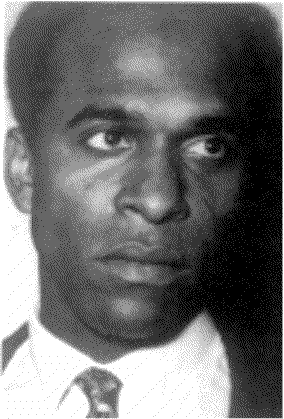
(Frantz Fanon)
I heard my friend in pain. And I could understand his pain completely. Dark skin and beard often arouse pity and revulsion amongst the people especially in the sophisticated crowds. If you are a celebrity, then anything would go; if not, you are the scum of the earth. The wretched of the earth are still identified by dark skin. I remember a couple of incidents in which I myself was put into thanks to beard and skin complexion. When I went to Oman, security took me away even after the clearance of my papers and X-raying of luggage, and questioned me thoroughly and checked me for ‘narcotics’. And surprisingly, the heavily armed security personal who questioned me with a hostile attitude was a black man of Afro origins! Six years back I was stopped at the Indira Gandhi International Airport in Delhi when I was collecting my baggage. They thought the bag that I picked up from the belt did not belong to me. I was not sophisticated enough to carry that bag!
(Malcolm X)
We live in a country with a history of mendicants and wandering minstrels. We live in the land of Buddha and Mahatma Gandhi. We have been taught to adore people who have sacrificed material security and embraced the life in the wilderness and of wandering. But growing influence of globalization has made us a race that hates its own roots and complexion. We are in a dangerous world and only hope is that there is still a minority that still upholds clear thinking, resistance and humanity as their life principle.
Subscribe to:
Posts (Atom)