Wednesday, June 17, 2020

Contemplating the Lost Works of Art on a Hot and Humid Evening


(Artist Dr.Raman Kutty)


Paintings get lost. Paintings get found. Lost paintings live on in digital or electronic images the way dead people live on in photographs. Dead people leave some traces; lost paintings generally don’t leave anything. Sometimes artists forget them altogether till they are rudely reminded of their absence. The knowledge of loss is more painful than the loss itself. If the artist doesn’t know that the paintings are lost they are fine; but the knowledge makes them painfully nostalgic. Some paintings are found in the attics, some in rolls, some in plastic pipes, some inside bubble sheets, some on the walls of friends’ drawing rooms, some in the drawers of old tables. In the case of a famous artist retrieval of a lost work or a body of works is an occasion to celebrate. If he is dead and gone, still there will be some celebration for it could strike gold in the auction market. But for a poor artist, finding an old work is finding a prodigal son, broke and wasted, in the old age. Where to keep him is again the question and also what to do with it.


(Artist-writer Amal Pirappancode)

Many an artist finds it difficult to keep the old works in order and archived with proper information. Works of art generated during the formative years of an artist are destined to be lost. They are not really lost; at times they are abandoned. Artists leave them with their settled and affluent friends, with a promise to pick them up later, a promise that is never fulfilled. If the said artists make it at some point of life, suddenly the keepers of the works remember the treasure that they hold. If the artists don’t make it in the market, after a few reminders, the keepers would abandon them. If you see a work of art, pretty much in good condition or losing sheen with time in the second hand markets, be sure that there is an artist somewhere in the world who has lost that work to a friend, an erstwhile reluctant but benevolent patron or someone who has gone awry and needed to pawn a work of art from the family’s holding. Each lost work is destined to be found somewhere else beyond recognition by the people who see it, if they have not destroyed by the ruthless time, insects and human beings.


(Lost painting by Dr.Raman Kutty)

An old work of art thus lost and found elsewhere without the knowledge of the artist who had made it has its own use value. Those people with spurious reputation for making fraudulent copies that exactly look like the original, including the signature of the artist, do buy these lost works from the secondary markets and make use of those canvases and frames for painting on the images of some master artist from a particular time period in his life so that they could pass it on as an original done on an old canvas that dates back to the image in demand. The frames are equally useful. The new works done on old canvases are framed in this old wood so that none would even question the originality of the work. Some of you may be thinking of the paints that have been used for making the fake image. The frauds do collect old paint stocks directly from the company discards and use them for painting the fake works of art. At least twenty per cent of the works that move in the market are fakes thus made original.


(Lost painting by Dr.Raman Kutty)

Artists who have lost their works in their original format would never try to make the copies of it. They just do not want to do that because they consider the image and the passion with which they had done those paintings sacred. They don’t want to impose profanity on them by painting at the same on a different surface. Another factor that prevents them from attempting the same works again is the time that has passed between the lost works and the types of works that the artists are doing at present. They may not be the same. Like everything else in the world art styles too change with the ageing of the artists. The works may look the same but there are minute changes in them. A singer may be singing the same song for the nth time but each time he renders it he makes certain changes in it and is recognized only by diehard listeners. Rendering of a song could be affected by the temperature in the hall or in the atmosphere, the audience response, the accompanists and the city where the concert is performed and so on. A painting is never repeated; may be it is repeated in form with almost likeness but the spirit is never the same. A copy is a copy is a copy even if it is done by a master artist. That’s why artists never get tired of painting the same theme because each time they do it they do it differently though it looks the same for the untrained eyes.


(Lost painting by Amal Pirappancode)

Dead people are dead people but lost paintings are not dead paintings. Dead people are dead because others see them their dead body. Seeing is believing in the case of death. A missing person, even if he is dead for years, is never a dead person simply because the others have not seen his dead body. There is always a chance of him coming back, may be after a hundred years. Lost paintings are like lost people. The artists will never believe that they are dead. If the artist has seen it being destroyed right in front of his eyes, he would believe that it is dead. If it is simply lost, there are chances of it one day knocking at his door, if not in the form a canvas or paper roll, in the form of a courier boy, a journalist or a buyer himself who has come knocking for getting an authentication certificate and a photograph with the work from you. You never know what is going to happen to a work of art once lost coming back to you in the form of a precious bond. Once turned into a market commodity, a work of art can create wonders for the holders, if not for the artist.


(Lost painting by Amal Pirappancode)

There are many things in our lives that go missing; a watch, a pen, a purse, a gold ring, a vessel, a muffler or woolen cap. One day, as you search for something else, they just pop up from some unexpected corner in your own house. You wonder why you did not notice it all this while. But with a beautiful but tired and old smile you welcome it back to your life. The work of art thus found may look a bit out of place in your studio as it watches the current body of works that you are doing now. But once propped up on an easel you could have a silent conversation with it, hold it, look at it, may be cry a little bit, exactly the way you do when you see a long lost friend again. The shocker of your life may come when you see your lost work displayed in a gallery that you don’t have any clue of having contacted or sold to. The shock would be doubled if you see the same work of art is signed and displayed by another artist! So long as you don’t recognize your children once lost in a fair ground they could stand right in front of you as a stranger and even share a smoke or a drink with you. But the problem floods in when you recognize your child. It is always better to have their life as they have it now. The moment you get involved legalities would follow, and your age and demeanor may not be comfortable in pursuing a legal course. May be you are married again and the current spouse do not want those middle aged children back in your life! A true parent is an old parent who looks at his lost child after many years with a lot of pride if he is doing well, and suffers silently if the child has not lived up to your expectation.

-JohnyML

(Today I found two artists, Dr.Raman Kutty and Amal Pirappancode reminiscing about their old paintings irretrievably lost due to many reasons. Reading their views on it this rumination took me over and I typed them out for you to read.)


Sunday, June 14, 2020

If You Don’t See the Knees of the State on Floyd’s Neck in These Paintings What Else do you See?


Landscape art is the latest fad. It gives an artistic opportunity to express one’s flair for painting, concern for the environment and above all, one’s innate need to evade the immediate social crises. Hailed as a safe haven for many an artist, landscapes otherwise provide a vast vista for visual, aesthetical and philosophical contemplations. Technically speaking the body of works that I present here done by Prasad Kumar K.S, does not belong to the landscape category. At the same time it is not too far away from it either. As I look at them deeply the central imagery of a tree transforms and transcends into a symbolic form, a metaphor for a struggling human being as we have seen in the paintings and sculptures of Michelangelo, Francisco Goya, Auguste Rodin, Chittoprasad Bhattacharya and Prodosh Dasgupta.


What do you see here? The central imagery, that is a tree which is weighed down so forcefully by heavy loads and clamps fitted to concrete blocking, literally choking and blocking its natural growth. But the tree is as relentless and determined as its oppressors. It has determined to grow, though misshapen and twisted; but it does grow and finds the sky. At the tips of the branches lives the freedom and existence that the tree cherishes. With indomitable spirit it proves to the world that you can defeat but you cannot destroy a human being because he is driven by the perennial energy to survive, nourished by hope.


What do I see here in this tree painted by Prasad Kumar? I see the faces of all those people who walked back to their villages during the lock down days in India. Daring the brutalities and heartlessness of the State they braved the hostile distances. Reverse migration was it, said the sociologists but for the migrants it was their exodus to hope. Once they had left those barren villages thinking that they could make a life in the peripheries of urban spaces that they themselves would build. They had lost hope in their villages. They were oppressed by the caste realities and poverties. Dr.Ambedkar too had asked the downtrodden people to move to the cities to build their life in comparatively less oppressive urban spaces. Now they were walking back, once again showing their indomitable spirit of survival. Now they were seeing hope in the villages that they still deemed their mother.


What do I see in these paintings by Prasad Kumar? I see the face of innumerable Dalits in this country who are, at every step, asked to bow down or rather make way so that the upper castes could move forward. These trees, the protagonists in Prasad Kumar’s paintings are the metaphorical representation of the Indian Dalits who are part of the International Black Communities. Look at the way the trees struggle and look the way the upper caste rules gleefully pull them down, hold them back and confine them beyond movement, blocking all the possibilities of free growth. The most surprising thing about these paintings is the HOPE that they could emanate. And at the same time they show how the burdens of the past, caste, poverty, discrimination, criminalization and dispossession for ages weigh them down at each stage of their lives. But they do live on and flourish though distorted and twisted. One could feel the pain of such growth.


What do I see in these paintings? I see the face of Geroge Floyd who had been choked to death by the American Police. He was black and was his crime. Floyd’s death is the latest in the series of murders committed by the White state Police with racial superiority consciousness and innate hatred for the Blacks. ‘I can’t Breath’, the last words uttered by Floyd under the pressing knees of the policeman have become the refrain of the protesting people from all over the world, who are now shaking the citadels of the brutal rulers. Along with Corona, the world has divided into two, before Floyd and after Floyd. The camps and weights in that you see in Prasad Kumar’s paintings are the metaphorical knees of oppression and racial hatred prevalent for centuries.

-JohnyML

Tuesday, June 2, 2020

Christo and Indian Artists: The Love-Hate Relationship


Christo Vladimirov Javacheff aka Christo 1935-2020)

In history some deaths are events and some others are not. Deaths can never be farcical because they don’t occur a second time for the same person; some deaths are enacted twice for legal-economic reasons. We are talking about normal deaths. Looking at the social media response towards the death of artist Christo Vladimirov Javacheff aka Christo, it seriously feels a notch less than being an event. Things were not the same with Maya Angelou and Marquez; people all over the world had gone crazy with affected grief disseminated like a mocking virus. Christo, the Belgium born French artist was an artistic phenomenon like Marcel Duchamp and Joseph Beuys though he has never been celebrated like the former duo.

It would be interesting to see the impact and influence of Christo among the Indian artists. Till mid-1990s, art historical information and the details regarding contemporary experiments with art in the West and the powerful Eastern countries like China were a highly guarded secret in the Indian art scene. Affluent and lucky seniors were able to travel abroad and could get firsthand information about contemporary art. The catalogues that they had brought to India were treated like top secrets. By the second half of the same decade the impact of globalization was slowly seeping in; in the case of art it was through the libraries.


(Wrapped Coast)

Two books made available to the major libraries in India, namely Janson’s History of Modern Art and Hans Werner Holswarth’s ‘ ‘Modern Art’ published by Taschen, a German publishing house started in 1980 giving a tough competition to the till then unrivalled British art publishing house Thames and Hudson, established in 1949. These two books covered modern western art from Impressionism to mid-1990s along with the monographs and the art movement based studies published by both Phaidon and Thames and Hudson. It was in these books for the first time that the Indian artists came across the works of Christo.

Oil painting was seriously challenged at that time by the youngsters and many were greatly influenced by the works of Duchamp and Beuys. Still the galleries and other art establishments were not ready to shake off the grip of the oil painting genre, and had considerably controlled the meagre art market that they themselves were instrumental in making. Young art graduates were converging in Delhi and Mumbai and were seeking opportunities to practice alternative art. The economics of art market was still a hard nut for them to crack and the only way left to them was to challenge that economy both in theory and practice. Inspired by the theories of conceptual art, ephemeral art, happening art, process art and the early beginnings of performance art heavily documented in the above -mentioned books, the contemporary artists started meandering through the world of ephemeral art and conceptual art; perhaps that was the starting point of installation practice in India.


(Wrapped Reichstag’ (1995)

Robert Smithson, Christo, Hans Hacke, Vito Acconci, Chris Burden, Anne Menderita, Marina Abromovic, Richard Lang, Tony Crag, Richard Long, Anselm Keifer, John Baldasseri, Meret Oppenheim, Richard Serra and so on were the most inspiring figures and it was seriously difficult for the artists to emulate any of those artists within the given socio-economic and cultural scenario. A proper milieu and platform were needed but the extreme grip of the art market did not allow any of these conceptual works to be displayed in their galleries. Hence, the young artists had to live a double life; day time painters and night time conceptual artists. Christo could have been the easiest one to mimic but such mimicry would have landed the artists in the hands of law for the ruling conservative environment.

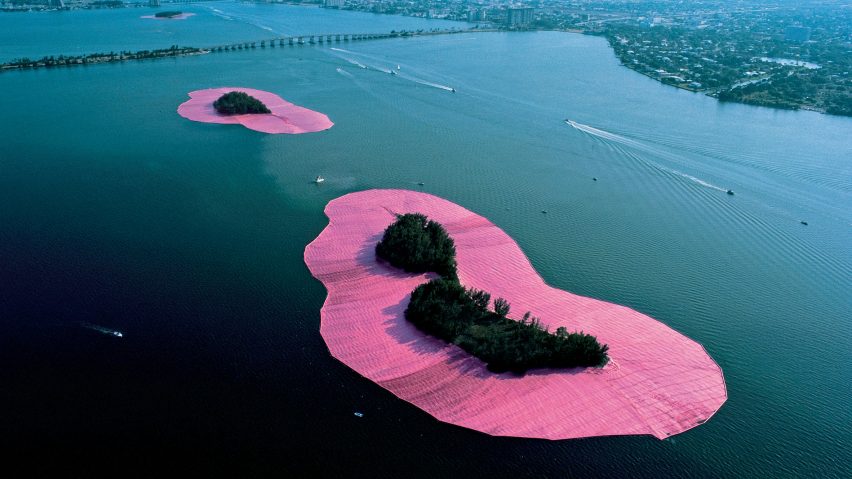
The most attractive part of Christo was his gradual progression in art that he had started with his French wife and collaborator artist, Jeanne Claude. The available images and information regarding Christo’s work were the ‘Wrapped Coast’ (1969), Valley Curtain (1970), Running Fence (1972), The Umbrellas (1984-1991) and so on. His masterpiece, ‘Wrapped Reichstag’ (1995) came after a prolonged legal fight with the German parliament for almost 12 years. A book detailing the legal proceedings of the twelve years were published in a book form and it was made available in the Central Lalit Kala Akademi library. This was a major source of inspiration along with a monograph on the life and works of Hans Hacke. Artists could allow themselves to be influenced by those artists from the conceptual stream who did material based works that could have been contained in the galleries. Vivan Sundaram is a pioneering figure in the installation art in India while N.N.Rimzon could ideate in the line of Tony Crag and Richard Lang, a few emerging feminist artists could think in the lines of Abromovic and Carole Schneemann. Artists like late Shantanu Lodh and Inder Salim started performing like Vito Acconci and Chris Burden.


(The Umbrellas (1984-1991)

None dared to go in the path opened up by Robert Smithson though some bold attempts were done by an artist named Umesh Madanahalli whose earth based action, process and performance pieces were a new breakthrough in Indian art in the late 1990s. Land and environment art became a fad later on in the new millennium with the art market opening up globally and letting the Indian art reach new heights. Christo still was an enigma for the Indian artists. Christo’s Umbrellas in Japan and the US could have inspired Antony Gormley to do his Horizon Field Project in Austria. In India none touched Christ using the same aesthetical mode. But his methodology was largely followed till one artist came up and did something similar to Christo but in a miniature scale.


(Horizon Field by Antony Gormley)

Christo started covering up objects and houses and later on huge buildings; the progression was gradual and the engineering involved was phenomenal. Christo-Jeanne Claude liked changing the familiar into unfamiliar. He made everything an obscure object of desire. In obscurity there were aesthetics and a threat; a challenge and an incomprehensible phenomenon. The covering process itself was quite challenging but the process defined his art than the covered up object. It was a sort of impermanent art which could exist only in documents and photographs. He rendered his art a sort of de-commodified anti-art. He needed funds to make his art and he couldn’t have sold his works to any collector for their sheer de-objectified nature. But patrons thronged up to support him for the challenge was universal and once in a life time opportunity.


(Les Moulins by Shilpa Gupta)

Following Christo in his methodology was Subodh Gupta whose works using cast bronze or aluminium started off in a small but human scale only to grow in size as the years progressed. Gupta’s idea was make the obvious more obvious yet strange for their sheer shock value and curiosity. Christo was definitely not attempting to shock but making the impossible relent. There was something Promethean and Hemingwayesque about Christo’s works. But Gupta’s are products that challenge the viewers with their unnatural thingness. Then came another Gupta, Shilpa Gupta. She covered the objects confiscated by the airport security personnel with band-aid clothes, erasing their brand and use values. One could see and feel the shape but couldn’t have used or experienced. The experience remained in the very act of seeing it. Shilpa Gupta was Christo-like here in this body of works but she moved away from it as she had taken it as a one off project, perhaps less lucrative as far as the market was concerned.


(Installation by Subodh Gupta)


Covering the objects and obscuring the identity, as an artistic strategy was not entirely new with Christo. In art, the Indian artists had previous encounters with the works of Georgio de Chirico and Rene Magrette. Encounters with the works of Philip Guston, Otto Dix and George Gross also had given some idea of masking the faces and obscuring the identities in their paintings. Henry Moore’s sculptures also had given the viewers a sense of wrapped up sculptures during the major part of the 20th century. Imagine someone in India attempting a Christo act in the art scene. First of all it would be treated as a criminal act; even if it is not taken so, it would take many of years for people to even recognize a wrapped object as a work of art. We should not forget that these are the days we see a lot of Christo works in real time; the black body bags in the corridors of Covid-19 hospitals.

-          JohnyML


Friday, May 22, 2020

Examining Six Self-Portraits of Shibu Natesan in the Context of Covid-19


(Shibu Natesan Self-Portrait Number 1)

A self-portrait, as far as an artist is concerned, is a very special and significant moment for he/she does not come to model for him/herself that often. That means self-portraiture is a moment of arrival and a moment before departure. Mostly done in a single sitting, a self-portrait heralds the arrival of the artist to that moment which finds himself too inspiring to avoid. And he would hanker around for long as the moment of arrival engenders the moment of departure as well. Hence, we could say self-portraits are a spontaneous yet very volatile moment that anticipates an ‘exist’ rather than a virtual sojourn within the space and time. It is different from a photographic self-portrait because in photography the portrait happens in a moment though after much deliberations that would result into the desired (self) portrait but in the case of painted self-portrait the result spreads through many moments which could be a single sitting or an extended one segmented into various times of the day or over a few days.

An artist, while doing a self-portrait examines himself, exposes his inner thoughts, turbulences and vanity he also inadvertently lets the people to come and take a good look at his ‘original self’ which remains hidden on a normal day at any given point of time. Before the easel where he does the act of self-portraiture he is also in an interim space, not exactly between the entry and exist points as mentioned before, from where he looks at his reflection on a mirror and at the canvas or surface where he makes the portrait. In this sense, an artist is an observer and the observed, the subject and the object, the object of his own desire and the very image of it. He may be flaunting his artistic prowess to create a likeable self-portrait in terms of likeness and an impressive one, in terms of its execution. He stands to gain accolades but at the same time he is at the edge of a cliff where he could lose the grip on his ego and fall into a ditch of self-exposure. A posturing could betray the underlying fear and trepidation and even if he denies his weaknesses the apparent strength itself could collapse in the weight of the denial. In short self-portraiture is a dangerous game, and adventurous pursuit, creation of a brittle auto-fiction, if not a plain confession.


(Shibu Natesan Self-Portrait Number 2)

In this short essay an attempt is made to locate the six self-portraits by the noted artist, Shibu Natesan (b.1966), done during the lockdown days in March 2020 in Wales, England. He was in London, spending time with his family when the Covid-19 pandemic broke out in the world. Wales, a country side location where Natesan’s wife, Kate Bowes, an artist herself, has her ancestral home, became a retreat for the artist and family as they found the place safe from the virus attack. A retreat is a happy retreat when the move is willingly done but when locked down from outside even the best place in the world could exude a sense of jail. Any creative person overcomes such moments of locked up feeling by engaging with it directly or by taking the attention away forcefully from it. Natesan seems to have done both of these; in his profuse landscape paintings one could see how the artist takes his energies away from the threat of the virus by indulging deeply into the beauties of nature and painting it. But when it comes to the direct engagement with the sense of the pandemic lashing out all over the world, he could do nothing but looking at his own self and paint it.

Natesan has been a master of self-portraiture. His mastery has also been seen in making portraits of unknown and well known people, always willing, patient and enthusiastic sitters for him, whom he meets while his innumerable journeys to make plain air paintings of the landscapes. Perhaps, he treats the given landscapes in front of him as people and models who prod him to paint their likeness, most importantly, the way he wants. In the context of the pandemic the models are always possible distractions and sensible engagements than a dialogue with the situation. Misery cannot always be dipped into beauty though misery has its own beauty when captured in forms and shapes, in moving or frozen pictures. Misery of the human beings in any part of the world has to be addressed and if they are within the means of addresser it should be alleviated. But alas, an artist is just an individual who could flag out, scream out and point out, but never offer solutions or means of it. In art there are no immediate or long term solutions to problems. But there are locations in art where one could see how the world should not repeat certain follies.


(Desperate Man by Gustav Courbet)

Self-portraiture is a self-examination; the way a woman searches her bosom to make sure that she does not have any carcinogenic lumps there. It is tender yet apprehensive; it is curious but pregnant with the possibilities of future miseries. It is self-assuring but doubt inducing. It is a private act yet once doubts confirmed it is liable to be exposed and treated. That means self-portraiture is a beautifully rough act; a violent yet pleasurable and dangerous self-indulgence. Natesan takes this risk and the risk becomes too palpable and visible when we see very few artists have done self-portrait in contemporary Indian painting. Self-portrait as a part of the narrative or as a surreptitious intervention by the artists who did miniatures and votive paintings for the patrons is a different genre altogether though art historically they too are treated as self-portraits. But Natesan’s is more independent and less interventionist like those in the lineage of Rembrandt and Courbet. In India, an artist like A.Ramachandran has dared to involve his self-portrait in his narrative works but the prolific doyens like Ram Kinkar Baij and K.G.Subramanyan have always resisted the impulse to make self-portraits in or as their works of art. This gives a unique position to Natesan in the art historical discourse in India.

Self-portrait number one shows Natesan sitting in an erect posture, palms on his knees and giving a side glance with the lips held tight. The summer in Wales is pleasant yet there is a nip in the air as the round neck full sleeve sweater worn by the artist suggests. The background is plain. The flowing locks are open and the light falls on his face from the right side of the painting a la a Vermeer painting. As we know that the Covid 19 was around then, the artist’s erectness shows his alertness to the situation. The tight lips suggest that he is yet to make head or tale out of the pandemic condition. He seems to be a bit tensed for the sudden shift to the Wales. The Grey tone of his clothes though a bit mundane should reflect the undecided nature of his mind for the time being.


(Shibu Natesan Self-Portrait Number 3)

In the Self-portrait number two Natesan seems to have grown familiar with the surroundings and has decided to put up a show for his own enjoyment. The half cushioned hacked and apparently the same grey t-shirt seems to make a good blending. What makes the portrait interesting is the red cap whose reference should be to the reggae musicians like Peter Tosh. His gaze is sharp and is directed at the imaginary viewer who is none other than himself. The gaze is quite piercing as he tries to look into himself and the show that he has put up for himself. The semi parted lips show a bit of ‘I do not care a bit’ attitude often exuded by the Rastafarians. Still the facial muscles are tensed and there is no chance of him relaxing internally. The work has certain self-referential qualities as similar posture could be seen in some of his early self-portraits.

The third Self-portrait seems to have originated from Natesan’s mental dialogue with Gustav Courbet who had done the self-portrait as a desperate young man. Courbet’s face is upfront and to the viewer. The eyes are wide open in it and one could sense the pang of a wounded soldier in his face. Natesan perhaps avoids the pain on face. But the expression betrays the desperation that he feels inside. The light falls from the right on his back highlighting the contour of the body as well as the folds of the clothes. He refers back to the works of Jean Ingres, perhaps in this work. As the gaze is averted and an extra sharpness given to the edge of the nose gives a sense of inquisitiveness about the surrounding that has just beckoned him back. Perhaps Courbet and Natesan have the same thin moustache!


(Shibu Natesan Self-Portrait Number 4)

The fourth self-portrait is more typical of Natesan where he seems to have adjusted to the pandemic situation that has held him back in Britain for more than expected. The gaze is direct and there is a sense of reconciliation in his eyes. The same clothes as in the first portrait show that he has been home bound for some time and his outing to do landscapes has not really been regular. The scarf around his neck in the previous portrait seems to have obscured deliberately to give a look of a lowered mask, which has become a health protocol all over the world. Once again the gloomy grey has come back as a background and the summer light hasn’t really lit up the mood or room. The extended left had must be holding on to the frame of the canvas on the easel but he leaves it obscure and lean as he thinks it is unnecessary to think about the details and go for what is apparent.


(Shibu Natesan Self-Portrait Number 5)

It is quite Zizekian as we come to the fifth Self-portrait of Natesan. He has all braced up to face the world. Covid or no Covid, I am here to work, he seems to declare the world. Zizek says that when we are afflicted by an illness we go through five stages of dealing with it, namely Denial (No it cannot happen to me), Anger (What on earth it came to me, why didn’t it spare me), Bargaining (Oh good Lord, give me some time so that I could finish my duties and tasks), Depression (No way…I am down now..), and Acceptance (Come what may let me live the rest of my life happily and I ready to die). Natesan in this painting seems to have reached the final and fifth stage; acceptance. The red sweater and apron shows the sanguine nature of the determination. Like Ernst Ludwig Kritchner, Natesan holds an erect brush in his right hand to assert his decision to live and paint. A portion of the adaptable easel is seen reminding the convention of Velazquez or Van Eyke. The mandatory mask is around his neck and what makes the painting assertive is the background where the flat emptiness is replaced with a traditional wooden shelf where crockeries are beautifully arranged. The gaze is more direct and cheerful. The apprehensive holding of lips is gone and they are shown full below the greying moustache.


(Shibu Natesan Self-Portrait Number 6)

Once all five stages are over and the summer has made the surrounding more beautiful than ever and the hope is fully back in the minds of the people as well as in the artist, the self-portrait number six shows an absolutely different feel. Natesan is seen more like a contemporary troubadour, with a Neruda like hat and a high neck Indian half jacket. A middle dandy with flowing hairs has his chin up and a quizzical look in his eyes. Like the second portrait here too you could see an act, a posture but with more lightness than the former one. Though the eyebrows are crooked to show questioning look, it is not really a serious one but a moment before the exit, a laughter perhaps. Natesan has also done a series of oil and watercolour landscapes immediately after March 2020. Rembrandt was examining himself through is self-portraits while registering his ageing but in Natesan’s case it is not the registration of ageing but the time that has held one and all in thrall without letting know anyone about their lives or deaths. One could see how the emotions festered in each person in the world which must have taken different forms of expression including poetry, painting, music, pornography, self-portrait, short film making and domestic violence. Natesan’s self-portraits are not his picture alone but the picture of all the people who have lived in March 2020 and lived beyond it.

-          JohnyML


Sunday, April 12, 2020

Santos does not See a World without Intellectuals


Sociologist Boaventura de Sousa Santos
Boaventura de Sousa Santos, one of the prominent sociologists has written an article titled ‘Intellectuals Should Come to Terms with the Tragic Transparency of Virus’ and it seems that many ‘intellectuals’ themselves have taken it for a clear evidence to the pursuits, intellectual as well as theoretical cancelling out themselves. In fact Santos does not question the intellectuals instead, he problematises the stance that the intellectuals have taken in theorising the pandemic context and events all over the world of which calling the state for the protection of the populace even at the cost of democratic and socialist values that the intellectuals have been holding up dear and high in their theorisations. It does not mean that Santos nullifies the theorisations; rather he asks for a rethinking of it. He points out how Agamben and Zizek, in their formulations, are calling out for the ‘undemocratic state of exception’ and a different form of ‘Communism’, which does not have anything to do with the Stalinist Communism that has become an emblematic of all what has gone wrong with Communism. 
Comparing the invisible forces of Market economy with the present Corona Virus, Santos makes a theorization of the same through drawing parallels in their working in our daily lives; both mundane and transcendental forms of it. He says that market is invisible so is virus. Market lives in the world here not in the world there. The only difference that once could see between the market and virus is that the former works for the rich and works against the poor; virus does not have such discriminations. Omnipresent they are though invisible, they fit into their own specific spaces, ‘gods in temples, virus in bodies and market in stock exchanges’ leaving the human being without these three a ‘transcendental homeless being’. 
We have to understand that Santos is not talking about the human beings in particular; his formulation does not exclude the ordinary mortals and the ‘exceptional beings’ like intellectuals. It speaks of the human beings devoid of those three spaces. And another set of trinity plays an important role in the non-transcendental life of the human beings; they are namely Capitalism, Colonialism and Patriarchy. He brings about a visual allegory created by Leonardo Da Vinci in the painting of Three Unicorns who are virulent and violent but could be defeated through sly. Capitalism functions through the omnipresence of market, colonialism has reincarnated into neo-colonialism, imperialism and so on. And patriarchy, despite all those progressive movements such as feminism and women’s legal right movements, presents itself in ‘domestic violence, sexual aggression and femicide.’

The misinterpretation of Santos (not by him) seems to have come from the concluding paragraph of the article where he speaks of the change of position that the present day intellectuals are bound to take eventually. He says that the intellectuals as vanguards is a thing of past means, the intellectuals no longer leads from the front because their leadership has become more or less redundant. “Intellectuals should see themselves as rearguard intellectuals, must heed the needs and aspirations of ordinary citizens and find out how to use that a foundation for their theories.” If not the people will be left with no devices for themselves other than listening to those who would understand their language and speak in their language. According to Santos, they would be the fundamentalists of any kind who ‘stand for the capitalist, colonist and patriarchal domination.’
To put it in simple terms, the intellectuals should change guard, which has been in the vogue for quite a long time. It is a call for ‘leading’ people from behind, which is an impossibility for one could only order or prompt or instigate people from behind. What Santos means is that the intellectuals should no longer cherish the dream of leading social movements for the leadership has already been taken by the people. They organize and agitate without heeding to a particular theory or leadership. Such formations have been a reality of the new millennium and it has been called ‘subaltern democracy’ by theoreticians like B.Rajeevan. However, it does not cancel out the intellectuals from the discourse altogether for the intellectuals eventually take over by ideating the dynamics of such subaltern formations and integrating them with the international discourse of similar movements.
Even in the times of Covid 19, the voices of the intellectuals have created such varied discourses in dealing with the post-corona context of the world rather than the rhetoric of the politicians and the sheer pragmatism of certain leaders and their governments. It is also important to say that not even once that the intellectuals thought of taking a vanguard position in the time of Corona though they have been by default catapulted to the frontline of discourse. It happens contrary to the expectations and the rearguard position is not a bad position so long as it helps one articulate the finds with certain amount of clarity. Hence, the claim of intellectuals being rendered as useless entities is just a false hope and does not help much in articulating the present world or the changed world in the post corona context.

Sunday, March 29, 2020

A Migrant’s Progress to Gallows: ‘Eli Eli Lama Sabachthani’ film by Jiju Antony


(Still from Eli Eli Lama Sabachthani by Jiju Antony)

Holocaust and the Partition of the Indian Subcontinent have given us more burning images than any other world events could impart. Perhaps, if you just close your eyes, closer to home images of horrifying images might pop up. And you often wonder why, if given without a suggestion to think a good or bad image, but just an image, why you imagine only those horrible images? Do images an innate horrible side to it? Does each beautiful image engender a horrendous image? Do the good images hide the bad ones? While the latter cannot be doing the same to the former ones, in dire contexts or even in the controlled contexts of a concert hall or a theatre or even in a drawing room where you read your daily dose of newspaper, the sad images could lead you to a cathartic experience and after the mental climaxing you may, yes you may, come out of the experience as a much refined being, at least temporarily. That’s what art does to a person. Jiju Antony’s movie, ‘Eli Eli Lama Sabachthani’ (EELS-2017) does the same to a viewer, especially when one sees it against the backdrop of the images of migrant laborers walking miles to get home streaming into his consciousness.


(Filmmaker Jiju Antony)

The word could be cathartic, when spoken in the context of a movie or art form as just mentioned above, but in a real life situation the images could something else; a pure indignation could fill inside you, an unreasonable dejection might engulf you, an inexplicable gloominess would envelop you, provided if you are a human being. If you are in a high rise building, move away from the balcony for you might feel this itch to jump down. If you are in possession of a gun, keep off from it for you might pull the trigger against yourself for you and I know it is a gloomy Sunday. Art could however make life imitate it inversing the oft-held notion of art imitating life. Here, almost four years before, Jiju Antony, the director of EELS seemed to have imagined the life imitating art. This line of thought becomes all the more poignant and powerful when you tend to see each abstract face in the milling crowd of daily wage earning men and women throng the bus stations in the blistering hot, making the drone shots a jumble of human pixels, a story. Like a shot where an image comes into focus after hovering around in out of focus for a long time, the faces become clear and each face belongs to a human being and each of them has a story to tell.


(EELS poster)

They do not tell it. They perhaps tell it to their silent nights through sighs of longing and pain. But there are sensitive film directors like Jiju Antony who would walk an extra mile to eke out stories from those faces. In EELS the protagonist is a taxi driver (when we see him in the narrative for the second time) and in due course of time we come to know that he is an orphan named Prakash Jadhav. As we see him on his day of hanging inside the jail and also in the 9th segment him committing a rape and double murder we ourselves have given the judgement that he deserves the capital punishment. Hailing from the underbelly of this vast country called India, any innocent looking person could turn into a potential criminal and that is what we learn to believe. A flotsam in the urban pool of life, these people are looked at with suspicion and distrust. And each time we confront them we make them believe that they don’t belong. “Tere aukat kya hai yeh toilet use karneka’ (What’s your right to use this toilet) asks the lady who has employed him as her personal driver. The relationship between the employer and the employee is so tentative and flimsy that any moment the latter could explode. He doesn’t do it because he does not want to be a criminal; but each time he knows that one beast is growing in him. He doesn’t even spit that hatred growing in him like the way the protagonist in Arvind Adiga’s novel the White Tiger, Balram, a driver does.


(Prathap Joseph, cinematographer of EELS)

What makes one a criminal is the question that many a film has explored. But in EELS, done in the Decalogue fashion, ten stories, of the same person but done in a reverse order but not strictly in a flashback fashion. Also one could see Jiju auto-refers the short movie, ‘An Incident at Owl Creek Bridge.’ However, Jiju’s idea is not to justify the rape and murder committed by Prakash Jadhav but explore how he has become one. In a way the culprit is not Jhadav but the events that unfold in his life which lie beyond his control. By the time we reach the last section we almost sympathize with the six year old Jhadav and wonder how this boy could do such atrocities in life. He goes through a series of setbacks in his life. Orphaned at a young age he is brought up by a Christian priest who subjects him unnatural sex which makes him escape from that hell. His baptism through street life and destitution finally makes him a taxi driver and in the meanwhile his experiences have made him impotent. His impotency is treated in the movie as a trope that makes him rethink about his worth and manliness and he could express that only through violence.  


(Deewar by Yash Chopra 1975)

One may find Jiju’s movie thematically a bit overdone especially in the mainstream cinema where a harrowing life is attributed to the protagonist to make him an anti-hero that a society craves for especially when it collectively feels the political impotency. But the way the film has been created is different. One doesn’t even come to know the transition of tone in each segment to not only show the time in past but also to emphasis the dying innocence of the man. By the time he commits crime, he is in color. One good thing about the movie is that neither the character Jhadav nor the director justifies the wrong doing of the protagonist. There is a sort of inevitability of events in the movie that couldn’t have controlled by any other parties. It is not even like the man flowing with the stream but it is more like an episode caught by the storm of history, as Walter Benjamin would put it. Perhaps, the grand tragedy of Jhadav is the collective tragedy of the laborers in India. Disorganized and anchorless these people are pushed to the edges of the society, as dregs of life. It is an effort to find a meaning to its own incomprehensible existence. It is not like the grand narrative of Deewar (Yash Chopra 1975) where the protagonist from the village living on a footpath looks at the high rise, promising himself to reach there by hooks or crook. Vinay Lal, the sociologist and cultural historian speaks of two viewpoints of the movie; one from the footpath and one from the high rise. ‘Mera pass gadi hai buglaw hai…sab kuch hai, tuhmare paas kya hai?’ (I have got a bungalow, car and everything what have you got?) ‘Mere pas maa hai’ (I have got mother).


(Cultural Historian Prof.Vinay Lal)

This effort to belong versus the natural belongingness (to mother, mother India, mother earth and so on) was the great point of crisis in 1970s and the grand narratives of the time sold the dream that one could make it in a city like Mumbai. But the post-global scenario unveiled a new reality where the movement from the footpath to high rise became impossible. Prakash Jhadav, with his surname connoting his lower caste identity is bound to end up either as a taxi driver or a small time worker. There is no emancipation for him in this city. The termite like existence that has brought them out during the corona crisis into the streets of Delhi underlines the fact that the rich has to exist with this kind of poor and make them constantly invisible. This sudden visibilizing of them through a calamity in fact has caught the rich unprepared and that has exposed their vile. Jhadav’s crime is not his crime but a collective crime which got manifested through him. It is constant invisibilizing of Jhadav and his ilk makes them assert their visibility through the most horrendous ways. Jiju Antony definitely does not endorse the criminal act but he calls out (like Lawrence Fishburne calls out ‘wake up’ in Spike Lee’s ‘School Daez’, a black redemption movie) ‘Eli Eli Lama Sabachthani’ ‘Oh God Oh God Why have You Forsaken Me?’


(Lawrence Fishburne in Spike Lee's 'School Daez)

Christ calls this out to God and it is what each person today on the road calls out. Perhaps it is what each person who have come down with Covid 19 calling out ‘Oh God, why me and why have you forsaken me?’ Prakash Jhadav could have been anybody else. But the question is that why he? So the story should go back. Had he been born to a rich family he would never have been this. Prakash Jhadav could have been an IAS officer, a doctor or anything of his choice had the events in his life were different since his birth. Hence, those who are back home relaxing and feeling okay about the migrant laborers and the destitute, Jiju Antony’s movie tells you, should know that they are lucky only because they are born in a different condition and grew up in a different way. Your crime is not lauded but the question remains, why oh God, if you are there, why have you abandoned me by ‘choosing’ me? Produced by NiV Art Movies and Kazhcha Film forum the film EELS has excellent cinematography by Prathap Joseph, himself an award winning indie film maker and is edited by another award winning film director Sanal Kumar Sasidharan.

-JohnyML

Friday, March 27, 2020

Ramayan Serial: Rethinking it through Nostalgia and Ideology


(Ramanand Sagar's Ramayan; the picture perfect ending)

It was in 1987 that we bought a television at home. I was doing my undergraduate course in English literature. ONIDA (neighbor’s envy owner’s pride), Dianora and BPL had already ushered flat screen television sets. However, the latest technology had little influence on me for I wanted a television set that looked like a television set; the picture tube eating up the major portion of the box and a side panel with switches and knobs. The salesman in a television showroom in Trivandrum tried to hammer some sense into my romantically stubborn head in vain. I wanted a television set that looked like a television set. The flat screen television set with anti-glare glass for added value did not turn me on. I was hooked to the conventional one and I found my heart’s choice in a Keltron Television set. Oh my Keltron; acronym for Kerala Electronics that had pushed its brand into the national market not as a television maker but as a maker of traffic lights. With indigenous technology of traffic light in hand Keltron remained unchallenged in the market for a very long time; today I do not know what is its condition though I live somewhere next to its headquarters in Trivandrum.

(Old Keltron Television set)

On the first day of its installation itself, by two sober looking young men with their resin bags bulging to burst with different kinds of tools (I remember the important one was a soldering iron and a set of screw drivers that dismantled the set into various pieces), the reception had gone into trouble and I had to run up and down the terrace to adjust the antenna towards the right direction. What a feeling it was to see the picture tube coming to life for some time with grains (it was raining in Kudappanakkunnu, the DD station, as we commented jokingly) and later with moving pictures gliding, swirling, folding, shaking, shivering for some more time to settle finally into some comprehensible scenes. Breaking down of the television set (why did you buy Keltron, you should have gone for the ONIDA is the general refrain) and when the television set fit like a fiddle, breaking down of the transmission itself (thadassam in Malayalam and Rukawat ke liye khed hai in Hindi) were a common feature and we learned to live with the vagaries of the television almighty.


(Shah Rukh Khan in his first serial Fauji)

Then came the Mother of all Television programs; Ramayan by Ramanand Sagar. Till then our staples were a Hindi movie on Wednesdays and Chitrahaar on Thursdays, Startrekk, He Man and the Masters of the Universe, Chithrageetham and some Malayalam movies. One good thing about watching Malayalam movies (often tear jerkers and sentimental love stories) was that the lovers separated by space (one in a village and another in a city) could watch it at the same time imagining that we were in the same room, heaving the same sighs and shedding the same tears. Yes, we also had Intezzar and Fauji that launched Shah Rukh Khan as the fast talking Abhimanyu Rai, the young soldier. Benjamin Gilani, Ajit Vachani, Kavita Chowdhury (Udaan), Vikran Gokhale, Pallavi Joshi and so on were our favorite stars. While Shammi Kapoor set the television into fire, Renuka Shahane and Sidharth Kakk told us about the culture of India. Dr.Narottam Puri discussed sports and Prof.Yashpal taught us Sunday science. Prannoy Roy had just launched his World this Week series. Miandad, Roger Binny, Kapil Dev, Gavaskar, David Boon, Narendra Hirvani, Viv Richards, Patric More and so on were playing cricket. John MacEnroe, Martina Navratolva, Gabriela Sabatini, Steffi Graff, Boris Becker were playing at Wimbledon. Sergie Boobka was pole vaulting and Mats Biondi was swimming. Ben Johnson had been just stripped off of his 100 meter record and Carl Lewis was still running. Then Ramayan happened and it was a different world then altogether.


(David Boon one of my favorite crickers)

Ramayan changed the topography of India. It reunited India in the line of a common imagination called Ramayan, the cultural saga that ran through the veins of India’s collective memory. Arun Govil became Rama incarnated and Dipika Chikhalia was unparalleled in her Sita avtar. Wrestler Dhara Singh got a second life through his Hanuman and many others got their second lease of acting life with Ramayan. But who cared about the other actors? Rama, Sita, Laxman, Hanuman and Ravan had filled the imagination of the people. For Ramanand Sagar it was not a difficult thing to make a series like that. There was no foregrounding to the story needed; the audience was already into narrative of Ramayan through its various incarnations and version in various parts of the country. Sagar based his work on Tulsidas Ramayan which in fact had forwarded a Maryada Purushottam Ram, a flawless king who was neither defeated by any nor doubted by his people or his wife herself despite his desertion at some point. It was a clean narrative and people suddenly found an anchor to their lives; no other work of visual narrative had held the nation in thrall like that before; Sholay had but it had the overtones of Ramayan. The secularization of Sholay’s narrative was good for the post –independent India where the good and bad were at loggerheads and the Hindu and Muslim were still finding their co-existence under the benevolent landlords who by hook or crook would take revenge on the wrong doers. Veeru and Vijai were perfect Ram-Laxman combination.


(Sanjay Kumar as Thakur in Sholay)

Ramayan’s success re-wrote the urban as well as rural life and its organizations. People looked forward to Sunday mornings with a new set of rituals and none moved when the serial was on. If there was a power failure there would have been a riot. A secular country overworked to keep things smooth for the transmission of an epic which had religious ramifications. But nobody was looking at the Hindutva side of it as it unraveled the cathartic plights of Rama and Sita. However, the narrative definitely worked for consolidating the Hindu sentiments in the country. Ravan was no Muslim invader but finding a common enemy in a narrative was something that the fledgling Hindutva forces wanted at that time. The success of Ramayan soon brought B.R.Chopra into action who in the following year (1988) launched his Mahabharat serial that further became the rallying point of Hindutva ideology. People with tender feeling rekindled for the ‘sanatan’ values by the serials were game for establishing a Hindu India or rather they could have been easily cajoled into the epic narratives that had taken political meanings sooner than later. Demolishing Babri Masjid on 6th December 1992 was just three years away and as in Sholay the Takur said, the Hindu leaders could say, ‘loha garam hai maardo hatoda’. The ground was prepared it was just a question of time that the Masjid fell.


(Dipika Chikhalia who acted as Sita in Ramayan serial with Mr.Narendra Modi)

I was not too fond of Ramayan. I used to take my red BSA cycle and used to ride around the village which was almost deserted during those hours. During Mahabharat times I was already moved to the city leaving the village home locked, and the same BSA cycle was my companion in the city roads on those Sundays, lying absolutely empty. They used to look like the Corona locked down days today. The city looked like George Di Chirico’s surreal paintings. I could touch my shadow for it was so thick in its loneliness and I used to enjoy that aloneness tremendously. I got much of the Ramayan and Mahabharat details from the film magazines (I was a subscriber of the film news weekly paper called Screen, published by the Indian Express). The politics of Ramayan had intrigued me though I could not put my fingers right into the eye of it. I remember writing a critique of Ramayan and sending it to the then famous cultural weekly Kalakaumudi edited by S.Jayachandran Nair only to get it back in the return mail. I still do not know whether it was the immature arguments that caused the rejection or the absolute anonymity of the author (almost a decade later I worked under the same editor as a special correspondent from Delhi).


(S.Jayachandran Nair, one of the prominent magazine editors in India)

Now it is said that Ramayan is in for a re-telecast through the same government interface. Interestingly, with the arrival of competitive private channels, both Ramayan and Mahabharat got remade and re-televised using new anchors and new gen actors only find no place in the minds of the audience. They got widely dubbed into various regional languages which became a time pass than some serious stuff that could engage the audience the way their pioneering tele versions had done a decade and half back. The re-telecast of the original Ramayan serial is said to be to fill the vacant times of the people who are caught in their homes with nothing much to do due to the corona lock down. But the suggestion is ominous, at least it looks like that to me for the right wing government at the center has lost a polarizing narrative with the relentless Anti –CAA protests followed by the quite unexpected historical and fateful leveler, Covid 19. An empty mind is a Devil’s workshop, so goes the adage. Ramayan serial is given to empty minds where Ramayan could do some Devil’s job; instead of elevating the minds of the people to embrace the world with a new vigor and perspective it could make people sectarian in the worst way possible by providing some ether moments to think about an all Hindu country where an imaginary Ram could rule once again and bring prosperity and patriarchy with added strength. It could be detrimental to the post-Corona mindset of the Indians, while the whole world is debating the possible ways of rechanneling the life energy in the post-catastrophe scenario. It can’t be religious by all means necessary, but India government thinks that it could be religious in many ways for their nefarious political ends. I cross my fingers and wait to see what people would make out of it. Watching a serial for the sake of nostalgia is one thing and for conscious ideological deliberation is another thing altogether. Still we need to see how many us have the mind to spend an hour with that when there are more pressing matters to deal with or interesting things to engage with elsewhere in the smartphones.

-          JohnyML