Wednesday, September 2, 2015

Remembrance of the things Future


My woman says, tell me a story. Which story, I ask. Any story, she says. For a moment I think that she must be asking for those innumerable stories that I have told her not only to inform her but also to take her out from the pits of the dark moods. She says a big NO. What she is asking for is not a story that I have told her. She wants a story that is absolutely new; it should be a narration either of a real incident or an imaginary one. When your woman asks you something like that be sure that she is going to infer something from your narration. It is a mind game for sure. Be careful on such occasions. As I know her very well I tell her a story which has a positive outlook about human nature and a moral. Now it is time for her to be guarded. She asks me where I heard this story first. I tell her that I studied it in the primary school. Then she demands another story which is a pure narration, not something which I had read at some point of time.


Therefore I tell her story; in fact an incident. I was travelling with a friend on his motorbike. I have not been travelling by bike for a long time. So I perched behind him on the pillion seat, with both the hands clutching on the steel clamp just behind me and also with my leather bag hanging from my shoulders. At some point he embarrassed me by saying that I was doing the backseat driving by pressing his sides with my thighs. Yes, I was doing so. Except in trains, if I am not at the driver’s seat, I do a sort of driving. My legs would go from clutch to break to the accelerator and my hands will automatically go up as if to inform the driver about an impending obstacle on the road. Good friends take these side piloting efforts with compassion and the straight talkers ask me directly whether I am not feeling comfortable with their driving or not. And interestingly, such are the occasions when the guys on the driving seats open their bundle of stories that often recount the incidents of their prowess in driving. Hapless, I sit and listen while my feet work upon the invisible clutch, break and accelerator.


My friend tells me about how the land mafia turns all the marshy lands into real estate. He points out the multistoried buildings across the river and informs me that all those buildings stand on marshy lands turned into building sites. I see huge hotels, housing complexes and other public and private buildings and wonder how the city has been growing fast, of late. My friend tells me that the building mafia fills even the backwaters and makes reclamation land and using some loopholes in the legal system, they convert into real estate. Once huge buildings are built there, as the real estate kings are either from the political class or are related to that class in various ways, they remain there forever. While the people who occupy those buildings enjoy the scenic beauty lined by coconut trees, lagoons and backwaters, they forget the fact that they are the real encroachers in the ecological system. My friend shows me a marshland which has been turned into a ground. He tells me how they played the trick; they converted the marsh into a ‘land’ by organizing a political meeting there. They sought permission for the political meeting and on the pretext they got the marsh filled. Soon there will be a huge multiplex, says my friend.

My woman listens to the story carefully. Then she tells me about the fears that she has about the future of the world. She is a very sensitive woman; the smallest of ecological problems affect her mind. She becomes sad. She believes, like many scientists in the world that human beings are not just human beings. They are collaborators with millions of bacteria. Their lives cannot be extracted from those of the bacteria. Our I-ness is not a constant and our I-ness cannot be even the I-ness because the I-ness is totally depended on the presence of the bacteria present in our body at that moment. According to her there is no I but only the combinations of the imaginary I’s and bacteria. Today, she is not concerned with I or bacteria. She is worried about the change in ecology and how it would affect us in the long run. But her concerns just do not end there. She says, as a sensitive scientific mind would believe that with the changes facilitated by such mindless notions of development, we will slowly lose the sense of remember and also the sense to experience. This would cause a series of losses, right from the alphabetical loss to the loss of traditions that include the oral traditions. A vast repository of songs, memories and rituals passed on through oral traditions would end without leaving a trace. We all live in the world of encryptions where marking the things in legible forms has taken important roles. If something is not marked, it does not exist, the notion goes. She is worried. I listen to her carefully. Suddenly I remember the story of a woman musician recounted by the late neuroscientist, Oliver Sacks. Lillian is her name. She slowly loses the ability to read and recognize things. She can write but cannot read. Even her musical notes she can write but cannot read. This condition in medical terms is called PCA (Posterior Cortical Atrophy) and the person affected by this condition would slowly lose the abilities to recognize words and things around. Imagine that situation. You know, but yet you do not know. It is quite surreal. When my woman told me how things disappear from the world by the end of the present century, I just thought of Lillian, the musician.


A story is lost, a song is gone, a memory is not traced, a place is not marked. Only because we do not encrypt them, they go out of parlance. This would be a condition of our future where things would exist yet they will not. There will be things that crave for existence from their oblivion. There will be a lot of silent cries in every mind because there will be no chance of articulating them. When a common idea of articulation is lost, the basis of narrating something is lost. When the logic of narration is lost if one attempts it, may be it can sound like blabbering. What could be done? Nothing could be done. There will be slow evolution of methods of surviving in that world and luckily we will not be around to see or experience such a world. In that world, the kind of things that we have been using, the kind of words that we have been uttering, the kind of emotions we have been experiencing, the kind of urgency we have been feeling to share etc would become useless and anchorless because the milieu or the gestalt of their existence might have been nullified by then. Exactly the way we have museum-ized so many implements and also have archived so many languages, our daily parlance of language, customs, manners and emotions also would be archived. She says that there would not be even the concept of archiving because the history as a genre itself would not make sense as it could be completely useless for those generations to come.

Eerie indeed it is. However, I was thinking something different. What are the conditions that make a narrative possible? Why did I choose to tell her a story which I thought should vibe with her love for peace and solace? Why did I think that my story would be full of hope, good deeds and human redemption? I knew that she did not like disturbing stories. She has a lot of qualities regarding understanding a human being by gestures, manners, language, behavioral patterns and so on. She is a very sensitive soul and thanks to that she remains a bit melancholic at times. As I knew that she was my listener, I conditioned my narrative and made it full of hopes and human goodness. That was the reason why I told her a moral story. But she wanted something else. Hence I chose the second story; a real incident. There too she made connections and she was so happy that I could come up with a story that involved human sensitivity towards ecology. And her happiness had another reason that she could connect the ideas that she had been thinking of late with the story that I told her.


That means, a narrative is largely determined not only by the mental conditions of the narrator and the listener (who would be mostly absent or far away from the location of narrative/narrating act) but also by the physical conditions within which the story is narrated. For example, the story would have been different had my woman been sitting with me in a coffee house, sharing a sandwich and sipping coffee or juice. The narrative would have been different if we had not fought in the morning. The narration would have taken a different turn if she had asked me to speak to her over phone. The story would have been a bit more elaborate had she asked me to send it by an email. It would have taken a different shape and tone if it was a google chat. The story could have been a different one if it was a diary entry or a blog. But the story and its crispiness were all determined by whatsapp. She needed a quick story because she had something to test with that story; she had just read some scientific finding regarding the disappearance of languages and oral traditions with in this century. Our writings are conditioned by the circumstances of its production. The physical conditions really control the way the narratives are produced. When I type out something in Malayalam in google I find it as a very funny challenge. The transliteration software does not make certain words right. For a writer, the sight of a mis-spelt word is one of the most horrible scenes in the world. So what does he does do then? He avoids that word and chooses something else that would be correctly done in transliteration. If he was writing on a piece of paper he would have definitely chosen a different word. That means, as the modes of encryption change, the very narrative take a different form. It is sad because we lose certain wonderful expressions. When we lose those expressions, we lose those experiences and feelings behind those expressions. We create physical conditions so that we need not experience those feelings as there would be no mode to express them. Slowly, our expressions would be limited to those which could be expressed by the smart phones or similar futurist devices about to happen in our midst. Is there a solution to this? I do not think so. We can guard our memories. We can create more opportunities were human beings could meet in person and exchange words , ideas and emotions. We can remember strongly; that is the only way against forgetting. Technology helps us to store but they make the forgetting easier. Choose now. Do we need better storage facilities or strong powers to remember? I will go for the latter. 

Tuesday, September 1, 2015

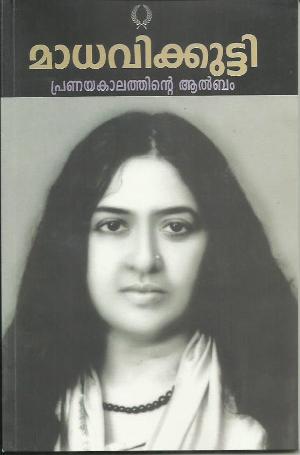
Taking Madhavikkutty Beyond Sex


“Do you like the works of Kamala Das?” asked the panel of judges headed by the famous Malayalam poet and English Professor, Vishnu Narayanan Namboothiri. “I do not like,” was my answer. It was my MA Final Viva Voce. Somehow I had hated Kamala Das. I did not like her ‘voice’; the voice that spoke from her writings. It was too feminine at times and too bold at other times. It was silly and affected, or I thought so. “I don’t like her writings,” I said again. Professors looked at each others’ face. Then they asked me to leave. I had forgotten Kamala Das and Madhavikkutty though I have been reading her all these while. Once again she confused me with her conversion into Islam. A literate and cultural Malayali cannot forget the magazine covers that showed a burqa clad face of Kamala Das in those days. She became Kamala Surayya. Her staying in a flat in Kochi had made news. Her leaving for Mumbai had made into news. She distributed her ornaments to her young friends and she gave away her car to a young radically creative or creatively radical couple (who I believe, sooner than later succumbed to the commercial pressures of a globalized world). Everything around Madhavikkutty was newsworthy. She was crazy to the extent that she made a sweet dish and distributed amongst her friends when Vajpayee Government conducted nuclear test in Pokhran, inviting a lot of flak for the act. Finally she succumbed to time and the illnesses that had been haunting her for a long time. That too made big news. She always enjoyed seeing herself in news. Death too did not deprive her of that.


I had read Kamala Das when I was in school itself. I read her like committing a secret sin. Perhaps that was the first English book that I had read. Somewhere I had read that the autobiography of Kamala Das was quite sleazy and spicy. It was titled ‘My Story’. I could lay my hands on a cheap paperback edition of it and I read. I did not understand all the words that she had written. But at some places when she spoke of herself, about her mind and about her desires, I pressed my legs together for an unknown reason. Kamala Das could titillate, I realized. Years after that I realized that I had read Kamala Das wrongly, exactly like many other grown up people of that time. Along with them I could also see only the spiciness and erotic imaginations in her writing. It was a choice of the reading public which was so concerned about its brittle morality. A Nair lady who wrote about her intimate relationships, desires and sexuality was very scandalous not only for the community in general but even for the family members. They tried to keep her away from their domestic circles. The more they tried to push her away, the more she made her efforts to belong. The more she made her efforts to belong by overdoing the old Nair lady traits she looked like a ‘slut’ and a blot to that community. She was hunted and haunted at the same time.

 (a volume of Madhavikkutty's unpublished articles that she wrote after My Story)

There were two Madhavikkuttys. One was Madhavikkutty and the other was Kamala Das. Period. Everyone knows about that. But for me there were two Madhavikkuttys beyond those two names that she chose to adorn when she wrote in Malayalam and English respectively. When she wrote in Malayalam she was Madhavikkutty and when she wrote in English, she was Kamala Das. But for me there were two other Madhavikkuttys. One, a Madhavikkutty or Kamala Das who could be read in public and two, the Madhavikkutty or Kamala Das who could be read behind the closed doors or inside the thick blankets or late at night when the world slept. When you read her, or rather when you chose to read the way the others directed you, you were like a tourist looking only for those copulating figures in an ensemble of wonderful sculptures in on a temple façade. You forget to see the philosophy, you tend to avoid the meaning and also you overlook the complexities of aesthetics. What you see are the fornicating figures. Guides, like critics just point out those sculptures. And I read Madhavikkutty in two different phases: one, during day time and people were happy to see me reading ‘Madhavikkutty’. When they found me out reading (or rather they caught me read handed reading) ‘Madhavikkutty’ behind closed doors, I hung my head in shame. The sin attached to reading Madhavikkutty slowly grew into a sense of hatred for her. I started disliking her. I started finding fault with her and also I became unsympathetic to her.

It was exactly when I was forced to face that question; did I like the works of Madhavikkutty? Facing that question was really a problem. I had read Madhavikkutty and Kamala Das and their popularly prejudiced and contaminated versions too. Being a young literature student I did not want to show my ignorance about rightly assessing her. Or rather I did not know that my assessment of her writings was wrong. I wanted to show a very bold face (which now I realize as male chauvinistic face) and disparage her writing. The professors looked at each other. Now I know why they looked at each other. ‘Poor chap, he seems to have understood nothing about Madhavikkutty’s writings’. Seriously speaking I had forgotten Madhavikkutty. As we all know, most of the writers do not play any important role in our daily lives. But sometimes they suddenly appear from nowhere and start affecting your life and its outlook. I did not know anything of Oliver Sacks, the neurologist who passed away recently, though I had heard his titles here and there. But one day I read about his death. Then I read a lot about his life. Then I read a little about his books and end up in buying a few books by him and start reading. This is exactly happened with Madhavikkutty.


When I came to Kerala for Party work, I got some hours in a week which I could use not only for teaching (for me that means meeting a lot of young people) but also for eking out some pocket money that could help me collect more books while living in the village. I started teaching in a parallel college in Attingal and in every week I spend around nine hours with the students. Interestingly, the first poem that came in my hands was Kamala Das’ ‘My Grandmother’s House’. This nostalgia driven poem, though small, was an eye opener for me, after almost twenty five years since that viva voce incident. Each line of that poem started telling me something different about Madhavikkutty. Yes, I knew that she has always been a writer of nostalgia. She wrote her past in order to survive in the present and she lived her present in order to make her future significant. She knew that she was a person who was destined to live different lives in one life time. She wanted to confirm with the society. She wanted to play the role of a very good daughter, very good wife, extremely caring mother, a great lover and so on. In each role she failed miserably or to put it in other words, in each role she tried to play it in her own way which she thought was really good to the dot of perfection, but the others were horrified to see her role playing.

In ‘My Grandmother’s House’ Madhavikkutty drew a word picture of her life in Nalappatt ancestral house. Sitting in her Mumbai or Calcutta flat she wistfully remembers the house where she had spent her childhood days. That was the house where she had ‘lived and loved’. Each object there has a story to tell. But now the house has been abandoned. And the on the bookshelf which still holds the books that she never read due to the fear of not understanding, snake slithered. The house itself for her looks like a blind face. She would like to carry a handful of darkness from that house and keep it behind her bedroom door where it could lie like a brooding pet dog. Now she is devoid of love. She has lost her way to the world of love. She is in a strange land and is forced to beg for love, at least in small changes. I taught this poem almost for a month in two different batches. Each time I taught this poem I thought I was re-discovering Madhavikkutty and in a way was paying tribute to her along with my own personal atonement for misreading her in the first place.


Today, I sat in the Indian Coffee House near the University College Trivandrum with a Madhavikkutty’s ‘Ente Lokam’ (My World), a small book in Malayalam, which has a subtitle claiming that the essays that are not published till date and are written immediately after publishing her controversial autobiography ‘My Story’. This book is a collection of small essays, which look like developed out of diary entries. What connects the essays one to the other is a sense of uprooted-ness that she had felt immediately after a controversy in Mumbai which dragged her name into an infamous copyright case with the editor of the now defunct ‘Current’ weekly. Madhavikkutty had translated her My Story into English for this weekly. Later it was published in a book form. Suddenly the editor of the Current weekly came up with the claim that the copy right belong to him. A case was filed against Kamala Das. Now she was on the run with his young son, Jayasurya. She goes to Kanyakumari and lives there for a month. This incident is the fulcrum around with the incidents narrated in this small volume move. She, at the outset itself confesses that she always wanted to behave differently because she always felt different. But humility was brought to her when she saw what ran between her thighs, urine. This revelation made her vanity subside.

This expression should be too harsh for the reader considering the conservative seventies. Now we may take it without batting an eyelid. When My Story was published, people did not want to identity with her. She was accused of having written so many things about the living people in her family. Madhavikkutty had to tell the world that she had written those things from her imagination. She saved them for the time being saying that her life story was just a fiction. Though it was painful for her, she was establishing another bigger truth; a woman’s life is not real, it is a fiction as controlled by a master writer, the male or the chauvinistic society. Sooner than later she was once again ready to say that whatever she wrote was true and she could kill her relationships but she cannot kill her relationships with her readers. Madhavikkutty wrote like a professional writer. She wrote for money. She knew only writing as a career. But when she wrote, she wrote about herself, from her guts, from her innards; she did not hold anything back. She fell in love and she fell out of love. She explored sex but never was wanton. Her husband encouraged her in writing because he felt good to ‘have’ a writing wife. She was haunted by men who thought that she was an easily available woman. She felt the contradictions in herself when she criticized her son for having an affair with a married woman. Madhavikkutty wrote.


When I was reading, I did not feel like eating. I kept on reading for an hour, drinking hot water and lemon juice. While reading I was thinking of coming to this coffee house every day, get a Madhavikkutty book and read, perhaps drinking hot water and lemon juice. I, from my extra sense, knew people coming and going. But I felt the presence of none; I felt the presence of Madhavikkutty, a writer who has been struggling all her life to write, write truthfully and forcefully. A writer can create a world; for that she need not live that life or live in that world. She can live everything in her mind. But the more she remains a writer the more she will be struggling to adjust with the society. She cannot be a normal one for her normality will always be taken for some kind of abnormality. I read and I read on. I read till I finish the book. I had my lunch at around three thirty. The book is very moving. I am not a fiction reader. I do not like reading short stories. But I do read because some of the fictions and short stories are written by very good writers. It is time to re-visit Madhavikkutty and I am sure that I will be doing it in the coming days.

One more thing I need to mention as a conclusion to this article. I used to spend a lot of time in the coffee house when I was a student at the University College. Now the coffee house is shifted to the basement of a new building where once the old beautiful coffee house stood. In terms of feeling and experience, the present day coffee house is a normal place where people come and go and have to speak loudly into their phones as there is some connectivity problem due to its basement location. Otherwise, the intellectuals and creative people still would like to spend time there. It is a full circle for me as I had come to the coffee house with my friends after my viva voce. Then I was arguing with my friends about Madhavikkutty’s writings. We were all ill informed then. Today with a little bit more wisdom in the right place, I read Madhavikkutty sitting in the same place. I wanted to run into the English Department and scream that I was wrong then. I did not do. I took a train back to home. I opened the book once again. Two women were sitting just opposite to my seat. They looked at the cover of the book, spoke something to each other and giggled. I knew that they knew Madhavikkutty in the wrong way.

Sunday, August 30, 2015

Killing a Writer with Bullets and Giving Birth to a Hundred Writers

(MM Kalburgi, writer and left ideologue, assassinated by miscreants)

Writers are no longer safe in today’s world. They are already refugees in the world of words, finding no solace in the real world or in the world of imagination. They create worlds where they pack words along with themselves exactly the way the refugees from the rest of the world try to migrate to the European shores. They may survive in the course of transportation or may perish, either within the containers and freezers or in the jails that they eventually land up. The lucky ones wander in the world of writing selling their talents and emotions to the ones who care. Writers have lost their land of security. They are now being hunted down by the fascists and fundamentalists. If someone has mistaken fascism as a thing of past, it is time for them to rudely woken up into the cruel light of reality. It is still there. If you speak up, they are out there to get you. There are no trials or confinements. The instant execution of justice takes you to the other world where words and lines no longer matter. Or does it matter who knows?


Ours is a time of intolerance. Last century saw how the Islamic fundamentalists issuing Fatwa against the internationally acclaimed writer, Salman Rushdie, who went into hiding for decades only to come up with an autobiographical volume that narrated his life as a refugee and exile, constantly fearing the bullets of the fundamentalists. ‘Joseph Anton’ told us how he lived in London and elsewhere, masquerading like a character in a cheap thriller movie. Reading ‘Anton’ makes things easier for the reader but the narrator had gone through some real hell. That is the virtue of the words and narratives; they make things look less threatening and even a potential death threat would look so desirable in them. Rushdie survived and perhaps the fundamentalists too have lost the steam in that pursuit. Then it was the turn of another Indian Muslim to go in exile. His name was M.F.Husain, the legendary painter though this time his attackers were Hindu fundamentalists from India. Taslima Nasreen from Bangladesh has been running for her life for the last two decades though the very running itself has brought her name, fame, asylum and love. She is safe in India and she has offers from elsewhere too. But she too lives on the edge for the Islamic fundamentalists of Bangladesh have not forgotten her.

(Salman Rushdie)

There was a time when the writers and artists got into trouble with the larger societies; often the point of difference was their writerly ethics. None questioned them for their religious beliefs or bigotry. They were free to express their ideas. Maximum they were questioned for their sexual deviance that challenged the morals of the Christian world. Sade, Castanada, Wild, Lawrence, Genet and so on were criticised for their explicit sexual narratives or even deviant attitudes in personal lives. They were arrested, trailed and punished. But none claimed their lives and none accused them of having done some wrong that demanded capital punishment. But our times things have changed. The world was divided into two by 9/11 when the Islamic fundamentalists attacked the twin towers in the world trade centre in New York. A new villain was born. But unfortunately, they went on consolidating the villain image for themselves by attacking the Dutch cartoonist for caricaturing the Prophet Mohammed. The vicious attacks continued in various forms and its climaxing was in Paris this year when Charlie Hebdo, the satire magazine was attacked and a few cartoonists were shot dead including its editor.

May be we are going through the days of the aftershocks. An earthquake of considerable intensity could raze down a city into nothing. There could be aftershocks that could bring down the rest that defied the first wave of tremors. The aftershocks continued in various forms interestingly in the Indian subcontinent. First it was an attack on U.R.Ananthmoorthy, the famous writer, pedagogue and public intellectual, as he said that he would prefer to live in Pakistan if Narendra Modi came to power. Moorthy was remembering the genocide in Gujarat allegedly masterminded by our Prime Minister who in 2002 was the Chief Minister of Gujarat. Modi did win the elections and he became the Prime Minister of our country. But a group of right wing fundamentalists reached his home with abuses and a flight ticket to Pakistan. It was a public shaming of a writer by a faceless mob which was driven by the Hindutva ideology. Our Prime Minister did not do anything to stop such harassment of writers in our country. Moorthy, as he was ailing, did not last long. He left us leaving a strong impression in the society; he still tells us through is writings, how a society should protect its secular fabric.

(late U R Ananthamoorthy)

Violence spread to the rest of the regions and this time it was the Islamic Fundamentalists who picked up the weapons; literally crude weapons like swords and machetes. In Bangladesh, one after another three bloggers were cut down in the streets, in complete view of the helpless public. The attackers came just like any other person in the street and hacked them to death. Washiqur Rahman was the first and Avijit Roy who came from Canada all the way to attend a literary meet went down second and recently Anant Bijoy. What did these writers do? They wrote about the ruthless activities of the Islamic fundamentalists in Bangladesh. They stood for social justice, education and public accountability of the clerics and theologians. They wrote for the people and they strived to hold the democratic values up. Some of them were sounded like atheistic views. The easiest to way to silence them was to hack them into pieces.

The latest is near home. Former Hampi Kannada University Vice Chancellor and a much revered award winning Kannada writer, M M Kalburgi was shot dead today morning by right wing fundamentalists at his home. Being a left ideologue, Kalburgi has been very vocal against the growing right wing fundamentalism in the country, especially in Karnataka. He had been given armed security which was withdrawn a few months back at his request. Today morning, an assassin walked into his house, shot Kalburgi dead and left. The news has already shocked the country and most of the writers and intellectuals have condemned the attack. This incident has a chilling resemblance with the assassination of the rationalist Narendar Dhabolkar in Maharashtra in 2013.

(Taslima Nasreen)

What is happening to our world? Today, three Al Jazeera journalists are given jail sentence in Egypt for operating in the country without sufficient documents. That means, for the state and its fundamentalist wings, writers and journalists have become a threat and they have recognized the fact that the words could be more cutting than the rules and automatic rifles. In Northern India, of late it has become a habit of the goons turned politicians to do away with political bloggers. They are brutally assassinated when they refused to yield to coercive tactics. Writers are the people who still carry the conscience of the world, these incidents reaffirm. How long are they going to kill the writers for writing the truth? How many are they going to kill for telling and singing the truth out? Don’t they know that when one is killed a hundred is born? How can they cut the tongue out of the mouths of millions of people who are capable of writing and still write? Today it is Kalburgi. Tomorrow someone else. But the fight does not stop there with this terror against writers. The more you kill the more they write. They write from skies, from clouds, from rains, from waterfalls, from woods, from sand particles, from rocks, from birds, from animals and from the children who are born every day, they write from jails, schools, colleges, hospitals, asylums, borders, no man’s lands, airports, jogging tracks, gardens, mountains, forests, hills, coffee shops, liquor shops, bars, toddy shops, beedi shops, textile shops, from fish markets, from ships, from streets, and from holes and hovels, from mansions and hamlets, from planned housing complexes and from shanty towns...will you be able to kill them all?  You can kill but you cannot destroy the never say die spirit of a writer. Moving hand writes and writes on. 

Saturday, August 29, 2015

Along a Village Road


Onam used to drive people out of their homes. That was long back. Today it drives people inside the homes as there are more delicacies served by the television channels. Silence pervades the streets and the lonely street lights let sodium sighs into the air. I walk along the corridor of stillness. On either side I see gates remaining closed, not letting an inch of the outside world in. The moonlit night appears just above the balcony waiting for the maiden of the home to open the windows and witness the fullness of today’s special moon. But nobody opens the window panes. Television sets beam the programs of unintelligence rendering a few generations of people into passive consumers of dumbness. Chimneys filter the dark sorrows of women and send out bluish curls of smoke that carry the souls that crave for redemption that never comes. Laziness burps from a sofa. A black cat crosses my path.


I do not stop. I follow the cat stealthily. Across the road it has just drawn a line of bad omen. I want to know where the line would end. As the cat has appeared from nowhere, the origin of that ill omen should be somewhere there in that darkness. The cat is just a willing tracer of that line. I see it jumping over a broken wall and entering a dilapidated house which has been lying abandoned there for ages. May be all ill omens start from darkness and end up in abandoned houses. Drunkards balance themselves on these lines of ill omens and reach the old house where I am told that someone runs an illegal liquor business. Bad luck keeps the drunken men straight on this line. They hold the invisible pole with both the hands and walk safely into the hands of self annihilation. However, I should say that the drunkards in my village are the best entertainers. They appear before you exactly the way the cats appear from nowhere and demand money. Sometimes you oblige because you cannot forget those good old days when they were your classmates.


Memories make a tunnel and it is all slippery with the slush of things that you would like to forget. So you hold the brass railings polished with the chemical of alertness. The walls of the tunnels are full of pictures and graffiti. It looks like a museum which displays both the modern and contemporary works of art. The pictures and sculptures are properly lit. You tend to stand before them and contemplate. As you look on the stories around it roll out. You just want to run away from there as you know that you yourself had created those pictures and sculptures and you yourself had written their history. They reek with the smell of ancientness and most of its histories are filled with anecdotes of tears, blood, loneliness and cunningness. Perhaps, you are still ready to look in between the pictures and see the framed darkness and those are the spaces that you really try hard to ‘remember’. Why there are so many glaring gaps? Suddenly you realize that those are the gaps that are still with you, helping you pass through the tunnel. You have a dark light and you see your past well with that darkness and your present is all slippery and your future….yes there is always the other end to every tunnel which has light. But here you have an end which has opens into another tunnel made of a rainbow.


As I emerge from the tunnel, I see the lamp posts growing branches and marigold flowers blooming from every inch of those branches. The street is now filled with the fragrance of a thousand flowers. Thin silvery threads run everywhere and you wade through a sea of petals, removing the shining threads carefully. You stop at a threshold. And you see hundreds of people waiting at the either side of the threshold waiting for something to happen. A transparent veil hangs from the door frames and in the gentle breeze it moves. People wait on their winged horses, golden turtles, huge lady bugs, blue giraffes, green camels and crimson elephants. A thunderous noise is heard from somewhere. Everyone waiting rejoices at the noise. They all become alert. A huge procession passes in front of your eyes. A never ending carnival of light, sound and speed; it has languages, fashions, smells, manners and styles from different worlds in a lighting display. A carnival that looked never ending suddenly ends leaving a heavy silence behind. The curtain goes up automatically and the people waiting there on their ethereal animals cross the threshold and disappear. A thousand shiny red spot dangle in the air and move fast and disappear.


I also cross the threshold. Three is a sand path across it. Once upon a time there was a sea and angry master who taught us history drank the sea and it became a sand bed. Under the moonlight the sands sparkle. I see a lot of patterns there. Innumerable beings have walked on it and what I see are the foot prints. Here is the foot prints of a lion, here, of a camel, there those of a cat and horse, here a monkey’s paws, here is the trail of a butterfly that tested its walking feet, this is a mark left by a grasshopper, here is the trail of a the earthworms. Look, here you see the foot prints of a widow, there those of a martyr; can you see the hoof prints of arrogance and aren’t they the marks of disobedience. Here you may see the shadow of a spirit’s feet, and there you could see the feather prints of angels. Look there, isn’t it the shadow of a sword? There, that of a bomb. What is that mushroom out there? And can you see the foot prints of the refugees, still wet? This is the mark of a father who has just received his son’s dead body. Here is the foot print of a son who has just seen his father hanged by the state. At the far end of this sand path, do you see the foot prints of silence that has just received a bullet in its chest? Right there, let’s go and sit for some time. A moon up there, a few boulders here, at the cliff you and me and a raging sea down. Hold my hand, let us walk into that benevolent smile. 

Friday, August 28, 2015

Hard It Is, Hardik Patel: The Upper Caste Conspiracy in Gujarat

(An ugly face in 21st century Indian politics: Hardik Patel)

They say Hardik Patel has a baby face. They also say that he is all twenty two years old yet he could gather millions of people in Ahmedabad and ask for reservation in jobs and opportunities for his rich and powerful Patel community. He wants some sort of demotion for the Patils who are also known as Patidars from their upper caste status to the Other Backward Community status only because he, curiously and perversely feels like many others in the upper castes do these days, believes that the upper castes are left behind due to reservation policies. Jats and Gujjars in North India have been asking for this demotion for quite some time for the same reasons. They all want opportunities in education and job sectors as they believe that the major chunk of it has been taken away by the lower castes due to reservation. By late 1980s, when Vishwanath Pratap Singh became the Prime Minister of India, he had tried to implement the Mandal Commission Report that assured caste based reservation to many backward communities. North India had shown then the ugliest caste-ist face possible at that time by interrupting public life through strikes and even by self-immolations.

The demolition of Babri Masjid on 6th December 1992 could not have been the direct fall out of the Mandal Commission Report but the upper caste consolidation in the lines of reservation was definitely an outcome of it. With Babri Masjid, the upper caste-ist ideology of Hindutva could take roots in the Indian soil. There has been no stopping of it since then. Today, when Hardik Patel asks for the demotion of his own community in order to avail the fruits of caste reservation he attempts nothing but the perverse distortion of Indian history which is primarily ridden with caste burdens. Perhaps, the history itself is a caste narrative in India in which the upper caste always subjugated the lower caste and reservation policies of the Indian Constitution are the only protection available for the backward and other backward castes. Hardik Patel’s chubby face, which has now become a talking point, however does not lend any cuteness to his argument as his intention is not to read history but to distort it.


(Indian Talibans demolishing Babri Masjid in Ayodhya on 6th December 1992)

Hadik Patel has been in the making for quite some time. If you are a keen observer of the clues of opinion formation in the public domain as manifested in the postings seen in the facebook and other social networking sites, one could clearly see how cartoons and narratives make the SC/ST and OBC reservations look the dirtiest thing that has happened to Indian history. These pictures and narratives tell us how the backward and other backward communities have been eating away the major portion of the social opportunities leaving the upper castes high and dry. The upper caste supporters make it look like a social crime. It comes to us like a surprise revelation. See, have you ever noticed how our resources and opportunities are taken away or given away by/to the lower castes in the name of reservation, all these pictures and narrative seems to ask. If you repeat a lie several times it may look true to unsuspecting people. There are so many social theories doing the round like this. For example, the statistical falsities that propagated the idea of Muslims taking over Hindus demographically by 2050. A recent religious census conducted by the central government revealed categorically that Hindus are 97 crore and Muslims are a mere 17 crore. The difference is a whopping 80 crore. If Muslims have to overtake Hindus in number they may have to do nothing but engage in procreation.

The fear of lower castes taking away the opportunities of the upper castes is not a new thing. Through various ways of persuasion this idea has been injected in the social psyche ever since the reservation policies were made clear by the governments during the post-independence years. Taking the popular fiction and film narratives as a starting point of investigation, we would find out that in all those we see the upper caste heroes losing pride and property through the heinous activities of the lower caste villains. We hardly have lower caste heroes or heroic identities. In the popular narratives the lower castes appear as powerful yet comical and villainous only to lose grace before the righting capacities of the wronged upper caste villains. A lower caste hero is seen as someone who has usurped the space of the upper caste hero. He cannot stay there for a long time in his heroic throne. Sooner than later he would be relegated to side roles or villain roles. If not he has to migrate to other language movies where he could become either a righteous police officer or ferocious villains or outright comedians.

(Due to his lower caste origins Kalabhavan Mani cannot be a permanent Hero. He has to become villain)

The rise of the lower caste to the positions of power and affluence is a social fear ingrained to the psyche of the upper caste that has been trained to believe that the powerful positions are genetically, generically meant for them. But the new economics and the rise and proliferation of the urban spaces have brought in a different reality that blurred the demarcating lines between the lower castes and the upper castes. The newly emerged middleclass did not work in the lines of castes as the lower caste could raise his status while the upper caste struggled to maintain his position within the middleclass. The promotion as well as demotion within the castes has been driven by economic factors that worked functioned neutrally to certain extent. However, this was not an ideal scenario either. Surnames, complexion, region, language, education, sophistication, customs, rituals, marriages et al played very strong roles in further segregating the society. The blurring of caste lines in the urban spaces at times fails when the above mentioned categories become reasons for demarcating people within the economic level playing fields. While a dark complexioned girl is automatically pushed to the back office jobs despite having good skills in handling a front office, a fair skinned girl (obviously from an upper caste) is brought to the front desk even in the corporate offices where money makes sense than castes. In the hospitality industry also one could see caste working in these lines.

These stray examples are familiar enough to tell us how the caste system is still rampant in our country and it needs so many decades to bring around an even society that would perhaps be called as a casteless society. As of now, we have all the reasons to believe that this division is going to further widen than mending the ruptures caused by caste-ist thinking. Our politicians, policy makers, social engineers, social workers and so on have been working towards the annihilation of castes for a long time. But the demand of Hardik Patel and people like him is meant for collapsing all these efforts and to take India to the dark ages. Hardik Patel, while asking for the demotion of Patels to the OBC, does not consider the fact that the Patels do not need reservation as they have been enjoying power and affluence since the establishment of the caste system. Reservation is something that assures opportunities to the dispossessed. It is a long term process towards establishing an equal society. It is not a process that will continue till the end of the world. Once the caste based inequalities are erased through politics and policies and our country as a whole gain confidence to do away with reservation on caste lines, this will fall off naturally. In a society where everybody has merit in their respective fields there is no demand or need for reservation. In such a socialist situation only reservation for the lower castes will be taken off or reversed or altered to include the present upper castes.

(Manual scavengers should only produce scavengers, as they say)

Hardik Patel claims that his community, though affluent, still has so many poor people who lack in opportunities. Doesn’t he think that as a social leader of an affluent class, he could handle it from within through charity and equal opportunity efforts, exactly the way Sikhs do in their community? There are so many communities in India, for example Parsis and Jains, that do not ask for reservation but they maintain their society very well without letting it fall below a standard. The lower castes that get reservation today have been the victims of the very caste system that has created Patils, Jats and Gujjars. To become equal with their subjugators, the oppressed ones need equal opportunities in all the sectors for a long time till they gain confidence to stand up to their former oppressors. At present that is possible only via reservation. Though our current reservation policies cannot be called fool proof, the counter narrative against the reservation system is not the right alternative as it is ideologically ridden and carefully created to thwart the possibilities of the lower castes coming up in socio-economic and cultural lives. They are status quo-ists and they want the leather tanners to be leather tanners forever and the bhangis (scavengers) to be bhangis forever.

This large scale movement to take India to the old Feudal days is absolutely unjustifiable because Hardik Patel’s idea is not to give equal opportunity to his community though that is the claim, but in fact what he wants is the blatant demand of taking reservation away from the lower castes. He wants to be demoted to an OBC but a lion even if he is called a dog cannot be a dog. He will show his lion’s character if not today, tomorrow. He wants to occupy the social and political space that the OBCs have been occupying through reservation and by snatching that away from them by making further cut to it by enrolling his own community into the list, what he wants is to push out the other backward communities. Once he gets the reservation, he could at once avail the fruits of it and further subjugate the other OBCs. It is also curious why he would like to become an OBC; why not a Dalit? That is where exactly his hidden agenda of Ghar Vapsi lies. If he becomes and OBC he will be always a Patil converted to OBC for convenience. It is just for record sake. And the role of the OBC is ambiguous and is collapsible within the society. But becoming a Dalit means assuming a clear identity of being a Dalit. Being a Dalit means going several rungs down in the caste hierarchy. This will debilitate him from his false pride. He uses the same technique in his Ghar Vapsi. A Dalit converted to Christianity is never brought back to his Patel caste. Instead he is generically brought back to Hinduism and here Hinduism means Dalit.

 (The procession carrying the dead body of the Dalit poet Namdeo Dhasal in Mumbai. It is not just Patel power)

Many people ask why there could not be the implementation of creamy layer and economic reservation policies. Though these suggestions sound really good and feasible there is another danger involved in it. Suppose, if we go by creamy layer, that means the economically affluent class within the castes should be taken out of the reservation schemes, there will be large scale corruptions happening in the implementation of it. The same thing would happen if we go by economic reservation. By massive bribing people could influence the officials and lower their economic status on paper and avail the benefits meant for the lower castes through reservation. The economically and socially deprived millions from the lower castes will be further pushed out of this scheme through the rampant corruption that is happening these days even in the case of availing the APL and BPL (Above and Below Poverty Line) ration cards. Many affluent families, by bribing the ration supplier and Panchayat members and political parties get BPL ration cards so that they could get more food benefits from the government while the deserving one struggle as they don’t have the ability to bribe the concerned parties to get a BPL card. This irony has been happening in our country for a long time and if we let the economic reservation to replace the caste reservation, the lower castes and the Dalits are going to be pushed further down the socio-economic hierarchy and it will pave way for the returning of feudalism. Though many people think that making some caste into OBC could solve the present problems in this country they are disillusioned and politically naïve. This demand of the Patels for OBC status is more of a social conspiracy than a political conspiracy and the baby faced Hardik Patel knows that he could stall the country for some time, if not forever. 

Thursday, August 27, 2015

A Thin Dangerous Layer of Icy Ethics

(marking a space, from the Great Dictator)

There is no support better than the support of the people. They support you with all their might if you stand for them and stand with them. That also does not mean that the support could often be translated into electoral success. People may understand your worth, embrace your ability to work with them and for them, but at the same time they may even send you messages saying that you are someone who should be staying out of the power that corrupts. They may fail you in the electoral arena but they will love you and follow you. One day, when they decide that it is time for you to take up the reigns of the governance they will let you do it. People judge and when they judge they judge absolutely. That does not mean that their judgment should be right always. When their judgment goes wrong, they themselves pay for it with their lives, if not for ever but at least for five years.


When you read this, you may think that I am anticipating an electoral defeat of the AAP, a political platform that I have chosen to the serve the people or to articulate the issues of the people. I know that I am not that kind of person who has the ability to handle complicated political issues. But I understand political issues so long as those are about people and their problems, not about the legal tangles, technical complications and mazes of corruption. When you are not corrupt and you have the ability to work with the people and work for the people, things become much easier. Today morning I went out with my senior front who I consider as my leader in my village, and started writing ‘AAP’ large on the walls. There was not a particular intention to choose this auspicious day to perform this public act of graffiti writing on the walls. Today is a very special day for the Keralites as they celebrate Onam today by cleaning homes and lighting the lamps.

 (marking the walls in my village)

I am not so keen about lighting the lamps anymore. I like lit lamps but which I believe that should be lit everyday with the same verve that people show during the Onam days. Lighting the lamp means dispelling darkness. It is a symbolic act in the days of electric lights and illuminations. An ancient way of dispelling darkness has now taken a different meaning; symbolic and pious. When you light a lamp you light a lamp in the minds and hearts of the people. It is supposed to remove ignorance. But people in Kerala generally are immersed in ignorance. The more they light the lamp the more they go into the deep darkness of ignorance. Onam has become a shopping spree. People shop every day and they do shop on the Onam days also. People used to shop during Onam days once upon a time because those were the days when people gathered enough money to spend and celebrate. In a limited economy it was the only way to spend or buy new things. Today, people have a lot of money and they spend as if there is no future.

I have so many reasons to feel aversion towards Onam. First of all, I have not been celebrating it for the last twenty two years. And after my school days most of the Onams had bitter memories. During the school days we had anticipated the Onam days. We could play, feast and celebrate. For ten days, we did not open our text books. In college, I started understanding the economics of Onam. It needed a lot of money to celebrate Onam. Anything and everything had to be tallied with the money that one had to spend. Slowly I started moving away from it. The places of celebrations where one could enjoy Onam without spending money were taken over by concrete buildings. The public places were turned into the carnival of hooliganism. Today, the complexion of hooliganism has changed considerably. On its place a new Hindu verve has come in. I hate that. Onam did not have anything to do with Hindus particularly. All and sundry used to celebrate it here. Now, it has become a celebration of Hindus.


(Onam lamps)

Decision to go out to paint the walls was largely depended on the special nature of this day. At home, they said today they were all going to eat vegetarian food. But I could sense that they were going to make fish. People have fixed a day for meat also. That is on the third day of Onam. That is a sort of permissible adjustment. But what about drinking liquor. I was out to book the walls with my friend. I saw a few very ‘respected’ people in my village sitting in their cars and drinking liquor in the morning itself. I asked my friend why they could not drink at their homes. He told me that they were respecting the day. Ah…that’s it. They can drink inside the cars but they cannot drink at home. People drink as if there is not tomorrow. We went out to paint the walls because we thought it was the right day for doing it. WE DID NOT have anything to do today. Some people thought that we wanted to show our rebellion. But in fact there was no point in showing our rebellion to anybody. While they all want to go by the norms of the society, we just want to tell them politely, our path is different. We are in the same direction but the path is slightly, for them ‘off the right’ and for us, ‘right there on the track’.

I was cycling down to the party office in the evening. At the market junction I met a friend of mine. He has been working in some gulf countries and has come back just now to celebrate Onam. He told me that he was rushing back home to light the lamp. I said that was okay and we would meet soon. He asked me where I was going. I told him about my routine visit to the party office in the evening. He asked me to join for a drinking session once I am ‘over’ with my party work. I politely declined his invitation. He decided to dangle some carrots before me saying that he has brought some good ‘Scotch’. I smiled at him and peddled away. ‘Scotch’ is a catch. Many people would fall for it. I am not a new convert to the religion of non-drinkers who would preach from the roof top against the vices of drinking. My reason for declining that offer was simple and complex at the same time. Whatever scotch it is I am not tempted by anything in this world. If I want to drink I will definitely drink. If I don’t want nobody can force me, that simple it is. It is also complex because I do not understand why people show so much of Hindu fervor in rituals and once done they rush to hold the bottle? I do not like this hypocrisy and in multiple levels of perspectives that include religious, ethical, moral and political, I oppose such breaching of customs.

 (a scotch I learned to enjoy)

I really wanted to eat beef today because I wanted to tell my mother and sister that there is a lot of hypocrisy in saying that Onam days are vegetarian days and then eating fish covertly, finding flimsy reasons for making a non-vegetarian dish. I spoke to them of getting some beef or chicken today. But then they were like Hindu fanatics. They put their foot down and said that they will not allow ‘non-veg’ at home today. I could not understand the double standard of my own family members. If they are like this, how the other people would be. It is a difficult world of funny ethical standards. Hence, I decided to go and eat beef today at least to tell myself that I was not a hypocrite. But surprisingly all those shops that sell beef fry and parota were closed for lighting the lamp. What a pity! But people are very interesting. Whether they show double standards or not, if they show flimsy ethics or not, they are very poor and insecure. Hence they rush to judge people. But after judging, when they are left alone they face their conscience and they feel ashamed of themselves. So when they see you alone on the road, walk up to you and say, ‘Brother, we are with you.’ Thank you. 

Wednesday, August 26, 2015

The Boy who Received his Death, Smiling

(child and snake- representational purpose only)

I read a piece of news today; a small news item in a corner. I could have skipped it. But there was this face of a cute child. He found his space in news by his death. Birth of a child may be a familial event but the death of it becomes a public event. We too are like that. Many of us come to this earth hardly people knowing about it. But some of us, when our part is played well or ill and it is time to remove the grease paint from face, death could be an event that people celebrate or mourn. When miscreants kick the bucket people rejoice and when the pious ones depart even the nation mourns. There are some places in our country (also elsewhere in the world) where death is celebrated irrespective of the deceased person’s social standing. They take the dead body in a regal procession; death is a joker as the bard had said, but not always. Death is an event provided the dead body is found out. Finding out a mass grave is a historical event. Death of the powerful and affluent could change the course of history. At the same time, deaths of the ordinary people also could change the very narrative of history. In our own humble ways, we too contribute to the making of history, if not by life, surely by death.


The child in the news paper was bitten by a snake yesterday. His grandmother had taken him to the courtyard to collect some coconuts. She made him stand under a coconut tree. For a three year old child he was too obedient. He did not move from there. A slimy creature bit him. He did not raise an alarm. He stood there wondering at the creature that had left two red spots on his leg. When his grandmother came back, he told her that he was bitten by a snake. Horrified, she rushed him to the hospital. But by that time he was gone. I read that news again and again. I could not contain my tears. I was in a train, travelling to another district to attend a meeting. The morning was bright and the air was cool. The coach was full but I felt some kind of emptiness. I read the news again. I was just imagining that scene. A child, who did not know what a snake meant stood there and received the sting of those poisonous fangs. He could be a child who took his death so lightly and happily. It must be a sort of deliverance for him; who knows.

 ( a scene from Mischief Makers, Truffaut's film)

Children are like that, innocent and receiving; but not always. They could be caring and at the same time irritating and insulting. They could bring out that criminal hidden inside you by their insistent and persistent mischief. They could be truant and wayward. But what makes them distinct from the grownups is their ability to receive. They could receive even a snake bite without any complaint. They do not suspect people and creatures. Children do not anticipate danger. They could face an atomic explosion right in front of their eyes with a smile. What make them scared are the frightened faces of their parents. If parents stand smiling, children also would smile. They would overcome hardships if at all they feel, by sleeping. They will sleep till they find themselves ready to face the reality. By that time the atrocious events might have taken place. If there is a loving being around, they would not even cry. Even if they cry, they do so because they do not know how to explain the inexplicable.

The other day, a mother and two children got into the same bus which I was travelling in to the city. The bus was rather empty. But as the young mother could not handle both the small boys, she rushed one of them to my seat which could accommodate three and she sat next to the child with the other child on her lap. The moment bus moved the child on her lap fell asleep. I knew that the next was the other one’s turn. Sooner than later I felt that small burden on my side. I smiled and looked at him. He had already gone into a deep sleep. His mother was embarrassed. She was looking at me with apologetic eyes and was making vain efforts to pull him away while balancing the other child on her lap. I told her that it was okay. I let him sleep on my side and later when my stop came I took him up, laid him on the seat which had now become a small bed of sorts and came out. Today, in the train, while coming from the meeting, I saw a four year old child coming with his father and finding his nest on the lap of a young man in his early twenties and sleeping away as if it was his mother’s lap. Perhaps, what attracted me most was the young man’s selfless act of cuddling the child to his chest as if he was his mother.

( a female singer in an Indian train- representational purpose only)

Then came a song, accompanied by the rhythm of a crude device made out of two pieces of stone. The singer was a woman and the voice was a disembodied voice. I could not connect the voice with the woman. Her voice was shrill and she sang all the songs in the same tune. The tapping of the stone pieces was felt like another track. Her voice was just walking over that track, lazy and wailing. She sang the usual songs; Tujhe Dekha to yeh jaana sanam et al. The original tune has been forgotten. I was reading the history of the Saint Chavara Kuriakose who was instrumental in establishing the first nunnery in Kerala in 1866. I had just read a line from his teaching that none should be sent back without giving alms if they had come seeking help. Suddenly a small child, perhaps three year old, appeared in front of me. She was holding a bunch of coins in her little fist and the other hand had a fistful of ten rupees notes. I took out a two rupees coin and pushed into her right fist. What amused me was her unaffected stance. She had pride in her eyes and I heard a feeble humming. She was singing along with her mother! I trained my ears; yes she was singing along with her mother, perhaps much better than her. Suddenly, time came and engulfed me. I could see the future clearly. Some other place and some other train, a young girl is seen singing the same song and another girl child going around collecting money. It is a never ending cycle. And some miracle could happen. A music director or a film maker or some philanthropist must be traveling by that train. They could change her life. Suddenly the train changed tracks. I was woken up from my day dreaming. I could see each person travelling in that compartment, holding a small child resembling him/herself, in his or her lap, carefully and with a lot of  love.