Saturday, April 2, 2016

Dinner


Sounds get
Translated into
An inky silence

From downstairs
An alien language
Climbs up to the library
Just a glance, then
It walks out murmuring

Buddha complains
That he could have
Avoided enlightenment
Giving his begging bowl
And robe, he walks into
An ocean of nakedness

Wrongs that do not have rights
Rights that do not have wrongs
Stand trembling before the red light
Three….two …one

Time is the green light
That never comes alive

Don’t
Don’t salivate in words
When a platter of life is
Served on the dinner table.


Reading the Murals of K.G.Subramanyan: Enchantment and Engagement

(Prof.R.Sivakumar, author of Enchantment and Engagement)

In 2011-12, when K.G.Subramanyan decided to do a large mural on the walls of the polygonal building in the Kalabhavana campus in Santiniketan, a ‘little bit more permanent’ by nature than the previous ones that he had done in the same campus, thanks to the pressure of many friends and lovers of the institution, suddenly a group of traditionalists felt that the move was blasphemous for the building that was about to get a KGS touch was the illustrious ‘Mastermoshai’s Studio’. Master Moshai is none other than Nandlal Bose (1882-1966) who used to use a few of the seven cubicles in this building as his studio spaces. While preservation of a building touched by history was the prime motto of the people who opposed KGS’ mural making, KGS and his supporters felt that it was underlining a great lineage of art and aesthetic philosophy that made Santiniketan a vibrant space, without altering the architecture structurally. Despite the agitations and rumor mongering, the mural was finished and that too when KGS had already touched 90 glorious years of his life.


‘Moving hand writes and write on’ wrote Omar Khayyam in Rubaiyat. That was how the exactly most of the poets felt when they wrote poetry; it was a divine inspiration, we believe it or not. 19th century literary critic Mathew Arnold while writing about William Wordsworth said, ‘nature seems to take pen from the poet’s hand and write for him’. Almost four centuries before Arnold, when Ezhuthacchan wrote his ‘Adhyatma Ramayana’, he invoked the Goddess of Learning saying that she should create words in him like waves in the sea. KGS painted, wrote, ideated, taught and did murals as if he were just a medium of the divine inspirations and sources. And he, even at this advanced age of 94, continues remain the divine medium of creativity. Perhaps, KGS would not agree with it. But textual analysis of his works proves that he knew about this that too from a critic like T.S.Eliot who wrote ‘Tradition and Individual Talent’ and furthered the notions of Arnold and it is not surprising a fact that KGS too has written books titled ‘Living Tradition’ and ‘Creative Circuit’ definitely resonating a few of the ideas expressed by Arnold and later carried on further by T.S.Eliot.

(KGS working on a Mural)

The Kalabhavana mural at Mastermoshai’s Studio was successfully completed and when Prof.R.Sivakumar narrates the making of it, we get to know the depth of the ideas that have gone into the making of such an ambitious process. Read ‘Enchantment and Engagement- The Murals of K.G.Subramanyan’ written by R.Sivakumar and published by the Seagull Books, we get a chance to travel through time and visit all those twelve monumental murals that KGS has done over a period of fifty years. Yes, that in other words is called ‘half a century’. When KGS came once again to Santiniketan to do this mural, he had already finished nine of his documented murals in different parts of the country and had even seen his Handloom board time textile murals coming up for sales in some auction houses, with a lot of amusement. But the making of this mural was a new experience for KGS. He chose the cow dung color for the stoneware tiles because he wanted to continue the Mastermoshai’s views on traditional aesthetical activities of people and the those of the academically educated artists; in other words, the intrinsic link between craft and art. Hence the color was evocative. As the technique was laborious, KGS limited himself to abstract patterns which have the resonances of/from the traditional crafts of India and elsewhere. First he drew them on the biscuit baked titles and then sent for final firing. It took a whole year for KGS to finish the work.

Sivakumar turns poetic when he writes about this particular mural. He captures the essence of the building with its new skin the way an impressionist painter would do with his canvas and colors: ‘This mural is like a landscape seen under a changing light rather than a work of art in a museum seen under constant illuminations. To know it mindfully and feel it fully, it has to be seen through the hours of the day and through the seasons, and attention has to be paid to the perpetual changes, not to the perpetual constancies.” (Page 29). KGS knew the effect of light and seasons on a mural because he had already had three encounters with another building in the Kalabhavana campus. In 1990, KGS came to Kalabhavana yet again and started working his famous black and white mural. He just wanted to reflect the surroundings (or the pace with which it was depleting) on the building so he chose the first tier and drew a lot of birds, monkeys and trees. Maintaining his post Expressionist style, which he has employed in his paintings, KGS worked on this mural and left it there only to make a revisit in 1993 to finish the second tier. While narrating the making of the present version Sivakumar says how he was coaxed into ‘mending and repairing the mural’ as the layers were coming off after a decade or so, instead of getting into that trap, KGS decided to ‘rub off or erase’ the existing mural and do a new one altogether!

(Mastermoshai's studio after the making of Mural by KGS)

In 2004, when KGS did this ‘redoing’ of the black and white mural, he had become more sensitive to the building and surroundings in a different way. The sylvan play and the pastoral metaphors that had enthralled the artist into the romanticism of the Santiniketan campus and even the sub-conscious demand of the artist to see the place as he had seen it during his student days, take a back seat in the third visit of the mural and in its place KGS brings complicated mythological narrative, which is entirely of the artist’s conjuration rather than the transportation of the existing ones onto a different medium, along with some traces of the early pastoral metaphors. The new mythology however is not completely out of the popular understanding. At the outset itself Sivakumar contextualizes murals as an art form and writes: “Illustrations and murals are firstly embellishments- they draw the viewers in, almost entice them in and then work upon them, make them read the message and ponder over it, and then through that perhaps connect with the physical and cultural world that surround them” (Page 6). KGS, while making it, was thoroughly aware of this ‘linguistic, communicational and aesthetic link’. Hence, we see a KGS creating a new mythology while drawing up a lot from the already popular mythologies but turning them around to his purpose in order ‘entice the viewer’ to weave a new fabric of narratives along with the artist.

KGS in his interviews with Sivakumar and other has said how he is impressed by his own making because the black and white combination which responds to the surroundings like a monolith having a different autonomy than the other building around it, changing the vehemence of presence according to the changing light. It is something when there is sunlight, something else there is rain and absolutely transforms into an ethereal thing on the moonlit nights. KGS however is not a fanatic who would vouch only for the black and white. His sand casting mural with three goddesses, turtle, fish and crocodile in Santiniketan stands apart in this case. Done in 1988, this mural is experimental and narrative at the same time. He not only takes the mythological narratives into one frame of reference but also incorporates geographical and topographical evolution of the place into the extended narrative of this mural. This is done in three frames, which perhaps is an interesting spatial technique for the artist. In most of the murals KGS uses polyptychs (multiple frames) to set up the narrative and Sivakumar says that this is not purely directional in function but is an attempt to provide multiple entries into the murals. In his latest murals like ‘Conflict to Conviviality’ (2010) and ‘War of Relics’ (2012-13) he uses multiple frames to create a larger narrative.

 (The book cover of Enchantment and Engagement by R.Sivakumar)

More than convenience, argues Sivakumar, the choice of multiple frames is meant as a ‘structural device’ to generate multiple meanings. He writes: “Most triptychs and polyptychs offer more than one reading; they have always been structural devices to generate multiple readings, and often for paired presentations of contrasting alternatives. Subramanyan uses the triptych here as a compositional device to present a complex situation rather than to signal a single reading of the scene. So it can also be read from right to left to suggest that the world has moved tragically from conviviality to conflict, or a little more hopefully , it suggest that the die is yet to be cast and it is for us to choose.” (Page 36=37). And the latest murals, as Sivakumar observes, draws the final points of a full circle where even if these two murals are done in canvas, KGS treats them like a mural on an actual wall whereas he had done his first mural in 1955 for the Jyoti Limited in Gujarat and he had treated it as a large scale painting rather than a mural.

KGS operated from the modernist frame work. For him creating a personal repertoire of linguistic elements was one of the prime motives than making them absolutely ‘communicative’. But at the same time he knew that without communication the art would perhaps remain a very private activity. KGS was not really for a purposeful communication with a message as done by his teacher Nandalal Bose. Sivakumar observes that KGS was more attracted towards Benode Behari Mukherjee and Ram Kinkar Baij who pursued their individuality with some strange sort of divine inspiration and automatically their art served certain social and aesthetic purposes without forcing it on the people. When KGS worked with Benode Behari Mukherjee while he was making the Medieval Saints mural in Hindi Bhavan in Santiniketan, he did not know what would be the purpose of this mural. But what he liked was Mukherjee’s wish to see things the way the Renaissance masters would have preferred to see the buildings around them. It was a great learning experience for KGS though he got only a chance to do a pair of Horse riders in the whole mural. Looking at it, Mukherjee told him, ‘Your Horsemen are too fleshy’. Sending his images for weight loosing was then easier for a young KGS because the admonition came in a Zen way.
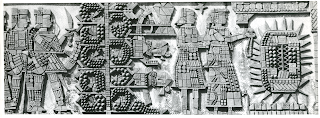
(The King of Dark Chamber Mural in Rabindralaya, Lucknow, by KGS- Detail)

At the outset of the book itself Sivakumar says that murals happen within a shared linguistic concern. If the sharing does not happen they will just remain as mere embellishments without drawing or enticing the viewers into it. We live in times when the state itself sponsor mural in the name of public art, urban planning and city beautification. Many of these visual embellishments though remain as a part of the collective consciousness and part of the general visual culture, fail drastically to move the people towards the sublime of whatever sort mainly because they do not function from within the shared linguistic concerns. Banksy’s success and failure of several others in our country should be seen against this historical and aesthetical point of view. Sivakumar after citing the milestones in the world mural art like the Russian Avant Garde murals, Bauhaus and Mexican murals, says this: “Though the Russian Avant Garde, the Bauhaus and the Mexican muralists attempted to create such a meaningful traffic between the two, they were in the end, contrary to the general course of modernism, moments of aberration inspired by utopian social ideologies.” (Page 3). What Sivakumar says as the ‘traffic between the two’ is traffic between the artists and their audience’.


 (The Black and White mural in Kalabhavana by KGS)

KGS knew the trappings of this traffic and the lack of it. As a person initiated very early into the mundane ritualistic symbolism that brought an exclusive community into the same thread of communication and also as a young man who happened to witness the western religious symbolism in the abundance of churches and the socio-political symbolism of both the Gandhian and the Communist movements, KGS could discern between the Utopian symbolism that took birth within the studios and the vibrant metaphors and symbols that people lived both in their mundane and cultural memories. The artist just needed to poke them in order to facilitate communication. That was what he did when he created his ‘King of the Dark Chamber’ mural for the Rabindralaya in Lucknow as a part of the Birth Centenary of Rabindranath Tagore. Sivakumar explains how KGS brought not only multiple narrative and entry points to the mural but also how he incorporated two version of the same drama written by Tagore, its oral base and its theatre production variant in which he had a part as a set and costume designer. The cultural sharing of the story make this mural interesting though it is one mural that KGS had done before the building was finished!

 (KGS preparing for sand casting one of his early murals)

As a modernist and as an artist who sought linkages between craft traditions and art, KGS never got into the exploitative mode with which he could have absorbed the talents of many rural crafts people into the scheme of his own works. That does not mean that KGS kept them away from his works. While using their expertise and knowledge in the making of several of his mural where he extensively used sandcasting and terracotta, he never let them to transfer their metaphorical repertoire into his mural formats. So the question is whether KGS was using them just as technical assistants or was he using their support as crafts people? The answer is perhaps both but it was not just about using and throwing or making them stand behind the curtains as many of the artists do these days. KGS was bold enough to seek their support (Gyarsilal from Rajasthan who was an expert in Jaipur Fresco was his constant technical support for over three decades) and at the same time not letting them make a kichri out of his works. KGS believed making art with his hands, exactly the way his masters did and in this he found both tradition and individual talent merging into one. 

Friday, April 1, 2016

The Edginess of Faith: When Prabuddha and Dalrymple Meet

(From Prabuddha Dasgupta's Edge of Faith)

Alfonso de Albuquerque was a stumbling block somewhere in the high school history text books. The name stood out, sounding and tasting different, giving us a hard time in learning the spelling. Very few got it right. He was the one who established the Portuguese ‘empire’ in the Indian subcontinent, exactly in Goa. William Dalrymple, in his introduction to the photo book titled ‘Edge of Faith’ by the late photographer, Prabuddha Dasgupta, in his characteristic style explains how the Portuguese loosened their clutches from being the grand inquisitors who burnt the heathens at the stake for following their pagan beliefs and for not following the new Catholicism that they were trying to impose on the natives. Looking at the portraits of the Portuguese rulers from 1510 to 1961, Dalrymple says that from the booted giants, they moved to frilled dandies, letting people to enjoy life in their new found Catholicism.


In 1961, the Indian Government sent its Army, Air Force and Navy to ‘liberate’ Goa from the rule of the Portuguese. And the combined forces could liberate Goa easily for there was little resistance. Like in 1947 when the British left India, the citizens of the Empire had the freedom to migrate to Britain but a few left thinking that Queen Victoria was their real Queen. Those who believed in the freed ‘Bharat Mata’ stayed back building a new India. Exactly the same way, in 1961 too, the Goans had the freedom to migrate to Portugal and interestingly many Catholic did. And for many others it was difficult to leave their beloved Goa and they looked at India as a foreign land and in 1961 the invasion was complete. The Catholic minority has been taken over by the Hindu majority, which of late has been turning into extreme right wingers. The Catholics with Portuguese lineage still believe that the liberation that India performed was just the ‘liberation’ from ‘peace and harmony.’ ‘Indian’ politicians and the majority Hindu arrogance have changed the complexion of Goa.

 (Edge of Faith published by Seagull books)

Prabuddha Dasgupta’s ‘Edge of Faith’ is a very brooding Goan picture book. Published in 2009 by the Seagull Books, Kolkata, ‘Edge of Faith’ cannot be called a typical Goan photo book. There are no sunny beaches, sands, waves, bikinis and naked bodies. There are no pot smoking hippies or tattooed freaks. There are not even the typical Goan musicians both the underground and the over ground varieties, and the theatre actors of stereotypical characters called ‘Tiatriste’ as caricatured extensively by late Mario Miranda and photographed by Alex Fernandes.  There are no beer bottles nor are there some beer bellies. Yes, Prabuddha had taken some series on the accidental formations on Goan beaches as well as the supermodels posing with expensive ornaments, the former for his personal perusal and the latter for advertising campaigns. However, Prabuddha had always been an artist who looked out for something left out or left alone. Be it the photographs from Tibet or from Karnataka’s historical site Hampi, or even his celebrated series on Women, one could see this affinity for lone figures who are left to their own devices.

Loneliness in Prabuddha’s photographs does not translate itself into depravity or hopelessness. Loneliness is a protected state of being or even a method adopted by many for self-preservation. In Goa, while the celebrations are on 365 days in a year, what Prabuddha looked for were the lives of those lonely people or historically selected people who were destined to be lonely in their pursuits. He immortalized them in his pictures, as none had done ever before; even when Prabuddha was looking for frozen narratives, he was trying his best to avoid the human presence. What is present in his works always evokes what is absent there and vice versa. If there are some people who are deeply caught in the web of the past or history for academic sake, we definitely look for something that is left out by them. May be one beer mug held by an old female tavern owner speaks a lot about her life rather than the freckles and the wrinkles on her face would say. The abandoned houses, like the haunted ones that we see elsewhere, always come into the ken of Prabuddha, so are the covered scooters, rusting Fiat cars or discarded memorabilia. Each time we see such negligence by time, we remember those people who are still living the memories of a Portuguese rule.

 (Prabuddha Dasgupta)

Modern Goa has a cusp history, as Dalrymple narrates through several of the interviews that he has woven dexterously into an airy fabric that looks so exotically readable. The Portuguese who came and conquered Goa, after a series of proselytization efforts interestingly got converted into Indian ways. Similarly the Hindus who got converted into Catholicism forcefully let their former Hindu roots and rituals to flourish within the newly found faith. Despite the chidings of the priests, most of the new converts continued with their Hindu beliefs and also maintained their relationships with the non-converted family members which have been continuing ever since. Even in the famous Hindu temples in Goa, the converted Christians make offerings and come to pray, even involve in pagan rituals like ‘Evil-Eye’ dispelling. In the meanwhile the Hindus go en masse to the St Francis Xavier’s Church to pray as the Goan population in general believes in the power of Francis Xavier; they have forgotten the days of inquisition. One of the contemporary Catholic Goans says ironically that the Portuguese Goans who live in Goa today have turned a bit fundamentalists in their efforts keep themselves exclusive. She says that while the buses owned by Hindus flaunt the pictures of Francis Xavier and St. Anne in their dashboards along with the pictures of the Hindu deities, none of the Christian bus owners return the grace by accommodating a couple of Hindu gods in their dashboards.

 (Willliam Dalrymple)

It was not just the Hindus got converted into Christian Catholicism by force or by choice, but the Portuguese people also volunteered to convert themselves into Islam or some of them followed Hindu religion as a philosophy. Those got converted to Islam were doing it for making some extra wealth. They migrated from Goa to the neighboring empires where the Islam Kings ruled. By becoming ministers, advisors, traders, fighters and even by becoming mercenaries the Portuguese survived in different ways in India. Some of them even adopted the Hindu ways of highlighting the women’s modesty, keeping harems, slaves and servants and so on. They even wore the kinds of clothes that the Hindus used to wear inside their homes. But what Prabuddha looked at was not these scenes. But he was looking at the small niches of staunch faith where the Catholics lived as Catholics and perhaps lived in memories. Prabuddha also looked at those talented Goans who could integrate with the mainstream society of India in the post liberation years and become a part of the Indian ethos. The bedroom of Wendell Rodrick, the ace fashion designer is one fine example to it. There are so many small little mantle pieces where personal adulation and commemoration get mixed up with the vignettes of religious remembrance.

Prabuddha himself was an exile in Goa. He spent his last years in Goa with his young girl friend. Goa and its old setting somehow had charmed him into a romantic world where the horse driven carriages rattled over the cobbled stone paths, where lanterns threw the lights of earthy stars, where the taverns entertained the revelers and where the pious people focused at the crucified Christ from the ancient pews. Prabuddha loved to live in this world of faith. It was brittle though, the last ditch effort to hold on to the very idea of faith was so alluring to the artist that he never left Goa once he reached there. He knew the subtlety and the brittleness of faith both in religion and relationship. While pain increased the passion for religion perhaps in the case of relationships pain distanced people. Prabuddha held on not only at his camera but also at his faith in humanity. He sung the lines of Leonard Cohen and moved on, until the stroke struck rudely at the age of 56. Today, the writer Dalrymple has turned a photographer. When I look at his works, what I see is the embrace of Prabuddha’s soul on them. I feel that it is Prabuddha who writes the forward for Dalrymples photography exhibition, from a world where the Portuguese and the Indians laugh alike in an exotic Tavern in absolute bliss looking at the rusting crosses and tridents inside vitrine full of tears. 

Thursday, March 31, 2016

Game


In the street
Summer stands
With the crowd
To see the game
In television.

A day that has
Forgotten to set
Is caught out
By the vigorous night
‘Howzzaat?’

To the stables
Abandoned by cows
Wagging tails and
Ringing bells
There goes a
Dust storm.

A little rain has
Just hidden itself
In a dark alley
Under the awnings
Eyes stand waiting
For the rain to stop.

A ring of smoke has
Just come out for something
Soon forgetting for what
It has come out; strange

Shaken by the thunder
Stars fall down all over
A lone girl collects all
And walks home shining

Naked bodies return
Holding handbags
And mobile phones
Knowing nothing

The game goes on
Both the god and crowd
Pray alike, oh Lord,

The current should not go. 

Interpreter of Languages: Jhumpa Lahiri’s ‘In Other Words’

(author Jhumpa Lahiri)

It is surreal. The first episode that she describes absolutely unsettles you. Perhaps, for me it is Dali and Chirico wound together with some American pastoral image and left me alone at the verge of it. Yes, I am talking about the opening episode of Jhumpa Lahiri’s latest experimental book, ‘In Other Words’. As we all know by now, this book is a translated book. An American/India writer, Jhumpa Lahiri’s book translated in English? Which language did she write then? ‘In Other Words’ is the answer for this question. Lahiri wrote it in Italian and it is translated by the well-known writer and translator, Ann Goldstein. The book has several layers than its apparent first person narrative about the adoption of a new language and writing in it.


Let me go back to the surreal image that Lahiri creates at the outset. She stands at the shore of a deep black pool and she sees people wading into the waters that hold too many enigmas that the author herself cannot fathom. At the other end of the pool, there is a building which almost looks like a Gothic Church. She does not dare to cross the water, but finally she does. She goes into the building, experiences something ethereal and comes back. She just does not know whether she would go back to it again or not. The very thought of it fills her with fear. And sooner than later we comes to know that the pool that she refers to is the pool of a new language and the edifice out there is the literary structures that have already been built in that language.

 (In Other Words promotional material)

This scene is perhaps is repeated in a different way, but very convincingly in her story ‘The Exchange’, which is originally written in Italian and translated into English, and included in this book. The story is about a young woman who wants to become someone else. She goes into a palatial boutique where women dressed in black hover around over rows of black designer wears, leaving whatever they have been wearing till then. She too removes her much loved black sweater and tries out a few new clothes. Having grown dissatisfied with the attires that she has chosen, she decides to get back to her own clothes. But the shop owner seems to have misplaced her black sweater. She demands it and the owner, a big woman in black makes a few phone calls and make sure that none has taken her sweater by mistake. Finally, the dressmaker gives her another sweater which is identical but not the same. Slowly, the woman grows into it and she forgets she had another sweater of the same cut.

‘The Exchange’ is pivotal to ‘In Other Words’ because, Lahiri herself has been wishing to try out another language and become ‘another’ writer. She leaves her beloved English behind; English that had given her the identity as a writer. But Lahiri has been living in ‘Other Worlds’ too. Born to a Bengali couple, Lahiri spoke chaste Bengali at home while growing up in the USA, where her mother preserved her pure Bengali for many decades as if she had never stepped out of Kolkata in her life. For her mother it was a rebellion. But for Lahiri to avoid that language was a rebellion to begin with. She found in a linguistically conflicting zone when she was with her teenage friends in the US and when she came to Kolkata and spoke in not so good Bengali. She grew up as a linguistic outsider who was craving for an anchor in some language. English being her first language and as she puts, luck favored her, she became an acclaimed writer. But her first novel ‘Interpreter of Maladies’ ‘took place’ in Bengal, exactly the Man Booker Award Winning ‘God of Small Things’ by Arundhati Roy ‘took place’ in Aymanam, Kottayam, Kerala. Lahiri wanted a language, which she gained for herself; not as a given either by the parents or by the country.

 (one of the statements of Jhumpa Lahiri)

17th century English literature and the influence of Italian architecture in it was Lahiri’s doctoral thesis and perhaps this was one of the reasons that she got attracted to the Italian language. She knew there were authors already in the firmament of world literature who wrote in adopted language, Beckett and Conrad being the best examples, who wrote in French and English respectively.  Lahiri was looking for a ‘home’ when she decided to take up learning Italian. The whole idea of finding a home became an artistic pursuit in itself and then it became a soul searching as well as transforming experience for her which continued for almost two years. None in the contemporary art scene or literature scene would have taken such great pains and gone such extents to learn a new literal as well as visual language in order to come out with an original work of art, here in Lahiri’s case a book, which narrates the story of making of the book itself.

A writer is automatically a translator. He/she walks between not only two languages but also many languages. She writes in one and reads in many other languages, even if they are translated. It is rare that a writer reads one language and writes in many. Lahiri says that for her, taking the Venice analogy, languages are like little lands separated by lagoons and she feels the need to create bridges constantly. Sometimes, these bridges are brittle and sometimes they are strong. Lahiri took up learning Italian as a challenge as well as a mission; to turn them together into a literary project. The great sacrifice that she did first was abstaining from English! A language that is her life line is now thrown aside for the sake of learning and experiencing a new language. She started taking lessons first by reading Italian books with Italian dictionaries. And then taking the assistance of a couple of teachers in consecutive sessions and finally going to settle down in Italy for a couple of years to be ‘inside’ the language.

 (The Italian connection - Jhumpa Lahiri)

Anybody who has experience in speaking a different language than the mother tongue or has acquired a new language as a part of growing up, would have felt the extra work that his/her brains have exerted in the act of constant translation. It starts from cognition of the others’ speech or visual or verbal codes, then moves on to the formulation of a reply in one’s own familiar language and then converting it into the newly acquired language. It takes quite some time to get the new language naturalized within the linguistic-cognitive-expressive system of a person. Initially it is very exhausting and above all the fear of committing mistakes would instill a sort of mortal fear into a person which could render the person absolutely speechless, silent, left out and lonely. Lahiri, an award winning and internationally acclaimed writer had to go through all these starting troubles when she picked up a new language. She elaborates how she used to go through each word and look into the dictionary for its meaning.

Language is ideological; in no uncertain terms Lahiri makes it clear in her new book. Language is something that is used for inclusion as well as exclusion of the speaker/user from the mainstream society. Lahiri married to a man who speaks Italian with a Spanish accent, though has learned the language painstakingly and speaks it without any accent is suddenly met with blind responses or vacant stares or outright neglect. When she goes into the shops the woman at the counter looks at her as if she just does not understand what Lahiri has just asked her even if the conversation is done in Italian, whereas when her husband speaks Italian to the same woman with an accent she wonders how a man who looks an English man could speak such ‘good’ Italian. Language therefore becomes a sign of discrimination also for Lahiri.

 (Jhumpa Lahiri with her husband, Alberto Vourvoulias)

Is Jhumpa Lahiri going to write more books in Italian? Not only the readers but also the author herself asks this question repeatedly. For the time being Lahiri does not know what she is really going to do with her Italian. May be like the woman in ‘The Exchange’ she would use the new sweater as the old one; that means she would continue writing in/from her new home, that is Italian language. And she will grow accustomed to it. She would then fondly remember her other languages that she has left behind. Here Italian is perhaps, for Lahiri, a language all created by herself for her exclusive use. She finds autonomy not only as a writer but also as a world citizen in the new language. But she has to go back. The perpetual migrants cannot stick to the new found land. They have to go back to their ‘homes’ elsewhere however harsher the realities are there. But as of now it looks like Jhumpa Lahiri would take off again to the shores of the Renaissance land. 

Wednesday, March 30, 2016

Denuded Self of Radhika Vaz: Unladylike

(Radhika Vaz)

Irreverence is the word that comes to my mind when I think of Radhika Vaz, the internationally acclaimed feminist stand-up comedian. Her autobiography, ‘Unladylike’ underlines the word, again and again. A girl who fears her turning to a man one day by dropping those ‘balls’ hidden between her legs, slowly grows into a woman, that too very assertive about her own personality, rules no bar. Being Radhika Vaz is being ‘freedom’ itself. A feminist could be fiercely outspoken, challenge the male norms and yet she could be loving, caring and deeply emotional. ‘Unladylike’ has it all; here is a young woman in pursuit of love, crossing continents to win her boyfriend who ironically has not given her any assurance of marriage. She wins not only as a woman in love but also as a woman in complete freedom. In her words, she could convince her Jat Mother-in-law of her wifely credentials or she could convince her MIL to pretend so.


My life being a stand-up comedy of sort, I have not taken much interest in stand-up comedians though I have keenly followed several of them and their performances. Eddy Murphy has been my all-time favorite followed by Chris Tucker and Martin Lawrence. Back home Raju Srivastava had done enough to tickle me by turning the rural innocence into sharpened socio-political and cultural criticism. Johnny Lever and Sunil Pal have done their bit to attract me. Reality Television has brought several of such Stand-Up comedians though Kapil Sharma, Cyrus Brocha, Vir Das and people of their ilk have hogged all the lime light. Back home I was grown up looking at Stand-Up comedians, who later became prominent film actors, paving way for many to follow their suit. Kerala is still a breeding ground for comedians (not strictly in the ‘stand-up’ sense) for the simple reason that the butts of their comedies and lampooning  just do not get offended by it, while rest of India reels under the pressure of hurting sentiments via comedy. Sedition could land you in jail so is comedy. India has become a land of holy cows.

 (Radhika Vaz with her book Unladylike)

Radhika Vaz does not mind calling herself a cow quite unholy. She could strip herself into nothing and assume the status of early nuns who had accepted sky as their clad. Vaz, in her popular solo performance, ‘What the F**k I should Wear?’ questions the dominant version of the world, which is scripted by the male chauvinists and speaks of her sagging body and the tension that each woman in the world takes on her shoulders in the morning in order to choose the right dress to look ‘sexy’. If one goes in that rate, according to Vaz, sky is the best wrap around for a woman, which would liberate her from all the demands. In the Youtube versions one could see the body of Vaz blurred in the key areas to keep the ‘modesty’ of the audience and make it ‘good’ for public viewing. Vaz makes a counter script to the male world and demolishes it like a one woman army. In her irreverent best, Vaz turns her acerbic witticism against the consenting women folk in India who celebrate Karva Chaut and does not mind calling them ‘Karva Choots’.

May be the Vaz Speak is not loud enough or rather the blasphemous utterances are done in the elite clubs and ticketed programs where the cultural police do not take a peek. Or rather Vaz speak is in English that makes the expletives that she profusely uses in her performances neutralized. Culture is affected adversely when it is uttered in the language of the roots. Vaz is a dare devil and her never say die and also her ability to show the mid fingers to both the male and female audience makes her exceptional in her critique. Vaz stands up in comedy, an art form which has gone down in the gutters using unimaginative double meanings to eke out laughter from the dominant male audience and reclaims it using the abuse directly at the face with no frills added. While the male comedians always have to resort to double meanings, Vaz takes up the liberty and responsibility to use ‘you-know-what-I-mean’ directly; in other words, while she calls a spade a spade she calls a dick a dick and a cunt a cunt.

(Radhika Vaz on stage)

‘Unladylike’ is a piece of autobiographical writing which positions the author in the mainstream and in the fringes alike. As Vaz is a successful Stand-Up comedian and performance artist who works internationally and speaks in English language, she automatically belongs to the mainstream, but when we understand that she writes from the position of a woman who seeks her liberation not only from the social systems but also from the linguistic system, she becomes a voice from the fringes. Interestingly, Vaz does not suffer from either position. She with her nose and mid-finger up at the reader/audience drills into them like an augur sharp with her sharp wit. When she speaks about her formative years in different countries and identifies her non-belongingness due to the uprooted-ness of her parents, we understand the throes of a young girl looking for an anchor. When she narrates how she heard her vagina farting for the first time in a silent library, when she opens her heart how she had craved to see an ‘X rated’ film with a real penis in action and so on we are pushed into an arena which we know exist but do not wish to acknowledge.

Vaz gives us an acid wash with her words. Each chapter shocks us to a new revelation; the inner recesses of a young girl who seeks approval amongst the peer groups. She wants to show off but her bounties are not so rich. She envies the booty of her classmates and wishes to have it like them. She pops socks inside her shirt so that she could pretend she has breasts, which she calls ‘chesticles’. Vaz desperately wants to let the other girls know that she too has got chums (menstruation). She displays a borrowed (begged and stolen as well) packet of sanitary napkins so that others could get the message, but only to be admonished by the matrons in the hostel. The second part of the book tells us how she reached the US of A and how she grew there as a professional in the advertising agency then into a Stand Up comedian. This book is a wonderful read. And the best sentence in this book is about Vaz getting a US visa from the US Consulate in Chennai. It runs like this: “Pick up your passport at 3 pm. This, as we all know, was code for ‘you can enter America’. I thanked her three times before backing away from the counter like a supplicant in a royal court whose execution had been stayed.” Go grab your copy. 

Tuesday, March 22, 2016

The Danger in Unsigned Art Reviews in Newspapers


(Review- For illustrative purpose only)

This article does not intent to hurt anybody; any journalist or any artist. Today morning, in the newspaper, Hindustan Times I happened to read a small report on an exhibition that is currently on in Delhi. It speaks of an artist working from Dharamsala, a spiritual retreat in North India where the Tibetan government in exile is headquartered. This unsigned article had a curious title which in fact attracted me to it. It read, ‘Artworks Explore Link between Creativity and Meditation’. As an art critic, I am a bit uncomfortable with the word ‘spiritual’ when it is loosely applied on the kind of works of art, which either has a Buddha head or purely abstract. But this title sounded a bit scientific and the assertion that the said works of art ‘explore the link between creativity and meditation’ made me think that reading it would help me to understand the ‘link’ (which I have been missing for so long) between creativity and meditation. Let me tell you, the reading left me disappointed for it was the usual stuff; artist is spiritually inclined and he paints spiritual subjects. Period.


I could have left the article there but two things struck me while reading it; the writer/reporter’s blind faith in the artist who speaks as the ‘author’ of these ‘spiritual’ works and the deliberation that the writer/reporter has taken to keep his/her name obscure. It goes by ‘HT Correspondent’. As I used to be an insider I know that this kind of a byline means either the writer is a cub reporter or the report itself does not have any fresh or authentic views which make the reader curious about the identity of the reporter/reviewer. Hence, this report/review appeared more or less as a PR exercise or maximum a result of the page editor who looks for a filler in the page stipulated for (here in this case) South Delhi. The gallery where the show is on is located in South Delhi and perhaps that is the only justification that I find the relevance of this story. But the danger is whether the reporter’s name is known or not people have a tendency to believe in what the newspapers generally say. So layman would definitely think that this artist has found out the ‘link’ between creativity and meditation. False.

 (Review 2 - For illustration purpose only)

Personally speaking, I do not have any problem with any artists who claim that their works of art come from deep meditation or an intense sense of spirituality. I know for sure that reading a few self-help books would not make you a professional trainer or reading a few spiritual discourses (whether it is of Osho or Dalailama or Jiddu Krishnamurthy or Sadguru or anyone like that) would not make one a spiritual guru. A person who has understood the link between creativity and meditation would never be able to say so because once that link is established the very life would become a deep meditation where painting or sculpting or anything of those so called creative activity ceases to exist. If you look from a different perspective, if you are creative and provided you are making a thing or conjuring up something with your mind and execute it through your hands then without this preamble of spiritualism and meditation, it is a deep meditative state. There is no link; because it is. If you are creative, in the very act of creation, you are meditative. But you could be meditative and be less creative where you would remain meditative but not creative. So the choice is left with you; Do you want to become creative therefore meditative or meditative and believe that you are creative too. I prefer the earlier one.

Those people say that they are very meditative and their art is linked to their meditation, are actually doing some self-deception. The state of mind in which the artist says that he/she is meditative and spiritual therefore the creativity that they have springs from that particular state of mind is a way of defining their creativity and seeking legitimacy for that. The fact is this that when you are creative, you could be nothing but meditative. You may be making a lot of noise; still you are meditative. You may be jumping around; still you are meditative. You may be sitting in the middle of the market; still you are meditative. You could be all in chaos and create something which could look quasi-spiritual or quasi-mythological and could call it meditative; still it would remain as a result of your confusion. So if someone claims that he/she has found out the link between creativity and meditation, it is all humbug. You cannot find out creativity in meditation. If you are creative, that is mediation. There could be a meditative state which is utterly inert and static, which blocks the nerve endings of creativity and make the whole being stand still or throb with the music of the universe. But it is not creativity. It is just finding rhythm with the universe. Great sages have done that. Once they have achieved that state of mind, they could hear what others could not (sruti) and they could remember what others could not (smruti). This is not creativity. It is just becoming a medium of the collective knowledge.

(Review- for illustration purpose only)

Therefore, the article that tells me about an artist who has read some spiritual literature, done fairly good yoga practice and has lived far away from the maddening crowd, and if the article claims that he has found the ‘link between creativity and meditation’ it is a false claim. It is as good as saying a quack had found out the complicated scientific truths about neuroscience. The jargon which is used without responsibility like in this press report, even barring the name of the writer, the fourth estate does a great disservice to the culture in general. The people who read and believe in it would perhaps tomorrow paint some Buddha head and some abstract stuff and say that they too have found the fresh springs of spirituality, meditation and creativity. It can never happen. The page fillers in this sense could kill the beautiful concepts of Indian art. When a famous newspaper like Hindustan Times publishes something like this, they could adopt a policy to say that ‘it is a promotional article’ or ‘the newspaper does not believe in the claims the artist has made. It is purely his personal views.’ Such disclaimers would help the reader to discern the good from the bad. The original from the fake. Otherwise, tomorrow the same jargon would be used for Subodh Gupta and Nikhil Chopra for they too explore their kind of spiritualism in their works. But in my view if they are doing something good, then definitely they are in a meditative mood. If any artist produces junk and it repels people both the initiated and the uninitiated, then be sure that the artist was just managing his/her art or just faking a spiritual orgasm.